

10 shillings (Easter Rising) – Ireland
Add to wishlist
Circulating commemorative coins
Commemoration: 50th Anniversary of the 1916 Easter Rising
Ireland
Obverse
Description:
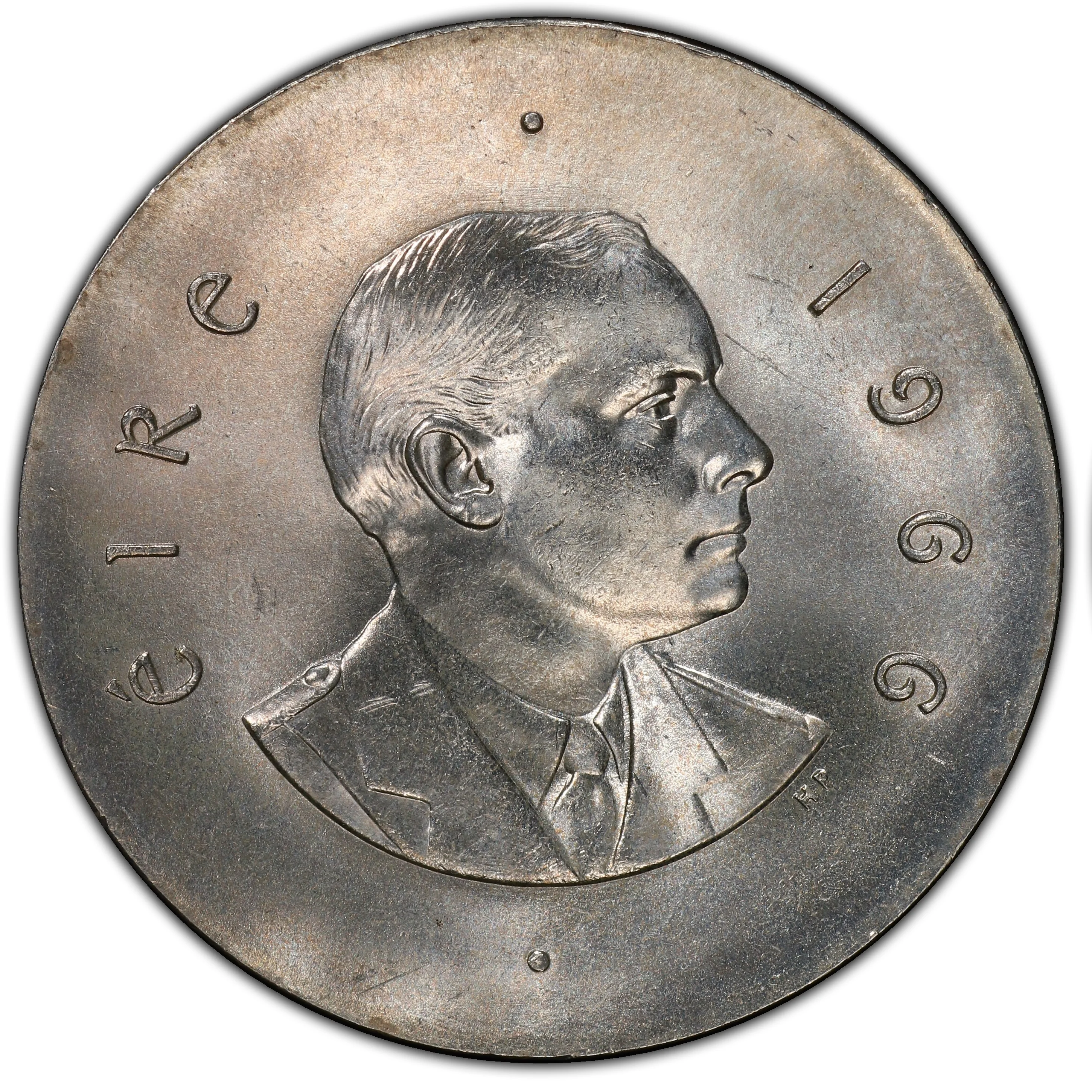
Padraig Pearse bust facing right, country name left, year right.
Inscription:
éire · 1966 ·
Translation:
Ireland 1966
Script: Latin (Gaelic)
Engraver: T Hugh Paget
Reverse
Description:
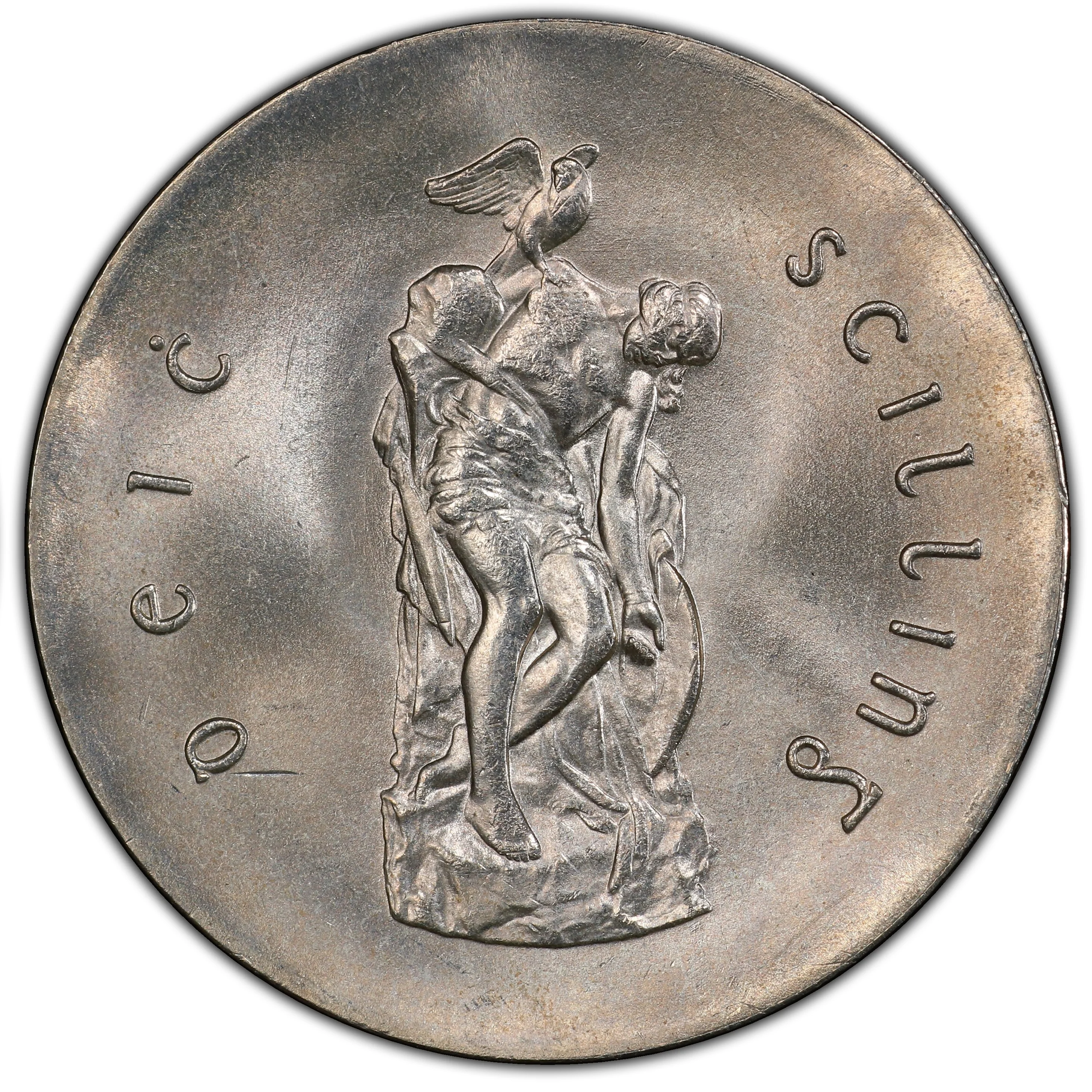
A miniature of Oliver Sheppard's statue of Cú Chulainn, located in Dublin's General Post Office.
Inscription:
deiċ scilling
Translation:
One shilling
Script: Latin (Gaelic)
Language: Old English
Engraver: T Hugh Paget
Edge
Smooth with Gaelic writing (normal and inverted)
Legend:
Éirí Amach na Cásca 1916
Translation:
Easter Rising 1916
Language: Irish
Mints
| Name | Mark |
|---|---|
| Royal Mint (Tower Hill) | — |
Mintings
| Year | Mint Mark | Mintage | Quality | Collection |
|---|---|---|---|---|
| 1966 | — | 2,000,000 | BU | |
| 1966 | — | 20,000 | Proof |
Historical background
In 1966, Ireland's currency situation was defined by its continued use of the Irish pound (or punt), which remained pegged at par with the British pound sterling. This arrangement, a legacy of the pre-independence monetary union, meant the currencies were fully interchangeable on the island of Ireland and in Great Britain. While this provided stability for trade, it also meant that Ireland's monetary policy was effectively set by the Bank of England in London, limiting the Central Bank of Ireland's autonomy.
The year itself was significant as it marked the 50th anniversary of the 1916 Easter Rising, a period of national reflection that heightened public discourse on symbols of sovereignty. This context brought the currency, still bearing the likeness of British monarchs, into sharper focus. In a quiet but symbolic step towards asserting financial identity, the Central Bank introduced a new ten-shilling note in 1966. It notably featured Lady Lavery, an Irish socialite, instead of the reigning British monarch, Queen Elizabeth II, whose portrait had appeared on the previous series.
Economically, the fixed link to sterling was broadly stable but came with inherent vulnerabilities. Ireland imported Britain's inflation and was exposed to any sterling crises, as would be starkly demonstrated a few years later with the 1967 devaluation. While there was growing intellectual debate about the benefits of breaking the sterling link to pursue an independent exchange rate policy, this was not yet a mainstream political position in 1966. The currency situation was thus one of practical dependency layered with emerging, but still cautious, gestures towards greater monetary sovereignty.
The year itself was significant as it marked the 50th anniversary of the 1916 Easter Rising, a period of national reflection that heightened public discourse on symbols of sovereignty. This context brought the currency, still bearing the likeness of British monarchs, into sharper focus. In a quiet but symbolic step towards asserting financial identity, the Central Bank introduced a new ten-shilling note in 1966. It notably featured Lady Lavery, an Irish socialite, instead of the reigning British monarch, Queen Elizabeth II, whose portrait had appeared on the previous series.
Economically, the fixed link to sterling was broadly stable but came with inherent vulnerabilities. Ireland imported Britain's inflation and was exposed to any sterling crises, as would be starkly demonstrated a few years later with the 1967 devaluation. While there was growing intellectual debate about the benefits of breaking the sterling link to pursue an independent exchange rate policy, this was not yet a mainstream political position in 1966. The currency situation was thus one of practical dependency layered with emerging, but still cautious, gestures towards greater monetary sovereignty.
🌱 Common