

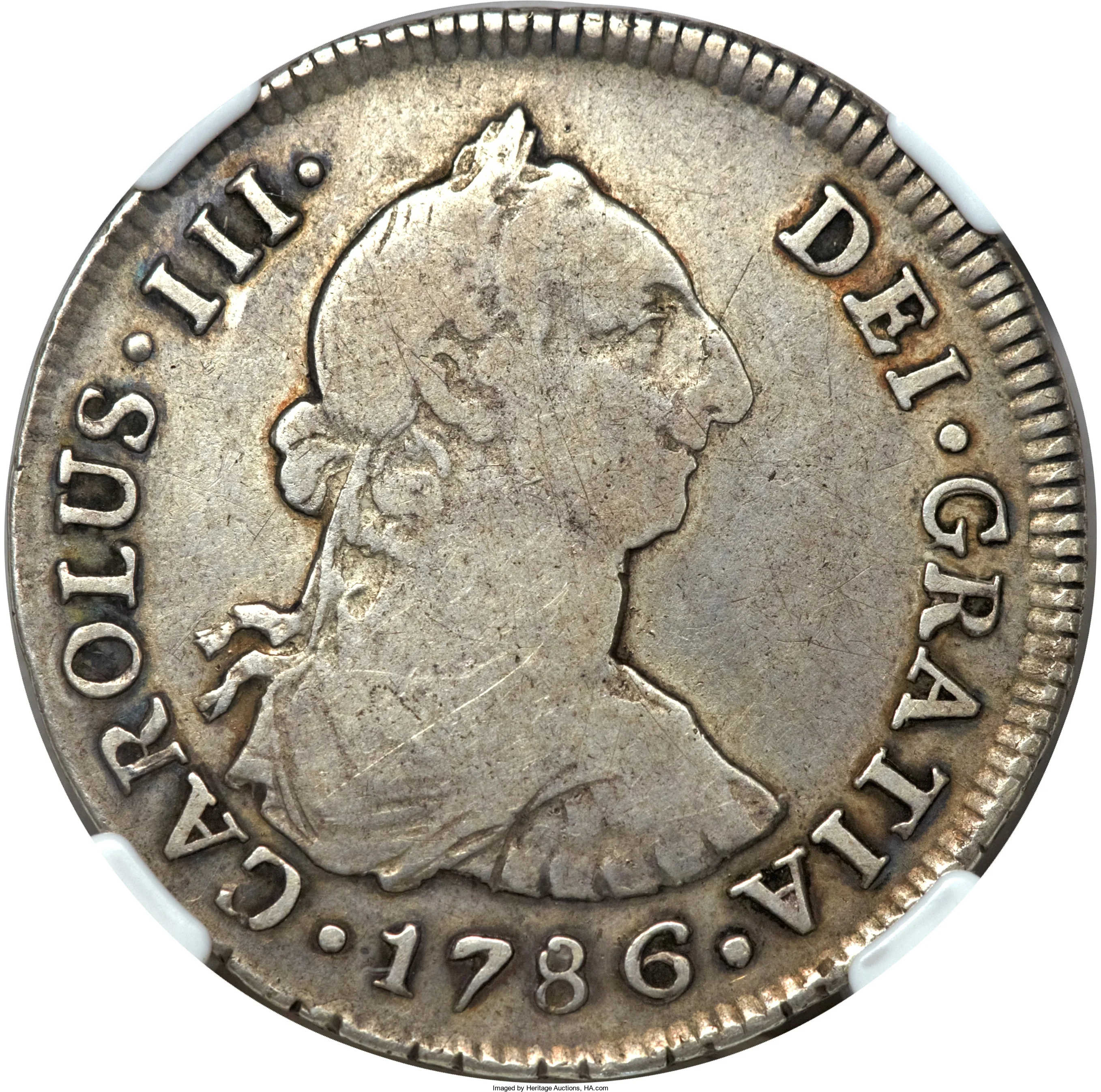
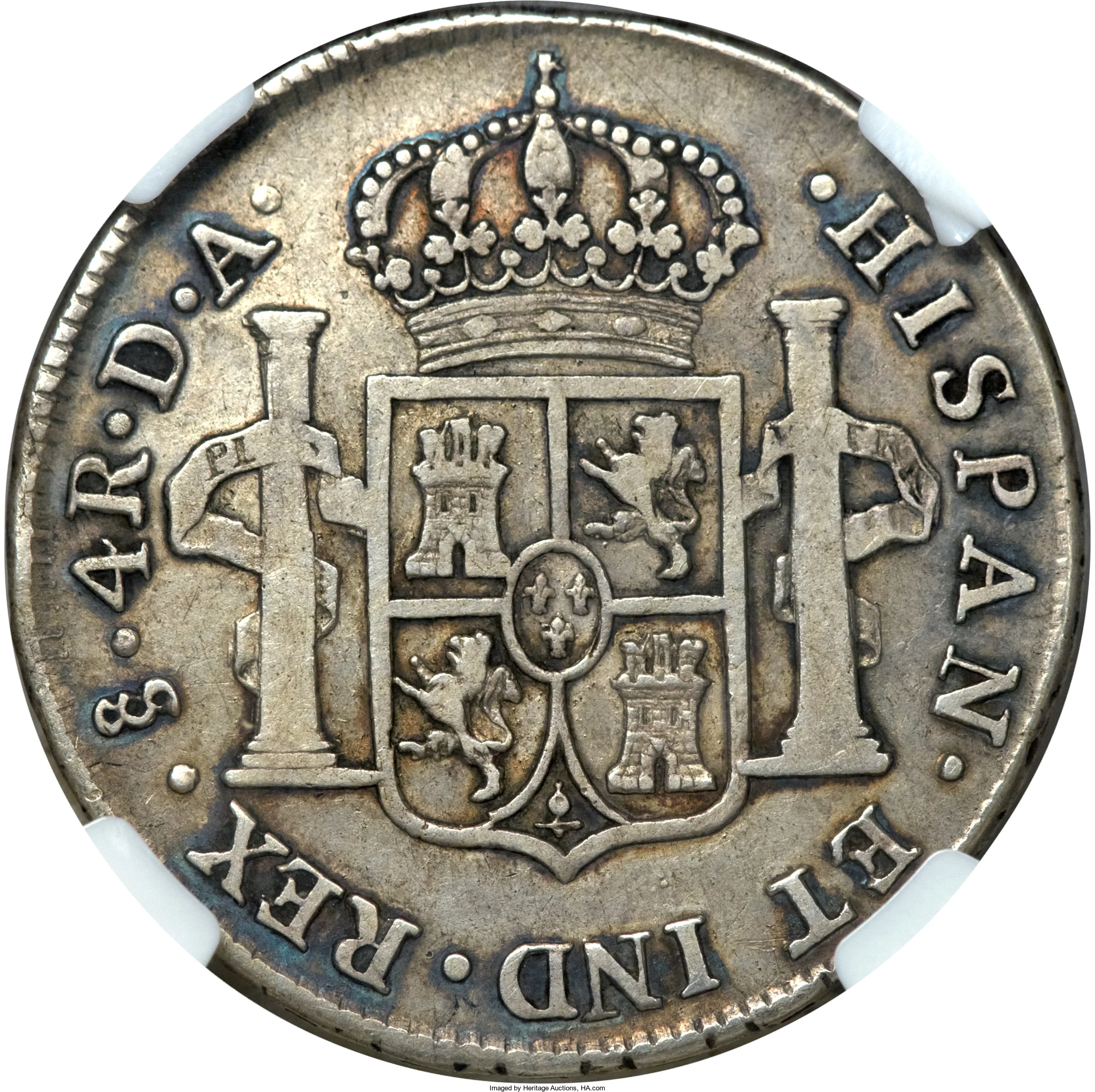
4 Reales – Chile
Chile
Context
Years: 1775–1789
Issuer: Chile 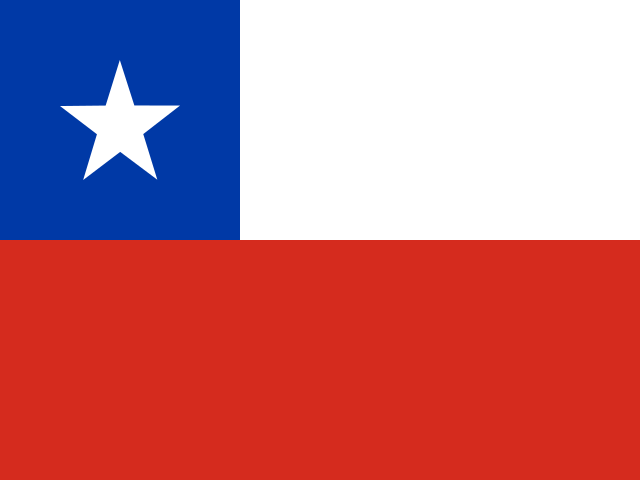
Ruler: Charles III
Currency:
(1541—1852)
Demonetized: Yes
Total mintage: 282,000
Material
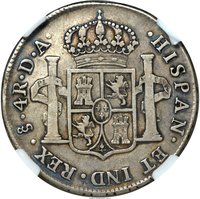
References
KM: #Click to copy to clipboard34
Numista: #121360
Value
Bullion value: $34.69
Obverse
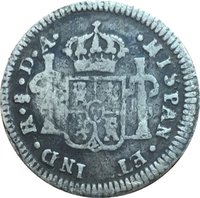
Reverse
Edge
Chained
Mintings
| Year | Mint Mark | Mintage | Quality | Collection |
|---|---|---|---|---|
| 1775 | So | 3,000 | ||
| 1776 | So | 3,000 | ||
| 1777 | So | 3,000 | ||
| 1778 | So | 15,000 | ||
| 1779 | So | 10,000 | ||
| 1780 | So | 9,000 | ||
| 1781 | So | 14,000 | ||
| 1782 | So | 7,000 | ||
| 1783 | So | 1,000 | ||
| 1784 | So | 40,000 | ||
| 1785 | So | 30,000 | ||
| 1786 | So | 36,000 | ||
| 1787 | So | 25,000 | ||
| 1788 | So | 41,000 | ||
| 1789 | So | 45,000 |
Historical background
In 1775, Chile was a captaincy-general within the Spanish Empire, and its currency situation was characterized by severe scarcity and reliance on external sources. The local economy operated primarily on a basis of barter and credit due to a chronic shortage of official coinage. While the Spanish peso (or "real de a ocho") was the official unit of account, physical specimens, especially gold and silver coins minted in Peru or Spain, were rare in everyday transactions. This scarcity stemmed from Chile's economic role as a supplier of agricultural goods to the mining center of Potosí, which drained coinage back to the Viceroyalty of Peru, and the restrictive mercantilist policies of the Spanish crown that controlled the flow of precious metals.
The lack of circulating coinage led to the widespread use of substitute currencies and credit instruments. Merchants and large landowners issued vales (promissory notes) and used ledger credit to facilitate trade. In rural areas, goods like wheat, tallow, and hides often served as direct mediums of exchange. Furthermore, foreign coins, particularly Portuguese and French, circulated unofficially due to contraband trade, which the Spanish authorities struggled to suppress. The Royal Treasury in Santiago attempted to manage finances through accounting pesos (pesos de cuenta), which were not physical coins but standardized units for bookkeeping, further highlighting the disconnect between the official monetary system and the reality of exchange.
This unstable and inefficient monetary environment constrained economic growth and complicated both governance and daily commerce. The Spanish crown's attempts to address currency shortages, such as authorizing the minting of copper tlacos in Mexico for use in outlying provinces, provided only sporadic and inadequate relief. The situation would persist until the establishment of the first local mint, the Casa de Moneda de Santiago, in 1749, but even by 1775, its output was insufficient to meet demand, leaving Chile's economy hampered by a monetary system ill-suited to its needs and heavily dependent on the broader, often dysfunctional, imperial financial structure.
The lack of circulating coinage led to the widespread use of substitute currencies and credit instruments. Merchants and large landowners issued vales (promissory notes) and used ledger credit to facilitate trade. In rural areas, goods like wheat, tallow, and hides often served as direct mediums of exchange. Furthermore, foreign coins, particularly Portuguese and French, circulated unofficially due to contraband trade, which the Spanish authorities struggled to suppress. The Royal Treasury in Santiago attempted to manage finances through accounting pesos (pesos de cuenta), which were not physical coins but standardized units for bookkeeping, further highlighting the disconnect between the official monetary system and the reality of exchange.
This unstable and inefficient monetary environment constrained economic growth and complicated both governance and daily commerce. The Spanish crown's attempts to address currency shortages, such as authorizing the minting of copper tlacos in Mexico for use in outlying provinces, provided only sporadic and inadequate relief. The situation would persist until the establishment of the first local mint, the Casa de Moneda de Santiago, in 1749, but even by 1775, its output was insufficient to meet demand, leaving Chile's economy hampered by a monetary system ill-suited to its needs and heavily dependent on the broader, often dysfunctional, imperial financial structure.
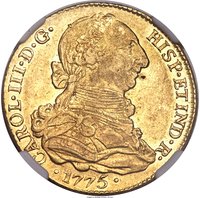
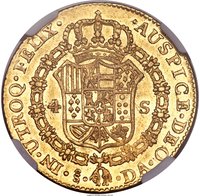
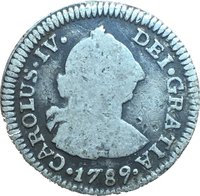
✨ Legendary