

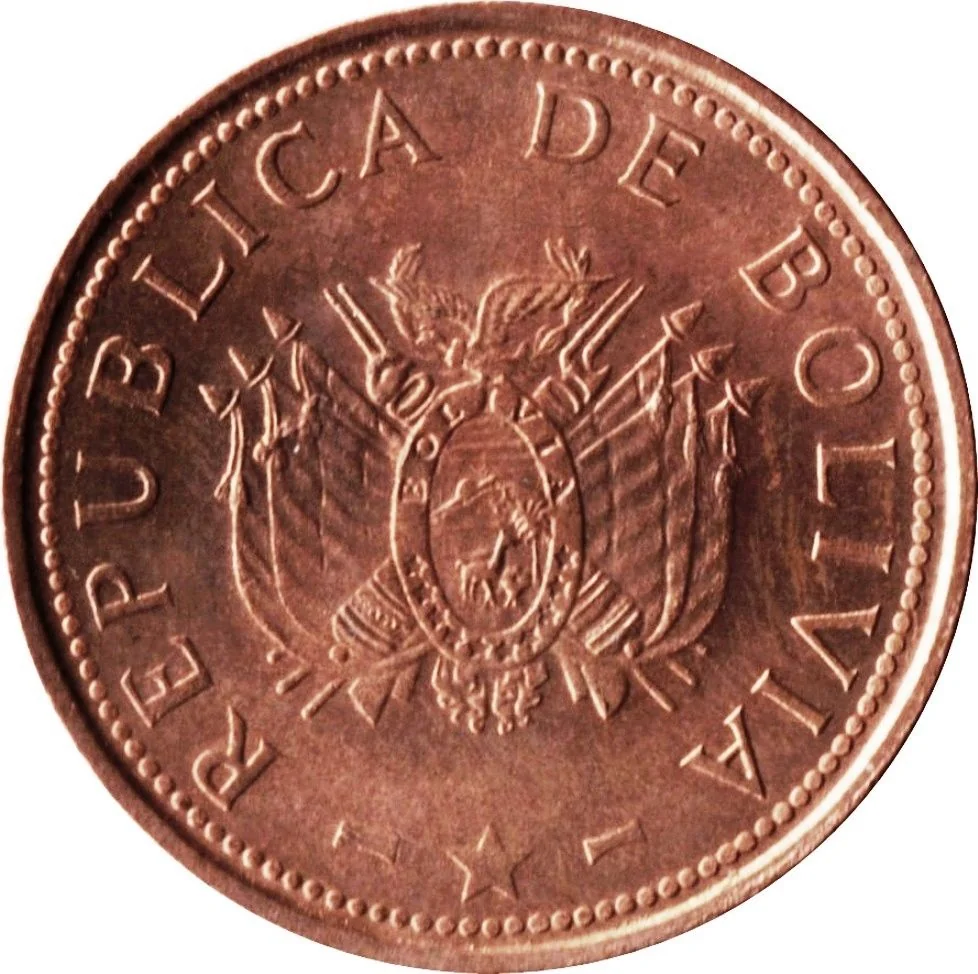
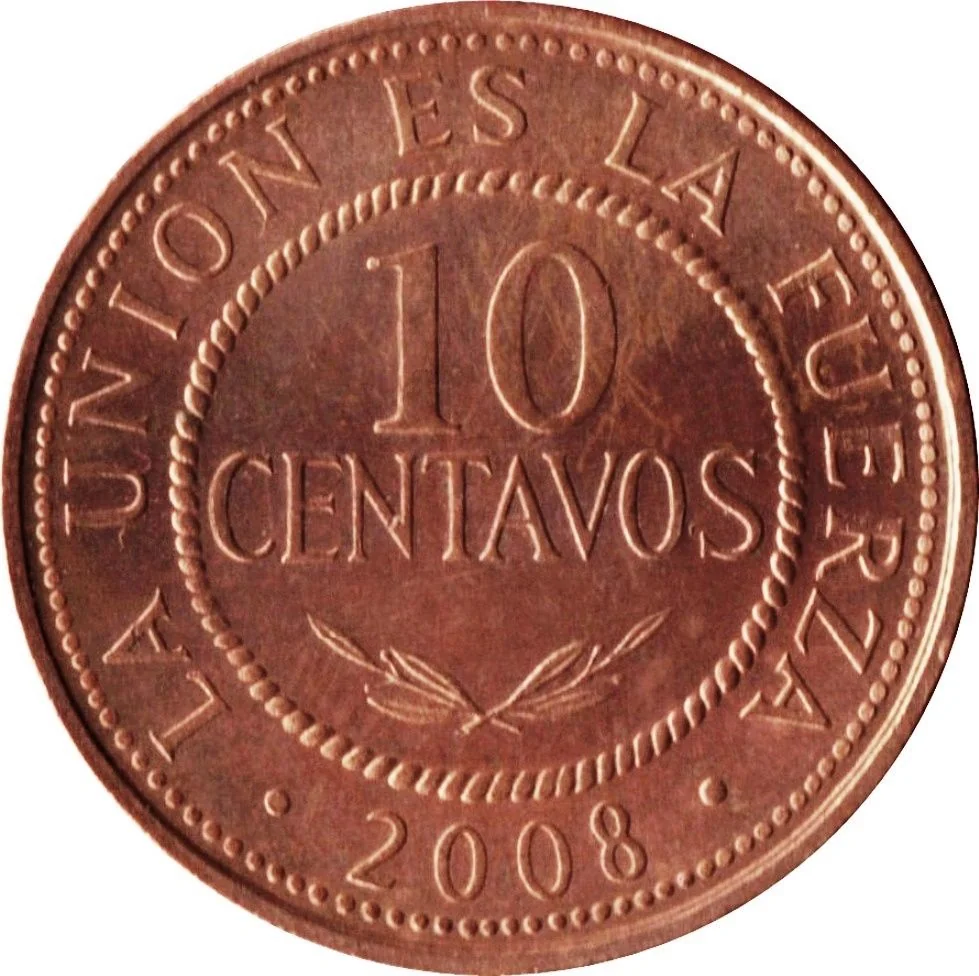
10 centavos – Bolivia
Add to wishlist
Bolivia
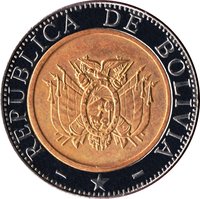
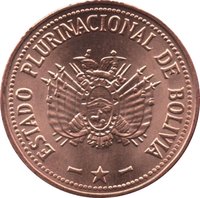
Obverse
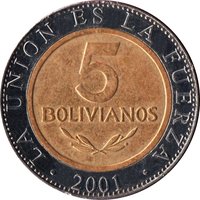
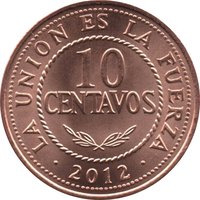
Reverse
Edge
Plain
Mintings
| Year | Mint Mark | Mintage | Quality | Collection |
|---|---|---|---|---|
| 2001 | — | 21,300,000 | ||
| 2006 | — | 13,300,000 | ||
| 2008 | — | 92,100,000 |
Historical background
In 2001, Bolivia's currency situation was defined by a period of relative stability under the framework of dollarization, though this stability came with significant economic constraints and underlying vulnerabilities. Following the hyperinflation crisis of the mid-1980s, Bolivia had abandoned its former currency, the peso boliviano, and introduced the boliviano (BOB) in 1987, pegging it to the US dollar at a fixed rate of 1:1. This hard peg, managed by the Central Bank of Bolivia (BCB), was successful in taming inflation, which had fallen to single digits by 2001. However, this policy effectively meant Bolivia had adopted a "dollarized" system without officially eliminating its national currency, as the money supply was backed by foreign reserves, primarily US dollars.
The primary challenge in 2001 was that this rigid exchange rate regime limited the government's ability to use monetary policy to stimulate the economy during a period of regional slowdown and domestic turmoil. The economy was still reeling from the aftermath of the late 1990s Asian and Brazilian financial crises, which dampened demand for exports. Furthermore, major social protests, particularly the "Water War" in Cochabamba in 2000, had created political instability and discouraged investment. With the currency peg, Bolivia could not devalue to boost competitiveness, leaving it reliant on painful fiscal adjustments and external borrowing to address deficits.
Consequently, the system placed immense pressure on the Central Bank's international reserves, which were needed to maintain the peg and guarantee convertibility. While the peg held firm throughout 2001, it created a growing sense of fragility. The economy was stagnant, unemployment was high, and the strict monetary straitjacket fueled debates about the sustainability of the model. This tense environment set the stage for the political upheaval that would follow, culminating in the election of Evo Morales in 2005 and a subsequent shift away from the orthodox neoliberal policies that had defined the era, including the eventual abandonment of the rigid dollar peg in favor of a managed float in 2006.
The primary challenge in 2001 was that this rigid exchange rate regime limited the government's ability to use monetary policy to stimulate the economy during a period of regional slowdown and domestic turmoil. The economy was still reeling from the aftermath of the late 1990s Asian and Brazilian financial crises, which dampened demand for exports. Furthermore, major social protests, particularly the "Water War" in Cochabamba in 2000, had created political instability and discouraged investment. With the currency peg, Bolivia could not devalue to boost competitiveness, leaving it reliant on painful fiscal adjustments and external borrowing to address deficits.
Consequently, the system placed immense pressure on the Central Bank's international reserves, which were needed to maintain the peg and guarantee convertibility. While the peg held firm throughout 2001, it created a growing sense of fragility. The economy was stagnant, unemployment was high, and the strict monetary straitjacket fueled debates about the sustainability of the model. This tense environment set the stage for the political upheaval that would follow, culminating in the election of Evo Morales in 2005 and a subsequent shift away from the orthodox neoliberal policies that had defined the era, including the eventual abandonment of the rigid dollar peg in favor of a managed float in 2006.
🌱 Common