

2 Skilling – Norway
Norway
Context
Years: 1684–1686
Issuer: Norway 
Ruler: Christian V
Currency:
(1523—1746)
Demonetized: Yes
Total mintage: 1,031,000
References
KM: #Click to copy to clipboard151
Numista: #98992
Obverse
Reverse
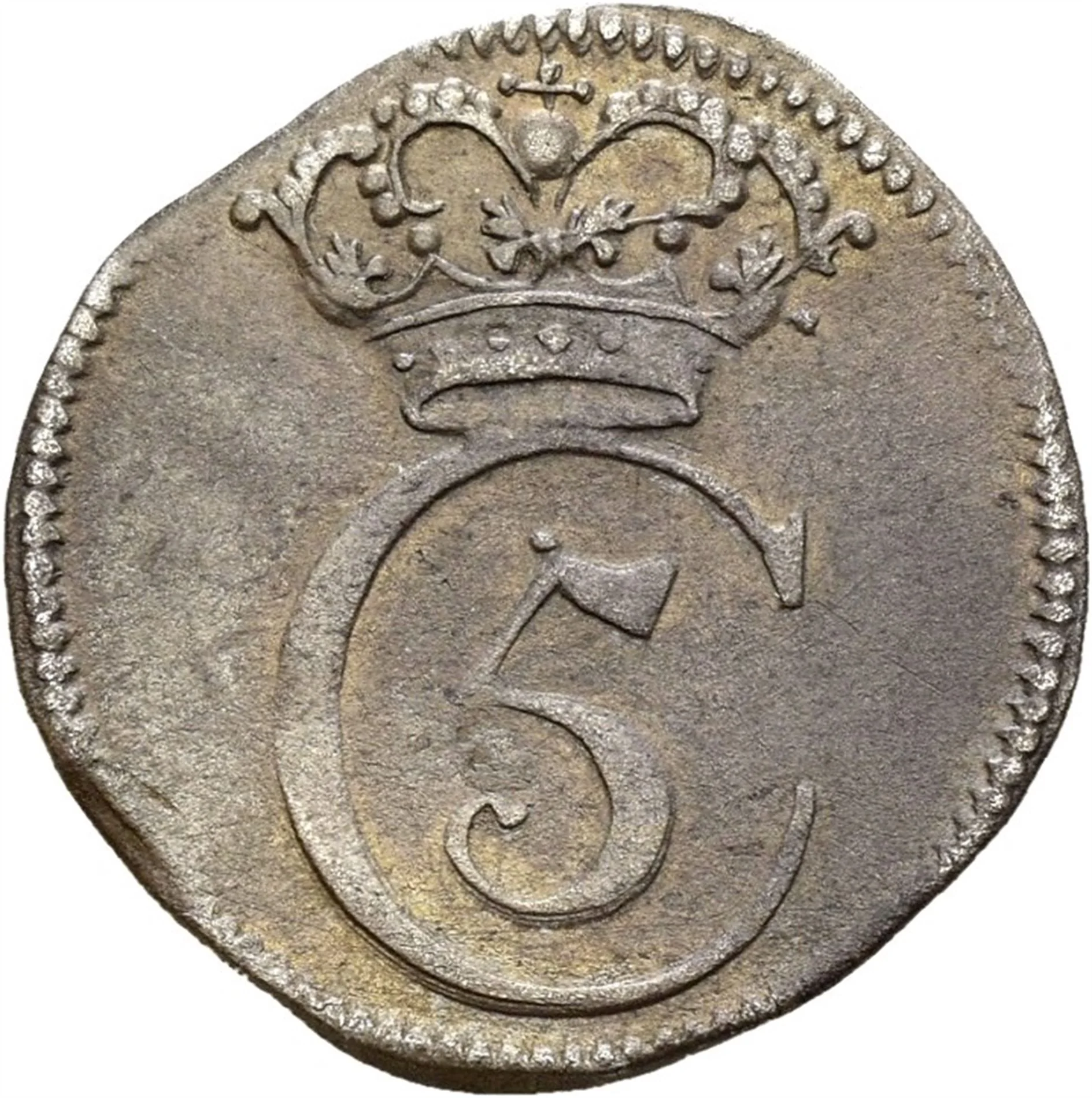
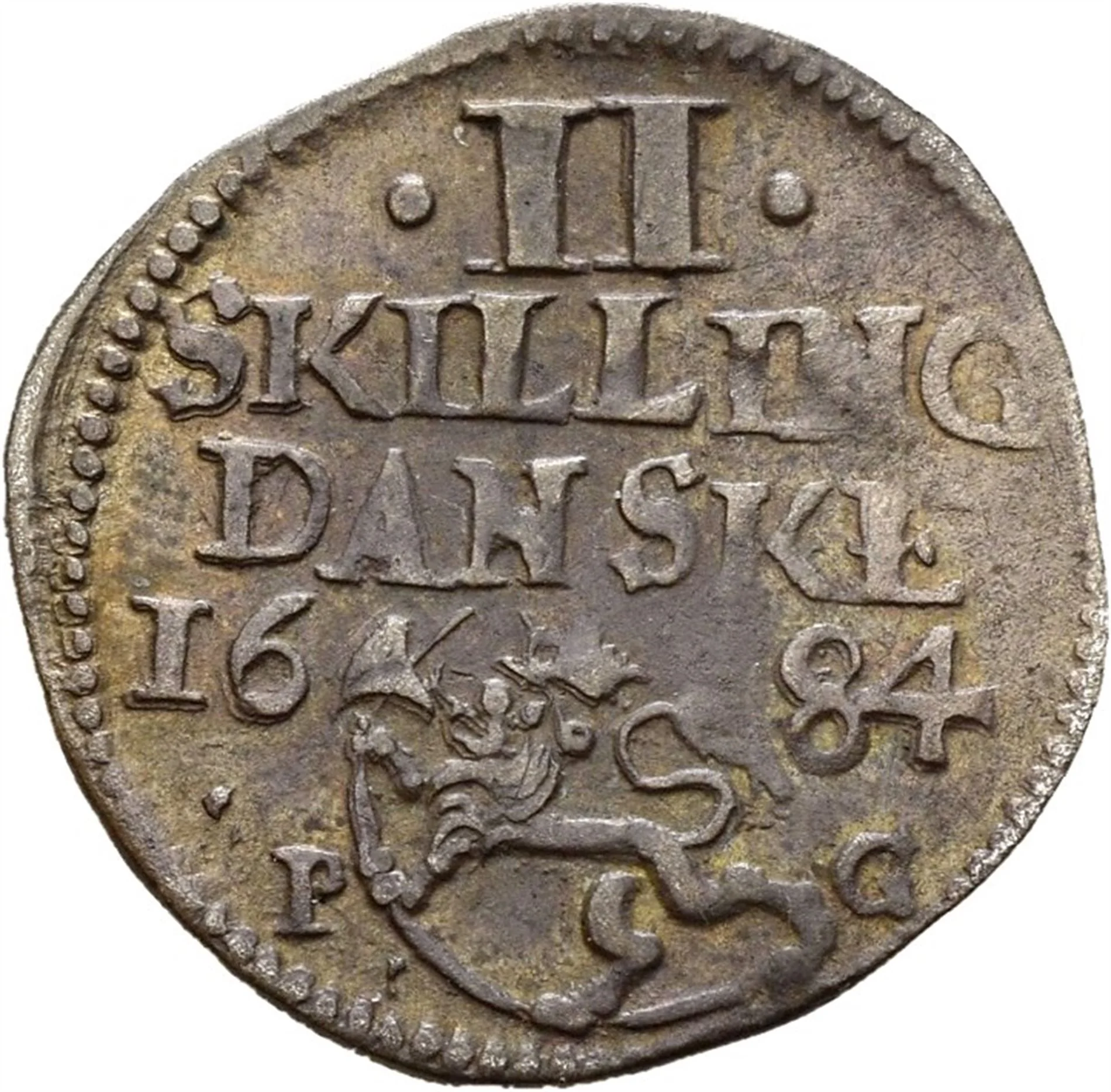
Description:
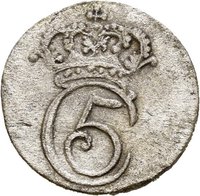
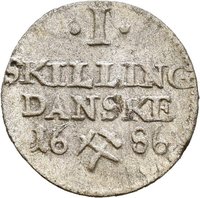
Value and date on four lines.
Crowned lion with axe divides date and mintmaster initials.
Beaded rim.
Crowned lion with axe divides date and mintmaster initials.
Beaded rim.
Inscription:
·II·
SKILLING
DANSKE
16 84
P G
SKILLING
DANSKE
16 84
P G
Script: Latin
Edge
Mints
| Name | Mark |
|---|---|
| Christiania | — |
Mintings
| Year | Mint Mark | Mintage | Quality | Collection |
|---|---|---|---|---|
| 1684 | — | 214,000 | ||
| 1685 | — | 586,000 | ||
| 1686 | — | 231,000 |
Historical background
In 1684, Norway was part of the dual monarchy of Denmark-Norway, and its currency situation was characterized by instability and a chronic shortage of sound coinage. The primary currency was the Danish rigsdaler, but the monetary system was complex, with a parallel system of skilling and mark, where 1 rigsdaler = 6 mark = 96 skilling. A significant problem was the widespread circulation of underweight and debased coins, alongside a flood of foreign coins, particularly from the Netherlands and Germany, which complicated trade and eroded trust in the currency's value. The state's frequent attempts to manipulate the value of coins to generate seigniorage revenue only worsened the confusion and led to Gresham's Law in practice, where "bad money drove out the good," as people hoarded full-weight coins.
This instability was exacerbated by Norway's specific economic position. As a realm dependent on exporting raw materials like timber, fish, and metals, it required a reliable medium of exchange for both domestic transactions and international trade. The poor currency situation hindered commerce and created practical difficulties for merchants, artisans, and farmers alike. Prices were often negotiated in a theoretical "bank money" or according to the silver content of coins, as the face value of circulating coins did not match their intrinsic metal worth, leading to frequent disputes and economic friction.
The year 1684 itself fell within a period of ongoing, but largely ineffective, monetary reforms initiated by the absolute monarch, King Christian V. While a major currency regulation would be attempted in 1686, the situation in 1684 remained one of transition and disorder. The government in Copenhagen struggled to impose a uniform monetary standard across the entire dual monarchy, and Norway, as the more distant partner, often suffered from a lack of adequate coin supply and the consequences of decisions made primarily with Danish interests in mind. Thus, the currency landscape was one of official policy clashing with the messy reality of a fragmented and unreliable circulating medium.
This instability was exacerbated by Norway's specific economic position. As a realm dependent on exporting raw materials like timber, fish, and metals, it required a reliable medium of exchange for both domestic transactions and international trade. The poor currency situation hindered commerce and created practical difficulties for merchants, artisans, and farmers alike. Prices were often negotiated in a theoretical "bank money" or according to the silver content of coins, as the face value of circulating coins did not match their intrinsic metal worth, leading to frequent disputes and economic friction.
The year 1684 itself fell within a period of ongoing, but largely ineffective, monetary reforms initiated by the absolute monarch, King Christian V. While a major currency regulation would be attempted in 1686, the situation in 1684 remained one of transition and disorder. The government in Copenhagen struggled to impose a uniform monetary standard across the entire dual monarchy, and Norway, as the more distant partner, often suffered from a lack of adequate coin supply and the consequences of decisions made primarily with Danish interests in mind. Thus, the currency landscape was one of official policy clashing with the messy reality of a fragmented and unreliable circulating medium.
✨ Legendary