

½ Cruzado – Portugal
Portugal
Context
Material
Diameter: 32 mm
Weight: 11.5 g
Silver weight: 10.54 g
Shape: Irregular round
Composition: 91.66% Silver
Magnetic: No
Technique: Hammered
References
KM: #Click to copy to clipboard51
Numista: #97845
Value
Bullion value: $30.49
Obverse
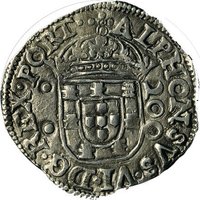
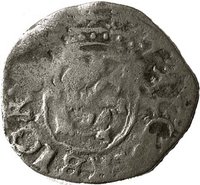
Description:
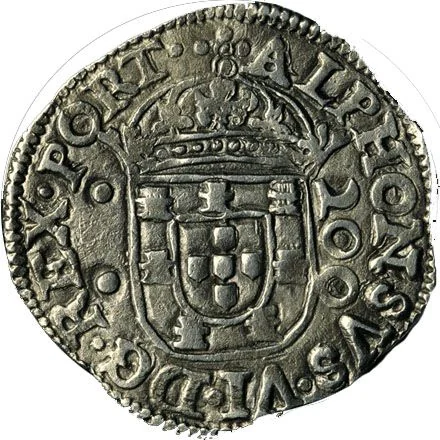
Crowned Arms left, value 200 right. ":" indicates Two Tostões (2x100 Réis).
Inscription:
ALPHONSVS VI REX PORT
.. / 200
.. / 200
Script: Latin
Reverse
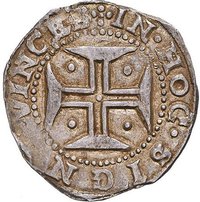
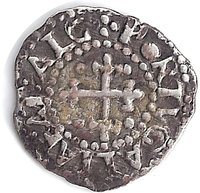
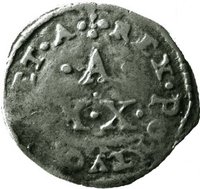
Description:
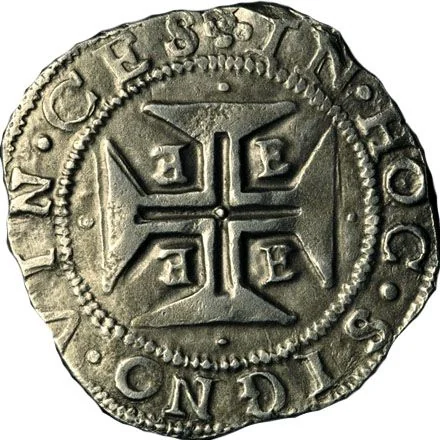
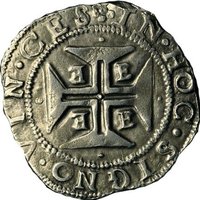
Military Order Cross with an "E" at each angle.
Inscription:
IN HOC SIGNO VINCES
E | E
E | E
E | E
E | E
Script: Latin
Edge
Mints
| Name | Mark |
|---|---|
| Ebora, Lusitania | EEEE |
Mintings
| Year | Mint Mark | Mintage | Quality | Collection |
|---|---|---|---|---|
| — | EEEE | — |
Historical background
In 1656, Portugal's currency situation was one of profound crisis and transition, deeply intertwined with its struggle for independence. Following the restoration of the monarchy in 1640 after six decades of Iberian Union with Spain, King João IV faced the monumental task of rebuilding a sovereign state. This effort was financially crippled by a near-constant state of war with a far richer Spain, which drained the treasury and disrupted trade with Portugal's lucrative overseas empire. To fund the military, the crown resorted to severe fiscal measures, including heavy taxation, confiscations, and the debasement of coinage, which eroded public trust and sparked rampant inflation.
The primary circulating coins were the real (plural réis), but the most significant unit of account was the milréis (1,000 réis). The pressing need for revenue led to the minting of coins with reduced precious metal content, a practice that devalued the currency. Most notably, the silver cruzado, a staple of Portuguese commerce, saw its intrinsic value plummet as its silver content was systematically lowered. This debasement, combined with the influx of lower-quality foreign coins and counterfeit money, created a chaotic monetary environment where the face value of coins bore little relation to their actual metal worth, harming both domestic commerce and international exchange.
This instability occurred against a backdrop of broader economic strain. The war hampered access to silver from Spanish America and disrupted the flow of sugar, tobacco, and other colonial goods that were vital for Portugal's balance of payments. While the discovery of gold in Brazil was on the horizon, its substantial impact would not be felt for another few decades. Consequently, in 1656, the Portuguese monetary system was characterized by a weak and unreliable coinage, inflationary pressures, and a crown desperately seeking financial solutions to secure the nation's fragile independence, setting the stage for future reforms that would later be fueled by Brazilian gold.
The primary circulating coins were the real (plural réis), but the most significant unit of account was the milréis (1,000 réis). The pressing need for revenue led to the minting of coins with reduced precious metal content, a practice that devalued the currency. Most notably, the silver cruzado, a staple of Portuguese commerce, saw its intrinsic value plummet as its silver content was systematically lowered. This debasement, combined with the influx of lower-quality foreign coins and counterfeit money, created a chaotic monetary environment where the face value of coins bore little relation to their actual metal worth, harming both domestic commerce and international exchange.
This instability occurred against a backdrop of broader economic strain. The war hampered access to silver from Spanish America and disrupted the flow of sugar, tobacco, and other colonial goods that were vital for Portugal's balance of payments. While the discovery of gold in Brazil was on the horizon, its substantial impact would not be felt for another few decades. Consequently, in 1656, the Portuguese monetary system was characterized by a weak and unreliable coinage, inflationary pressures, and a crown desperately seeking financial solutions to secure the nation's fragile independence, setting the stage for future reforms that would later be fueled by Brazilian gold.
Series: 1656 Portugal circulation coins
✨ Legendary