Logo Title
obverse
reverse
Katz Coins Notes & Supplies Corp.

4 Maravedis – Kingdom of Navarre

Spain
Context
Years: 1608–1621
Country: Spain Country flag
Ruler: Philip V
Currency:
Demonetized: Yes
Material
Diameter: 22 mm
Weight: 3.9 g
Composition: Copper
Magnetic: No
Technique: Hammered
Alignment: Coin alignment
Obverse
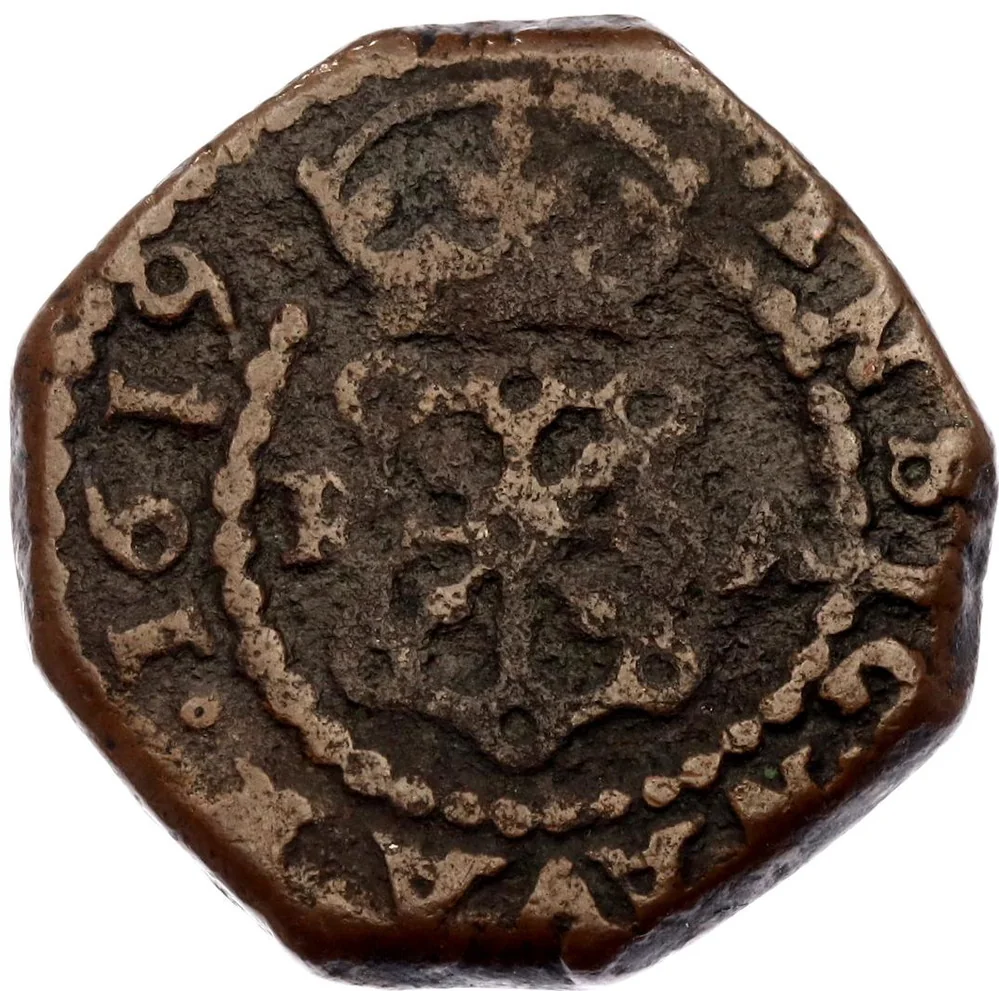
OBVERSE ↑
flip
Reverse
REVERSE ↓
References
KM: #Click to copy to clipboard6
Numista: #97141

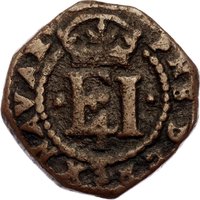
Obverse

Description:
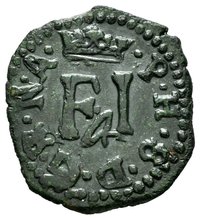
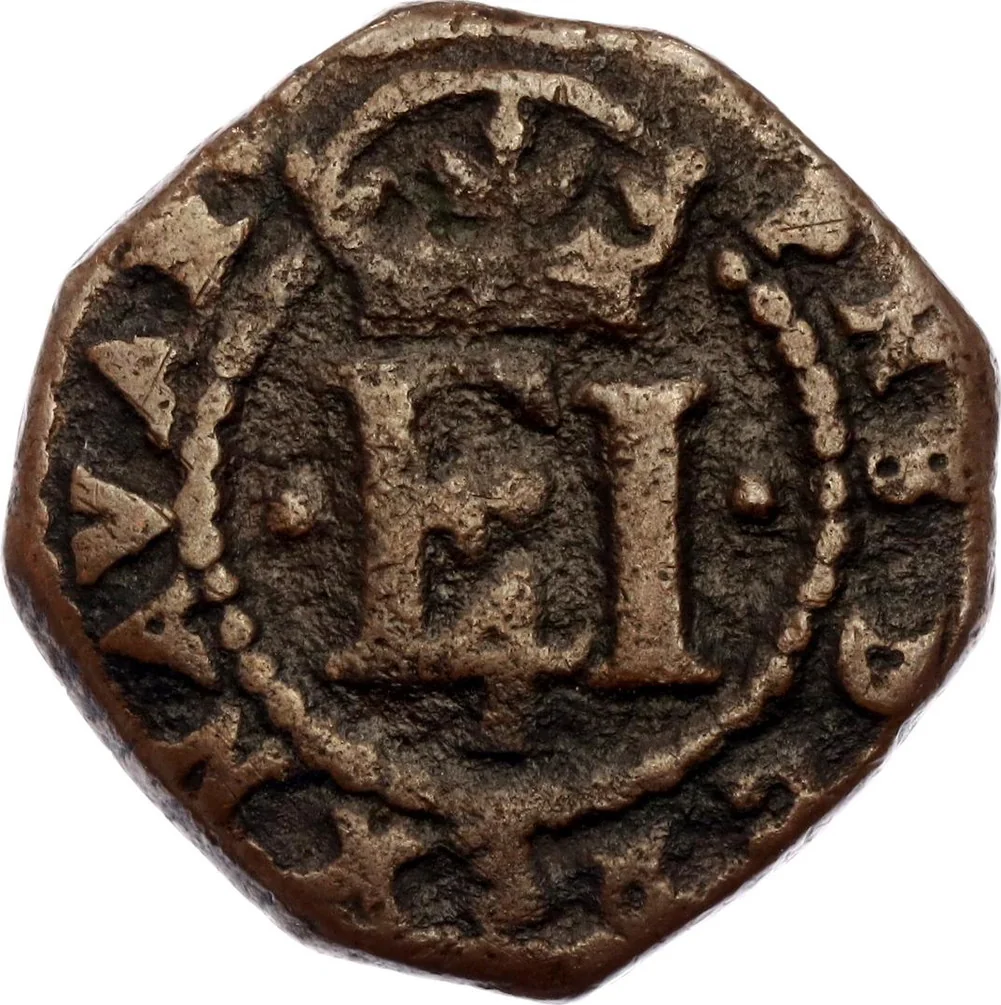
FI monogram crowned, value within inner circle, titles of Philip III.
Inscription:
PHS D G REX NA
Script: Latin

Reverse

Description:
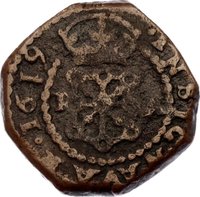
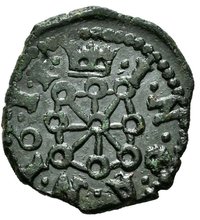
Crowned arms within inner circle.
Inscription:
INS A NA 1619
Script: Latin

Edge

Mints

NameMark
Pamplona

Mintings

YearMint MarkMintageQualityCollection
1608
1609
1610
1611
1611PA
1612PA
1613PA
1614PA
1615P
1615PA
1616PA
1617PA
1618
1618PA
1619PA
1620PA
1621PA

Historical background

In 1608, the Kingdom of Navarre existed as a distinct political entity with its own monetary system, but its currency situation was deeply entangled with that of its larger neighbor, France. Since 1285, the monarchs of Navarre had also been Counts of Champagne and, later, Kings of France. This personal union meant that, in practice, French coinage circulated widely within Navarre, especially the silver écu and various livre tournois denominations. However, Navarre retained the right to mint its own coins at its mints in Pau and Saint-Palais, issuing local liards (copper coins) and occasional silver issues, often bearing the names and heraldry of the joint sovereigns, King Henry III of Navarre (who was also Henry IV of France) and his queen, Marie de' Medici.

The monetary landscape was one of complexity and debasement, reflecting broader European trends. The ongoing costs of the French Wars of Religion, which had only recently concluded with the Edict of Nantes in 1598, had strained royal finances. To raise revenue, monarchs frequently engaged in currency manipulation, reducing the precious metal content in coins while maintaining their face value. This led to inflationary pressures and a confusing mix of old, full-weight coins and new, lighter ones circulating simultaneously. In Navarre, this meant that transactions often required careful assessment of a coin's actual metal value, not just its stamped denomination.

Furthermore, the situation was on the cusp of significant change. Henry IV was actively working to stabilize French finances, a project that would indirectly affect Navarre. His assassination in 1610 would ultimately lead to Navarre's full annexation into the Kingdom of France in 1620 under his son, Louis XIII. The year 1608 thus represents a late chapter in Navarre's independent monetary history—a period of hybrid circulation, where local coinage symbolized lingering sovereignty, but the pervasive use of French currency foreshadowed the kingdom's impending political and monetary assimilation.
💎 Very Rare