

3 Groschens – Duchy of Jägerndorf
Context
Year: 1612
Country: Bohemia
Issuer: Duchy of Jägerndorf
Ruler: John George
Currency:
Demonetized: Yes
References
KM: #Click to copy to clipboard46
Numista: #120885
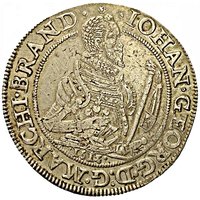
Obverse
Description:
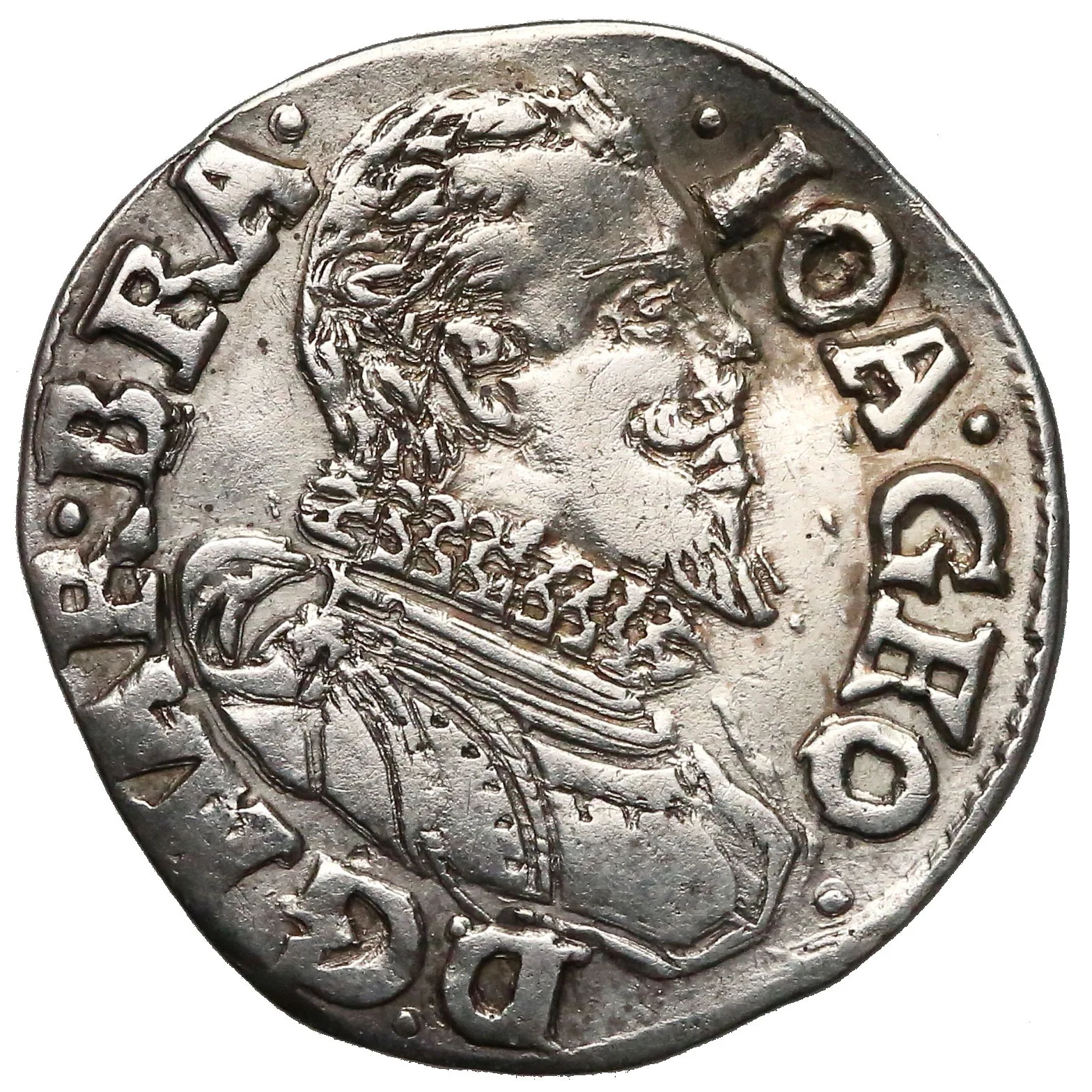
Right bust, legend encircling.
Inscription:
· IOA ˙ GEO · · D : G · MAR · BR ·
Script: Latin
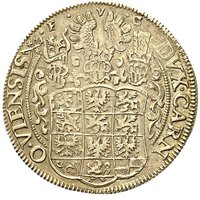
Reverse
Inscription:
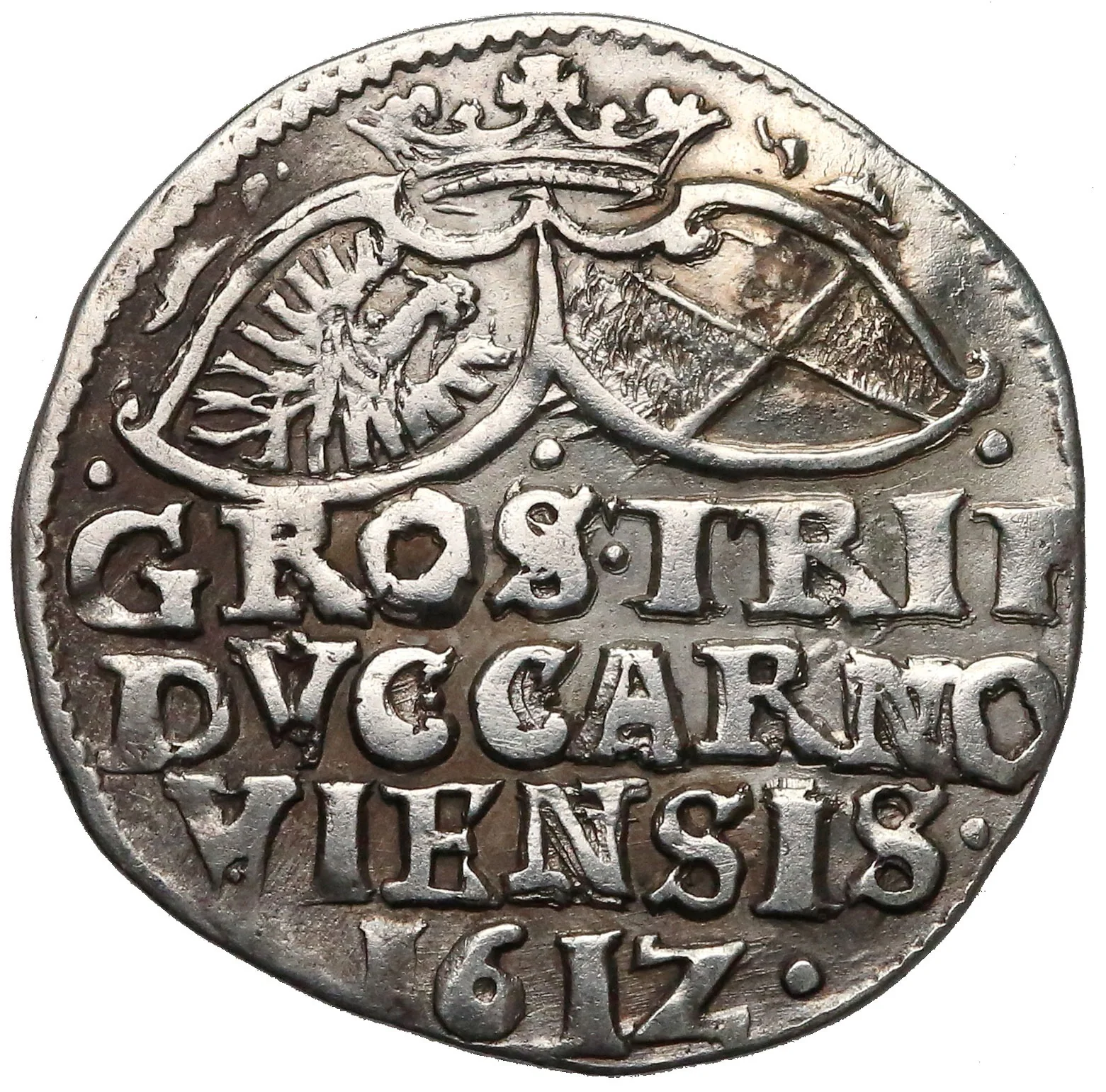
GROS · TRIP DVC CARNO VIENSIS
· 161Z ·
· 161Z ·
Script: Latin
Edge
Mints
| Name | Mark |
|---|---|
| Krnov | — |
Mintings
| Year | Mint Mark | Mintage | Quality | Collection |
|---|---|---|---|---|
| 1612 | — | — |
Historical background
In 1612, the Duchy of Jägerndorf, a Silesian territory under the rule of the Hohenzollern prince Johann Georg von Brandenburg, was deeply entangled in the complex and unstable monetary system of the Holy Roman Empire. The region operated within the sprawling network of the Reichsmünzordnung (Imperial Coinage Ordinance), but these regulations were widely ignored by the numerous minting authorities across the Empire. Consequently, Jägerndorf’s economy suffered from a flood of debased coinage from neighboring states, leading to severe inflation and a loss of confidence in circulating currency. Good, full-weight coins were hoarded or melted down, a classic example of Gresham’s Law, leaving daily commerce to be conducted with unreliable, low-quality money that hampered trade and created economic uncertainty for both merchants and peasants.
The local response was typical of the era: the ducal mint likely engaged in competitive debasement itself to generate seigniorage revenue for the prince’s treasury and to ensure that its own coins remained in local circulation. This created a vicious cycle of devaluation. The situation was further complicated by Jägerndorf’s political position; it was a Bohemian fief, and thus also influenced by the monetary policies of the Kingdom of Bohemia and its powerful Groschen and Thaler coins. The simultaneous circulation of imperial, Bohemian, and various regional German coins made financial transactions fraught with difficulty, requiring constant exchange and valuation.
This monetary chaos was not merely an economic issue but a symptom of the profound political fragmentation of the Empire on the eve of the Thirty Years' War. Without a strong central authority to enforce monetary standards, territories like Jägerndorf were left to navigate a dysfunctional system. The currency instability of 1612 therefore reflected the broader decay of imperial institutions and foreshadowed the much greater economic devastation that would engulf the region just six years later with the outbreak of a continent-wide conflict, which would further ruin Silesia’s financial and monetary systems.
The local response was typical of the era: the ducal mint likely engaged in competitive debasement itself to generate seigniorage revenue for the prince’s treasury and to ensure that its own coins remained in local circulation. This created a vicious cycle of devaluation. The situation was further complicated by Jägerndorf’s political position; it was a Bohemian fief, and thus also influenced by the monetary policies of the Kingdom of Bohemia and its powerful Groschen and Thaler coins. The simultaneous circulation of imperial, Bohemian, and various regional German coins made financial transactions fraught with difficulty, requiring constant exchange and valuation.
This monetary chaos was not merely an economic issue but a symptom of the profound political fragmentation of the Empire on the eve of the Thirty Years' War. Without a strong central authority to enforce monetary standards, territories like Jägerndorf were left to navigate a dysfunctional system. The currency instability of 1612 therefore reflected the broader decay of imperial institutions and foreshadowed the much greater economic devastation that would engulf the region just six years later with the outbreak of a continent-wide conflict, which would further ruin Silesia’s financial and monetary systems.
✨ Legendary