

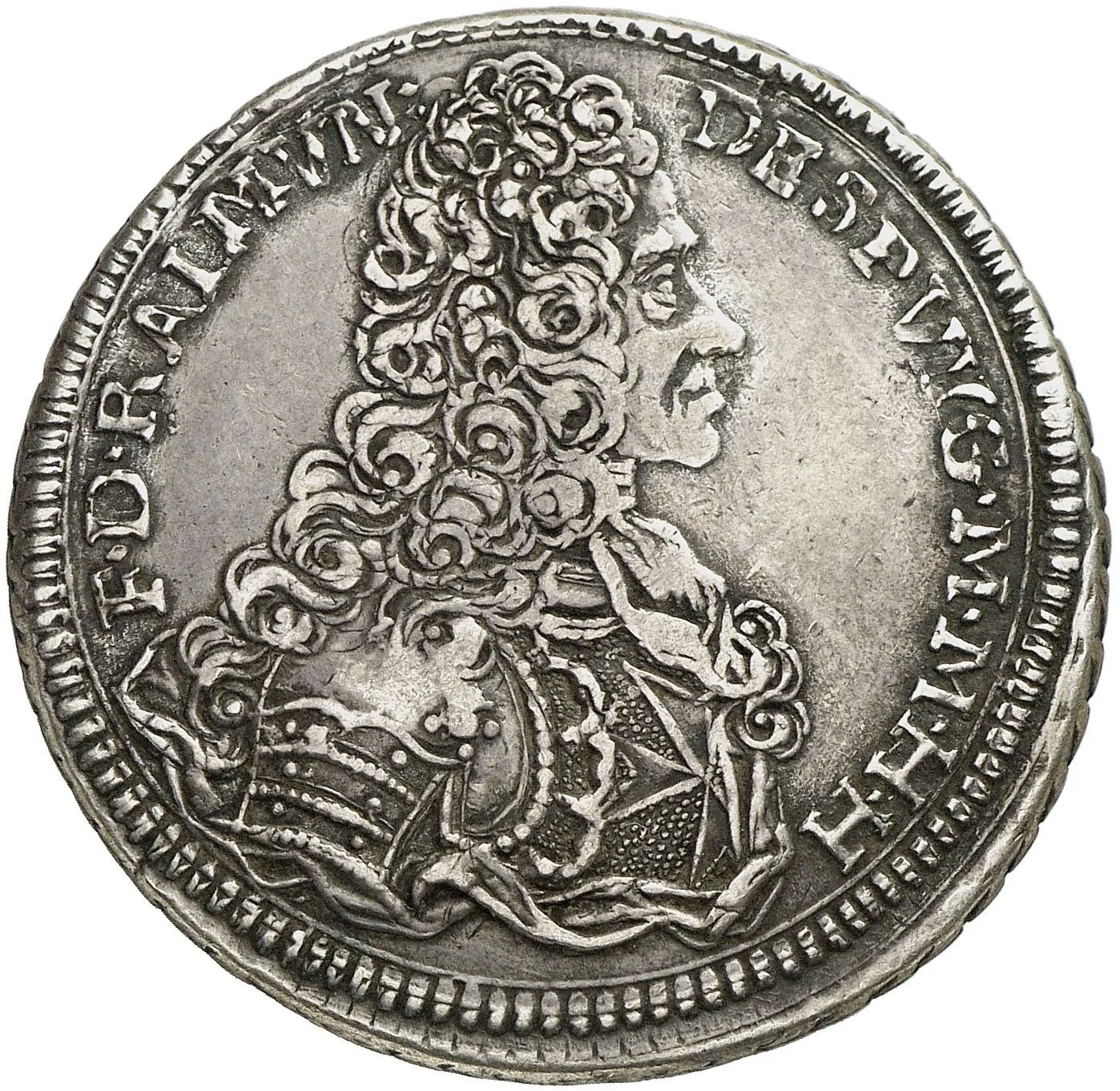
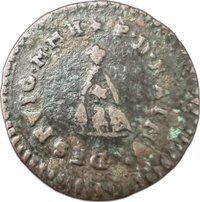
Obverse
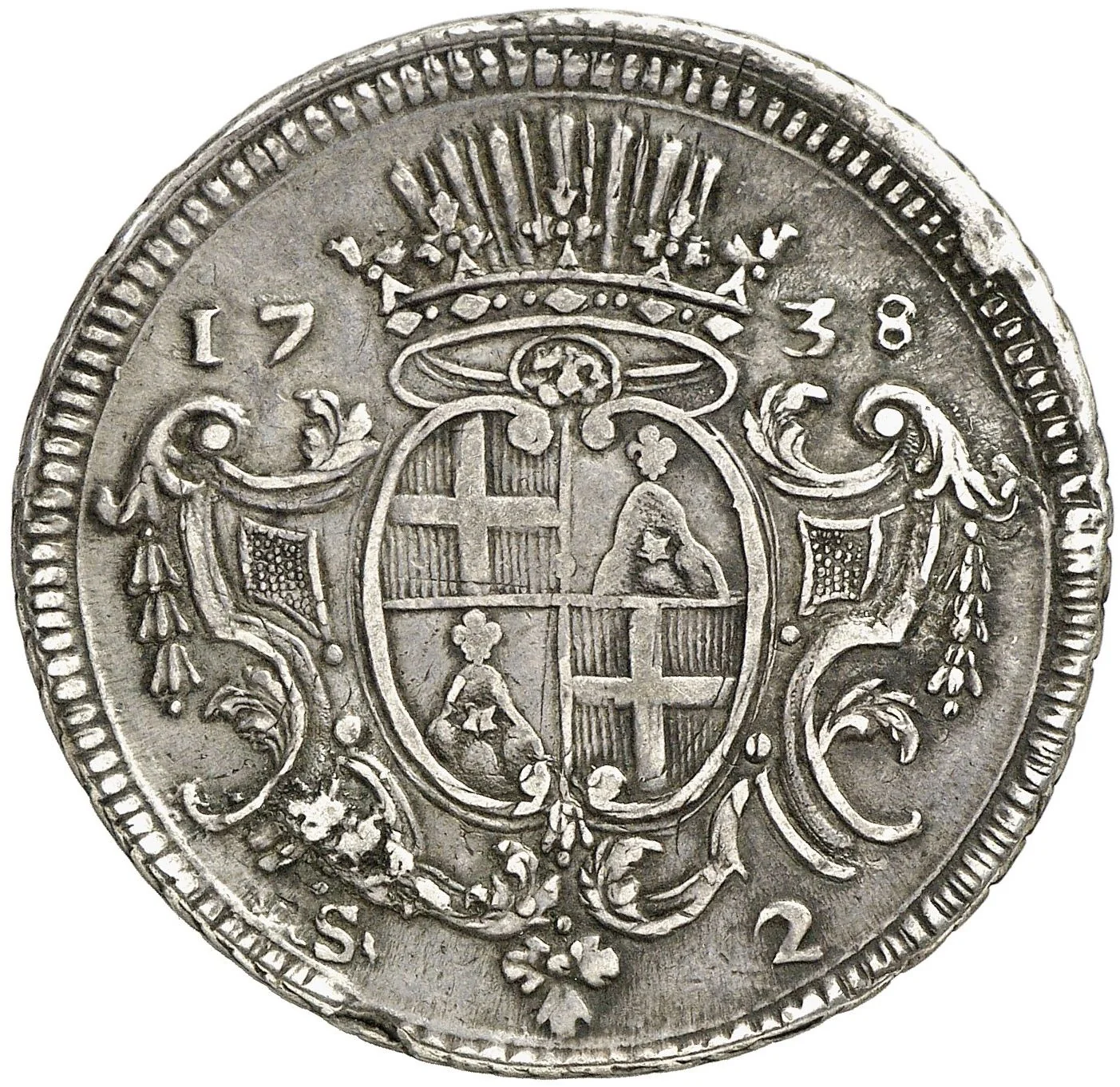
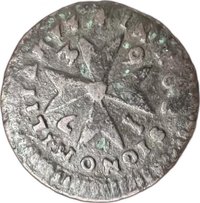
Reverse
Description:
Shield in cartouche with tassels, date above, value below.
Inscription:
17 38
S. 2
S. 2
Script: Latin
Edge
Mintings
| Year | Mint Mark | Mintage | Quality | Collection |
|---|---|---|---|---|
| 1738 | — | — |
Historical background
In 1738, Malta's currency situation was a complex and challenging reflection of its strategic position and political allegiance. The islands, ruled by the Sovereign Military Order of St. John, were a bustling Mediterranean hub for trade, corsairing, and navigation. This brought a vast array of foreign coins into circulation, primarily Spanish silver pieces of eight and their fractional reali coins, which served as the de facto standard for large transactions. However, a chronic shortage of official small change for everyday commerce plagued the local economy, leading to significant inconvenience for the populace.
The Order attempted to address this by minting its own copper grani and silver scudi, but these issues were insufficient in quantity and often mistrusted. Consequently, a chaotic multiplicity of coins from Spain, Italy, France, and the Ottoman sphere circulated simultaneously, their values fluctuating based on metal content and wear. To bring order, the Order's Magistral Camera del Patrimonio (Treasury) periodically issued official bando (edicts) that fixed the exchange rates for dozens of these foreign coins against the local scudo. These proclamations were essential for legal tender but were a reactive measure to a persistently unstable system.
Underlying this monetary disorder was a deeper economic tension. The Knights, reliant on revenues from their European estates (langues), were often fiscally strained, limiting their ability to inject sufficient quality coinage. Furthermore, the widespread clipping and counterfeiting of silver coins eroded trust. Thus, in 1738, Malta's currency landscape was one of imposed official rates attempting to govern a volatile, multi-sourced metallic currency, a system that ultimately burdened local merchants and consumers while hindering smoother economic development.
The Order attempted to address this by minting its own copper grani and silver scudi, but these issues were insufficient in quantity and often mistrusted. Consequently, a chaotic multiplicity of coins from Spain, Italy, France, and the Ottoman sphere circulated simultaneously, their values fluctuating based on metal content and wear. To bring order, the Order's Magistral Camera del Patrimonio (Treasury) periodically issued official bando (edicts) that fixed the exchange rates for dozens of these foreign coins against the local scudo. These proclamations were essential for legal tender but were a reactive measure to a persistently unstable system.
Underlying this monetary disorder was a deeper economic tension. The Knights, reliant on revenues from their European estates (langues), were often fiscally strained, limiting their ability to inject sufficient quality coinage. Furthermore, the widespread clipping and counterfeiting of silver coins eroded trust. Thus, in 1738, Malta's currency landscape was one of imposed official rates attempting to govern a volatile, multi-sourced metallic currency, a system that ultimately burdened local merchants and consumers while hindering smoother economic development.
✨ Legendary