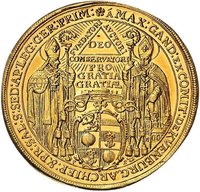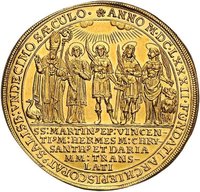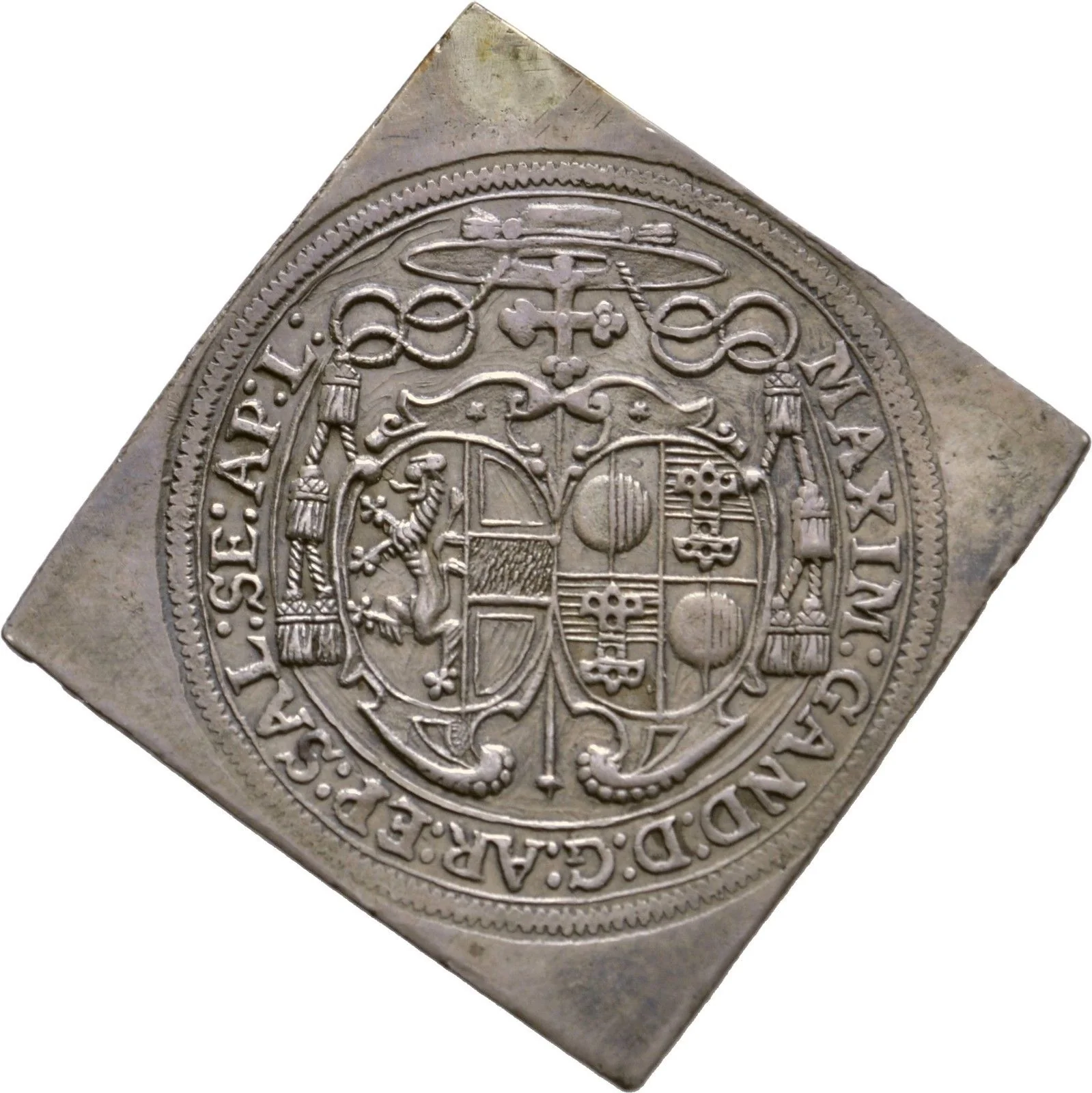
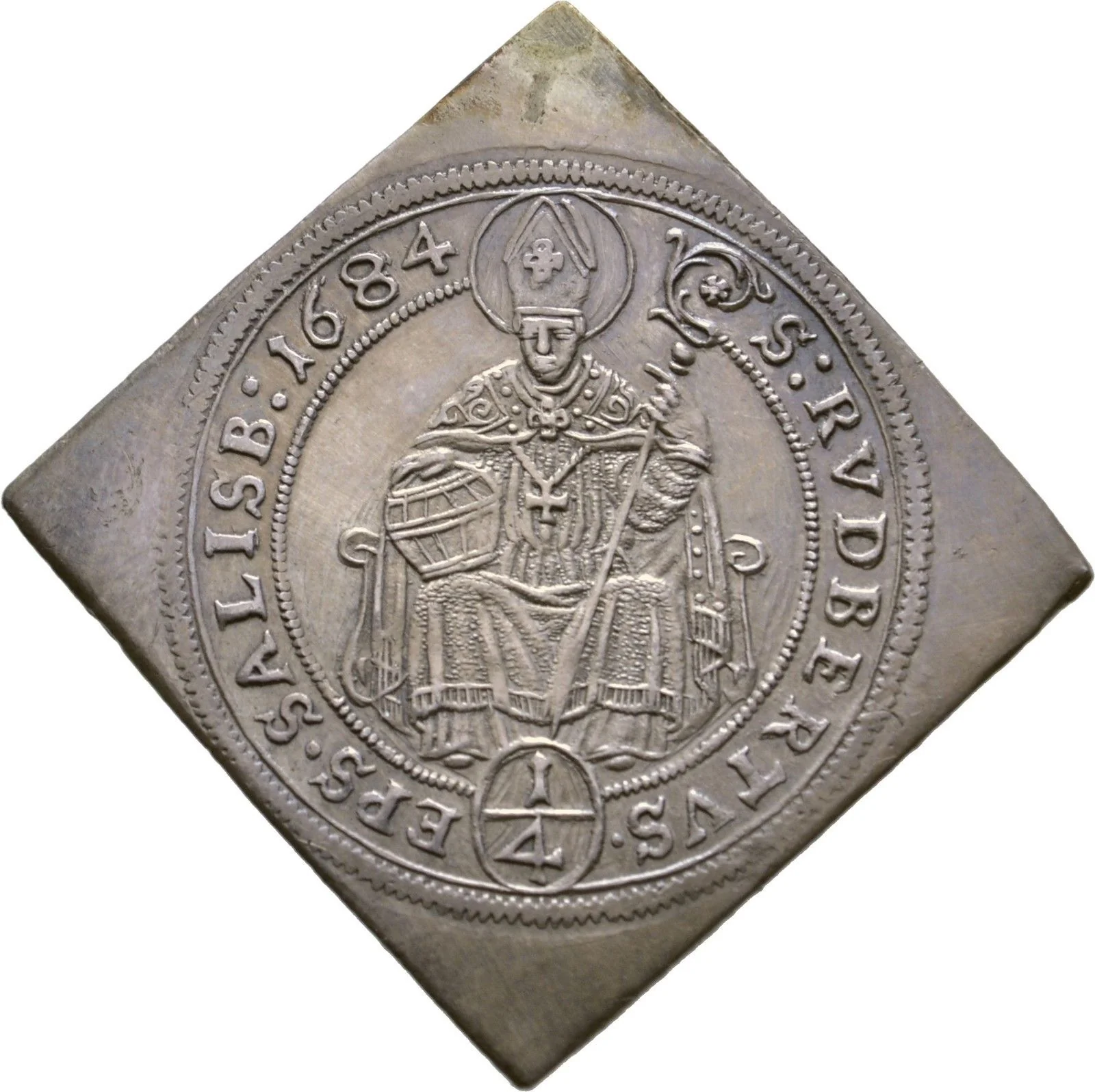
In 1684, the Bishopric of Salzburg operated within the complex and fragmented monetary landscape of the Holy Roman Empire. As an independent ecclesiastical principality, it possessed the right of coinage (
Münzregal), which it exercised through its mint. The primary currency in circulation was the Salzburg
Gulden (florin), which was subdivided into 60
Kreuzer. However, this local coinage coexisted with a plethora of other currencies, including Imperial Thalers, regional coinage from neighboring states like Bavaria, and even older, debased coins. This multiplicity led to constant challenges in trade and finance, requiring published exchange tables (
Münztafeln) to navigate the varying silver content and values.
The period was marked by the ongoing economic strain of the Great Turkish War (1683-1699), which demanded significant financial resources from Salzburg's Prince-Archbishop Maximilian Gandolf von Kuenburg. While not on the front lines, the principality faced increased military taxation to support the Imperial war effort. This fiscal pressure, common across the Empire, often tempted states to engage in currency debasement—reducing the precious metal content in coins to create more money from the same silver stock. While Salzburg's mint maintained a relatively stable reputation compared to some contemporaries, the temptation and the inflationary pressures of the war era were a constant background concern.
Consequently, the monetary situation in 1684 was one of cautious stability under pressure. The Bishopric's authorities had to carefully manage their coinage to fund princely expenditures and military obligations while maintaining the credibility of their currency for both domestic commerce and cross-border trade. The value of a Salzburg Gulden was not intrinsic but based on its declared silver content relative to other coins, making monetary policy a delicate balancing act between fiscal necessity and economic trust within the wider German monetary circuits.