Logo Title
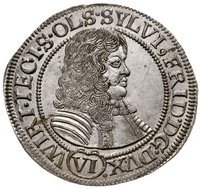
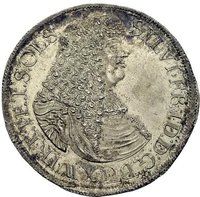
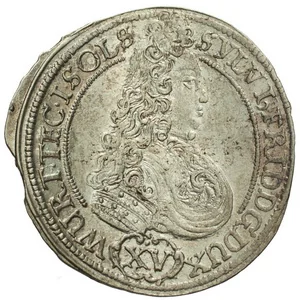
obverse
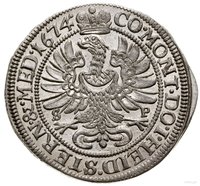
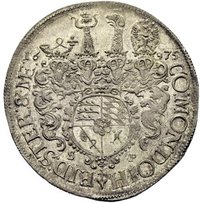
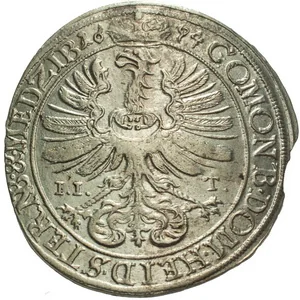
reverse
AUREA Numismatika

15 Kreuzer – Duchy of Württemberg-Oels

Context
Years: 1675–1694
Country: Bohemia
Currency:
Demonetized: Yes
Material
Diameter: 30 mm
Weight: 5.54 g
Silver weight: 5.54 g
Shape: Round
Composition: Silver
Magnetic: No
References
KM: #Click to copy to clipboard14
Numista: #92494
Value
Bullion value: $15.43

Obverse

Description:
Bust right, XV below.
Script: Latin

Reverse

Description:
Silesian eagle in circle, date divided by princely hat in top margin.
Script: Latin

Edge

Mintings

YearMint MarkMintageQualityCollection
1675SP
1676SP
1694IIT

Historical background

In 1675, the Duchy of Württemberg-Oels, a small Silesian territory ruled by a cadet branch of the House of Württemberg, operated within the complex and fragmented monetary landscape of the Holy Roman Empire. The region lacked a unified currency system, leading to a circulation of numerous foreign and domestic coins. Alongside coins minted by the dukes themselves, such as Groschen and Kreuzers, there was a heavy presence of Imperial Talers from larger states, Polish coins due to proximity, and various debased regional issues. This proliferation created chronic problems of exchange rate instability and uncertainty in trade.

The monetary policy of the duchy was heavily influenced by its political and economic context. As a minor state, Württemberg-Oels had limited power to enforce a standard and was often reactive to the monetary policies of its more powerful neighbours, particularly the Habsburg monarchy, which held sovereignty over Silesia. The period was also marked by the aftermath of the Thirty Years' War and ongoing regional conflicts, which placed severe fiscal strain on the ducal treasury. This frequently led to the temptation of debasement—reducing the precious metal content in coins to generate short-term profit—a practice that further eroded confidence in the local currency.

Consequently, the currency situation in 1675 was one of practical inconvenience and economic weakness. Merchants and the populace had to navigate a daily reality of fluctuating values and suspect coinage, hindering commerce. The ducal mint’s output was insufficient to dominate the money supply, making the economy vulnerable to external monetary shocks. This environment underscored the challenges of small-state sovereignty in the Empire, where the right to mint coins did not equate to the power to maintain a stable and trusted monetary system.
Legendary