

50 Shillings – England
United Kingdom
Context


References
KM: #Click to copy to clipboardPn24
Numista: #90252
Obverse
Description:
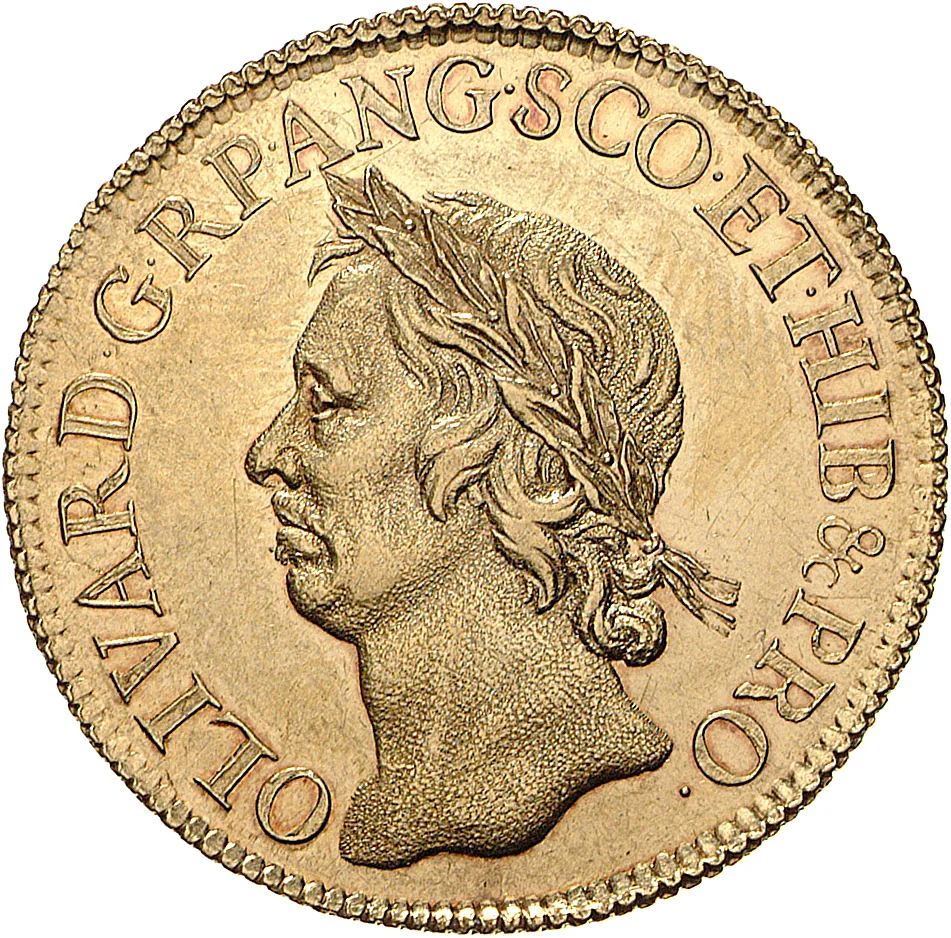
Oliver Cromwell bust, left profile.
Inscription:
OLIVAR · D · G · RP · ANG · SCO · ET · HIB & PRO ·
Script: Latin
Reverse
Edge
Mintings
| Year | Mint Mark | Mintage | Quality | Collection |
|---|---|---|---|---|
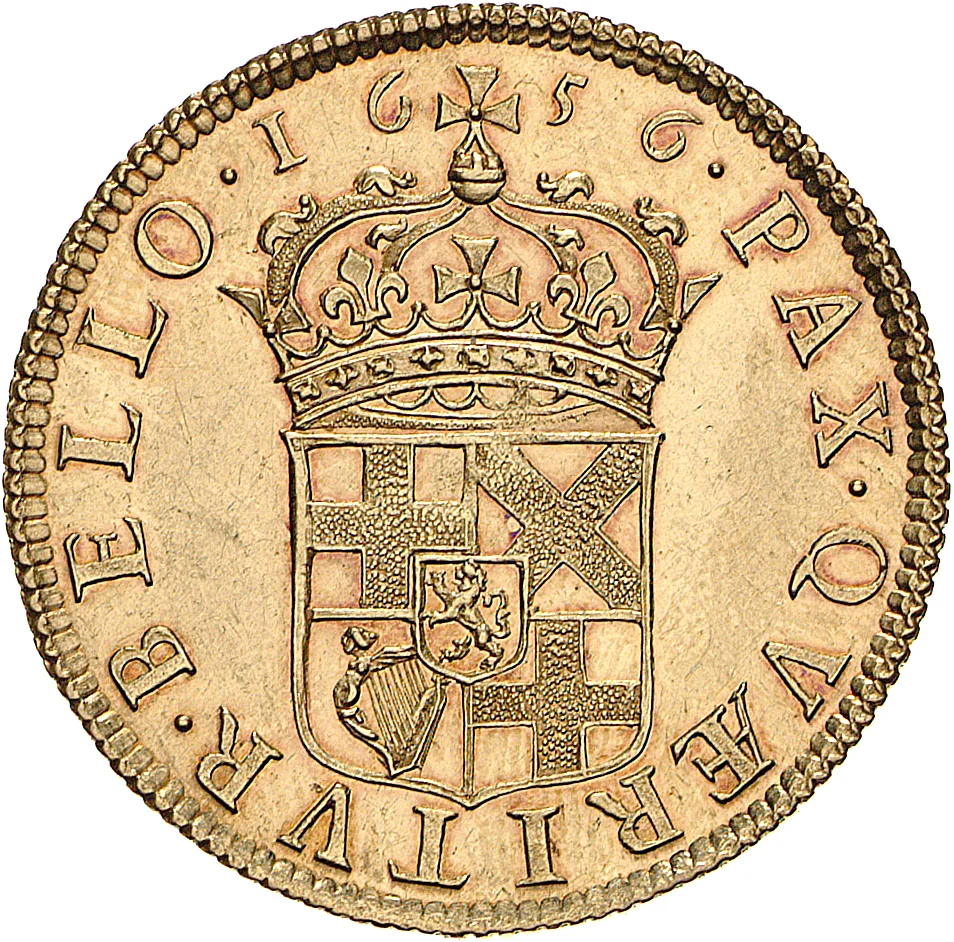
| 1656 | — | — |
Historical background
In 1656, England’s currency system was in a state of significant strain and transition under the Commonwealth, following the English Civil Wars. The government, led by Lord Protector Oliver Cromwell, faced chronic fiscal difficulties, exacerbated by the costs of ongoing wars with the Dutch Republic and Spain. Revenue was insufficient, leading to heavy borrowing and the sale of confiscated Royalist lands. While the pound sterling remained the unit of account, the physical coinage in circulation was notoriously degraded. Worn, clipped, and counterfeit silver coins were widespread, reducing the intrinsic value of the currency and causing inflation, which harmed trade and public confidence.
The root of the coinage problem was the failure to renew the official minting of silver coins for public use for decades. The last major minting had occurred under Elizabeth I, and subsequent monarchs had prioritized profit over currency integrity. By the 1650s, the silver content of many circulating coins was far below their face value. This created a classic "bad money drives out good" (Gresham's Law) scenario, where full-weight coins were hoarded or melted down for bullion, leaving only the poorest specimens in daily use. This debasement disrupted commerce, as merchants became wary, and complicated both tax collection and military provisioning.
Despite recognizing the crisis, the Commonwealth government proved unable to implement a comprehensive recoinage, a task that would only be accomplished after the Restoration in the 1660s. In 1656, proposals for monetary reform were debated, but the state's financial exhaustion and political instability prevented decisive action. Instead, the regime focused on stopgap measures, including enforcing ordinances against clipping and attempting to manage the currency through proclamation. Consequently, the monetary system remained fragile, acting as a persistent drag on the economy and highlighting the broader challenges of governing a fractured nation.
The root of the coinage problem was the failure to renew the official minting of silver coins for public use for decades. The last major minting had occurred under Elizabeth I, and subsequent monarchs had prioritized profit over currency integrity. By the 1650s, the silver content of many circulating coins was far below their face value. This created a classic "bad money drives out good" (Gresham's Law) scenario, where full-weight coins were hoarded or melted down for bullion, leaving only the poorest specimens in daily use. This debasement disrupted commerce, as merchants became wary, and complicated both tax collection and military provisioning.
Despite recognizing the crisis, the Commonwealth government proved unable to implement a comprehensive recoinage, a task that would only be accomplished after the Restoration in the 1660s. In 1656, proposals for monetary reform were debated, but the state's financial exhaustion and political instability prevented decisive action. Instead, the regime focused on stopgap measures, including enforcing ordinances against clipping and attempting to manage the currency through proclamation. Consequently, the monetary system remained fragile, acting as a persistent drag on the economy and highlighting the broader challenges of governing a fractured nation.
✨ Legendary