

1 Mangir – Ottoman Empire
Turkey
Context
Year: 1689
Islamic (Hijri) Year: 1100
Country: Turkey 
Issuer: Ottoman Empire
Ruler: Suleiman II
Currency:
(1327—1687)
Demonetized: Yes
Material
Diameter: 18 mm
Weight: 1.3 g
Shape: Irregular round
Composition: Copper
Magnetic: No
Alignment: Medal alignment
flip
References
KM: #Click to copy to clipboard89
Numista: #89843
Obverse
Description:
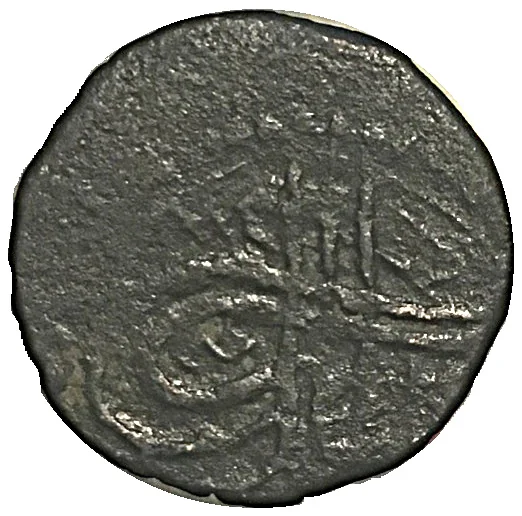
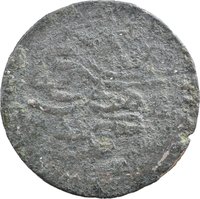
Süleyman II's tughra.
Inscription:
سليمان خان بن ابراهوم خان المظفر دايما
Script: Arabic
Reverse
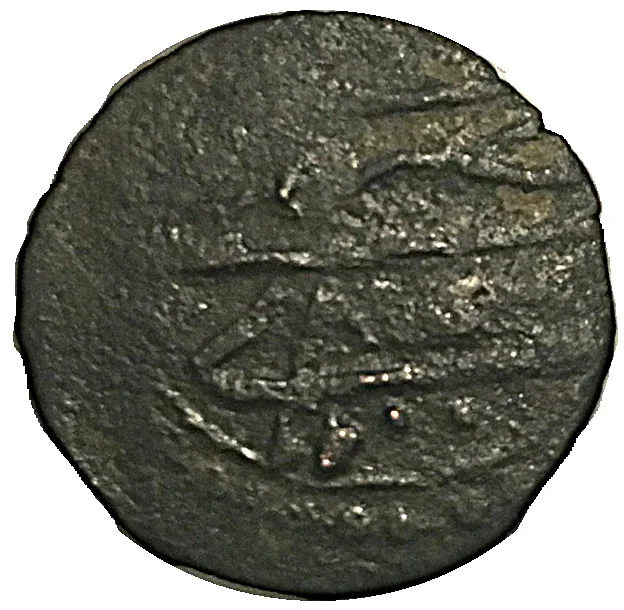
Inscription:
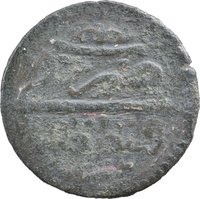
ضرب في
سرای
۱۱۰۰
سرای
۱۱۰۰
Script: Arabic
Edge
Mints
| Name | Mark |
|---|---|
| Bosna / Saraybosna | — |
Mintings
| Year | Mint Mark | Mintage | Quality | Collection |
|---|---|---|---|---|
| 1689 | — | — |
Historical background
In 1689, the Ottoman Empire's currency system was in a state of severe crisis, a direct consequence of prolonged and costly warfare. The Empire was deeply engaged in the Great Turkish War (1683-1699), a disastrous conflict against the Holy League that included the loss of Belgrade and a failed siege of Vienna. To finance these military campaigns, the imperial treasury resorted to the repeated debasement of the primary silver coin, the akçe. By drastically reducing its silver content, the state could mint more coins from the same silver reserves to pay soldiers and officials, but this eroded public trust and triggered rampant inflation, destabilizing the entire economy.
This monetary degradation was not new but had reached a critical point. A century of debasements had seen the silver content of the akçe fall by approximately 85% since the 1580s. By 1689, the coin was so diminished that it was largely supplanted in large-scale trade and state finance by the foreign kuruş (a European thaler or "lion dollar") and the gold sultani. This created a fractured monetary environment where daily transactions in akçe were plagued by uncertainty, while long-distance trade and treasury accounts relied on more stable foreign and high-value coins, undermining the Sultan's monetary sovereignty.
The situation demanded urgent reform, which would culminate just a few years later under the leadership of Grand Vizier Çelebi Ismail Pasha. In 1690, he initiated a comprehensive recoinage, introducing a new, pure silver akçe and a new copper mangır to restore confidence. However, the reform of 1689-1690 was only partially successful; while it temporarily stabilized the currency, the underlying fiscal pressures of war and a decentralized minting system meant that the Empire would continue to struggle with monetary instability throughout the 18th century.
This monetary degradation was not new but had reached a critical point. A century of debasements had seen the silver content of the akçe fall by approximately 85% since the 1580s. By 1689, the coin was so diminished that it was largely supplanted in large-scale trade and state finance by the foreign kuruş (a European thaler or "lion dollar") and the gold sultani. This created a fractured monetary environment where daily transactions in akçe were plagued by uncertainty, while long-distance trade and treasury accounts relied on more stable foreign and high-value coins, undermining the Sultan's monetary sovereignty.
The situation demanded urgent reform, which would culminate just a few years later under the leadership of Grand Vizier Çelebi Ismail Pasha. In 1690, he initiated a comprehensive recoinage, introducing a new, pure silver akçe and a new copper mangır to restore confidence. However, the reform of 1689-1690 was only partially successful; while it temporarily stabilized the currency, the underlying fiscal pressures of war and a decentralized minting system meant that the Empire would continue to struggle with monetary instability throughout the 18th century.
💎 Very Rare