

1 Denga – Russian Empire
Russia
Context

Material
References
KM: #Click to copy to clipboard116
Numista: #89434
Obverse
Description:
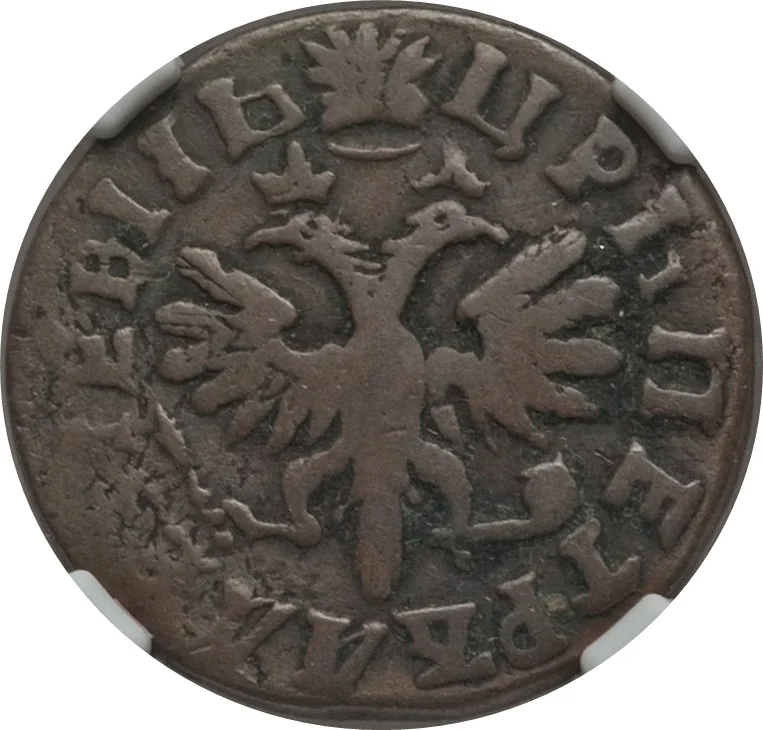
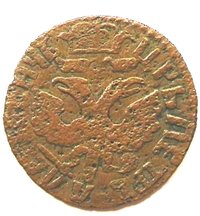
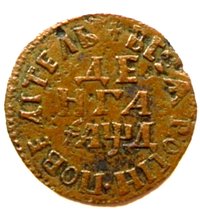
Double-headed crowned eagle in circle, surrounded by Peter I's name and title.
Inscription:
ЦРЬ ПЕТРЪ АЛЕЗIЕВIЧЪ
Script: Cyrillic
Reverse
Edge
Plain
Mints
| Name | Mark |
|---|---|
| Kadashevsky Mint | — |
Mintings
| Year | Mint Mark | Mintage | Quality | Collection |
|---|---|---|---|---|
| 1705 | — | — | ||
| 1712 | — | — | ||
| 1713 | — | — | ||
| 1714 | — | — | ||
| 1715 | — | — | ||
| 1716 | — | — | ||
| 1717 | — | — | ||
| 1718 | — | — |
Historical background
By 1705, the currency situation in the Russian Empire was one of profound crisis, directly driven by the immense financial demands of the Great Northern War against Sweden. Tsar Peter I, having suffered a major defeat at Narva in 1700, was engaged in a massive and expensive military modernization. To fund his new army, navy, and the ongoing war effort, the state treasury resorted to the most readily available tool: the debasement of the silver coinage. Starting in 1701, mints began striking coins with a progressively lower silver content, particularly the denga and polushka, while introducing new copper coins of higher face value.
This policy created a disastrous dual-currency system. Older, high-silver coins from pre-1701, like the kopeck, were hoarded by the population or melted down for their intrinsic metal value, disappearing from circulation. Meanwhile, the new, inferior coins flooded the market, leading to rapid inflation and a collapse in public trust. The state exacerbated the problem by demanding tax payments in the old, full-weight silver coins while paying soldiers and suppliers in the new, debased currency. This effectively amounted to a hidden war tax, transferring wealth from the populace to the state but at the cost of economic stability.
Consequently, by 1705, internal trade was severely disrupted, prices were soaring, and popular discontent was growing. The monetary chaos reflected the immense strain of Peter the Great's transformative ambitions, forcing the empire into a precarious financial experiment. The situation would eventually compel a more systematic, though still challenging, currency reform in the following decades, but in 1705, the empire's finances were defined by inflationary crisis and ad-hoc measures to sustain a protracted war.
This policy created a disastrous dual-currency system. Older, high-silver coins from pre-1701, like the kopeck, were hoarded by the population or melted down for their intrinsic metal value, disappearing from circulation. Meanwhile, the new, inferior coins flooded the market, leading to rapid inflation and a collapse in public trust. The state exacerbated the problem by demanding tax payments in the old, full-weight silver coins while paying soldiers and suppliers in the new, debased currency. This effectively amounted to a hidden war tax, transferring wealth from the populace to the state but at the cost of economic stability.
Consequently, by 1705, internal trade was severely disrupted, prices were soaring, and popular discontent was growing. The monetary chaos reflected the immense strain of Peter the Great's transformative ambitions, forcing the empire into a precarious financial experiment. The situation would eventually compel a more systematic, though still challenging, currency reform in the following decades, but in 1705, the empire's finances were defined by inflationary crisis and ad-hoc measures to sustain a protracted war.
💎 Extremely Rare