

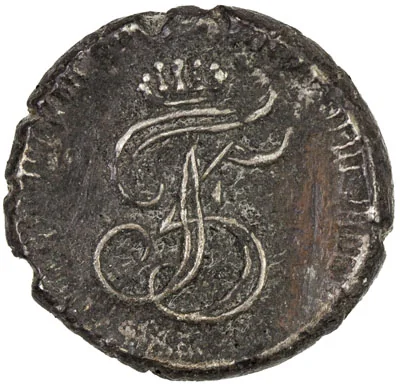
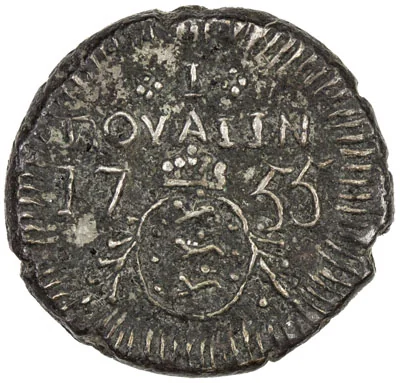
1 royalin – Danish India
Add to wishlist
India
Context
Year: 1755
Country: India
Issuer: Danish India
Ruler: Frederick V
Currency:
(1730—1818)
Demonetized: Yes
Material
References
KM: #
Numista: #119838
Value
Bullion value: $6.70
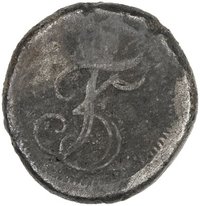
Obverse
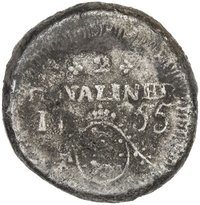
Reverse
Edge
Mintings
| Year | Mint Mark | Mintage | Quality | Collection |
|---|---|---|---|---|
| 1755 | — | — |
Historical background
In 1755, the currency situation in Danish India, centered on the trading enclaves of Tranquebar (Tharangambadi) on the Coromandel Coast and the later acquisition of Serampore (Frederiksnagore) in Bengal, was complex and largely dictated by regional economic realities rather than Danish authority. The Danish Asiatic Company, operating with limited capital and influence, did not impose a dominant national currency. Instead, the trading economy functioned on a multi-currency system reliant on widely accepted foreign and local coins. The most important of these was the Silver Rupee of the Mughal Empire (and its regional successors), which served as the primary high-value currency for substantial trade and contracts.
Daily transactions were facilitated by a variety of smaller subsidiary coins, creating a layered monetary environment. The Dutch stuiver and Portuguese tangas (from nearby colonies) circulated extensively, alongside South Indian gold pagodas and local copper coins called cash. This proliferation necessitated constant conversion, with published exchange manuals ("Course of Exchange") being essential tools for merchants. The Danish attempt to mint their own coins—the so-called Tranquebar pagoda and silver rupees—was minimal. These issues were small in quantity, primarily intended for local salary payments and minor trade, and they had to compete with and be pegged to the more established regional currencies to gain any acceptance.
Ultimately, the monetary landscape reflected Denmark’s minor position in the subcontinent. The Danish settlements were commercial outposts embedded within vast and sophisticated Indian economies. Their currency system was therefore reactive and adaptive, integrating into pre-existing networks to facilitate trade in textiles, spices, and other goods. Stability was derived not from Danish monetary policy but from the relative stability of the Mughal silver standard and the inflow of reliable foreign coins from more powerful European companies operating in the region.
Daily transactions were facilitated by a variety of smaller subsidiary coins, creating a layered monetary environment. The Dutch stuiver and Portuguese tangas (from nearby colonies) circulated extensively, alongside South Indian gold pagodas and local copper coins called cash. This proliferation necessitated constant conversion, with published exchange manuals ("Course of Exchange") being essential tools for merchants. The Danish attempt to mint their own coins—the so-called Tranquebar pagoda and silver rupees—was minimal. These issues were small in quantity, primarily intended for local salary payments and minor trade, and they had to compete with and be pegged to the more established regional currencies to gain any acceptance.
Ultimately, the monetary landscape reflected Denmark’s minor position in the subcontinent. The Danish settlements were commercial outposts embedded within vast and sophisticated Indian economies. Their currency system was therefore reactive and adaptive, integrating into pre-existing networks to facilitate trade in textiles, spices, and other goods. Stability was derived not from Danish monetary policy but from the relative stability of the Mughal silver standard and the inflow of reliable foreign coins from more powerful European companies operating in the region.
✨ Legendary