

5 Baiocchi – San Severino
Italy
Context
Year: 1797
Country: Italy 
Issuer: San Severino
Ruler: Pius VI
Currency:
(1534—1835)
Demonetized: Yes
Material
References
KM: #Click to copy to clipboard6
Numista: #119678
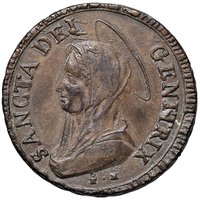
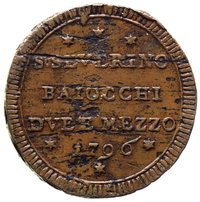
Obverse
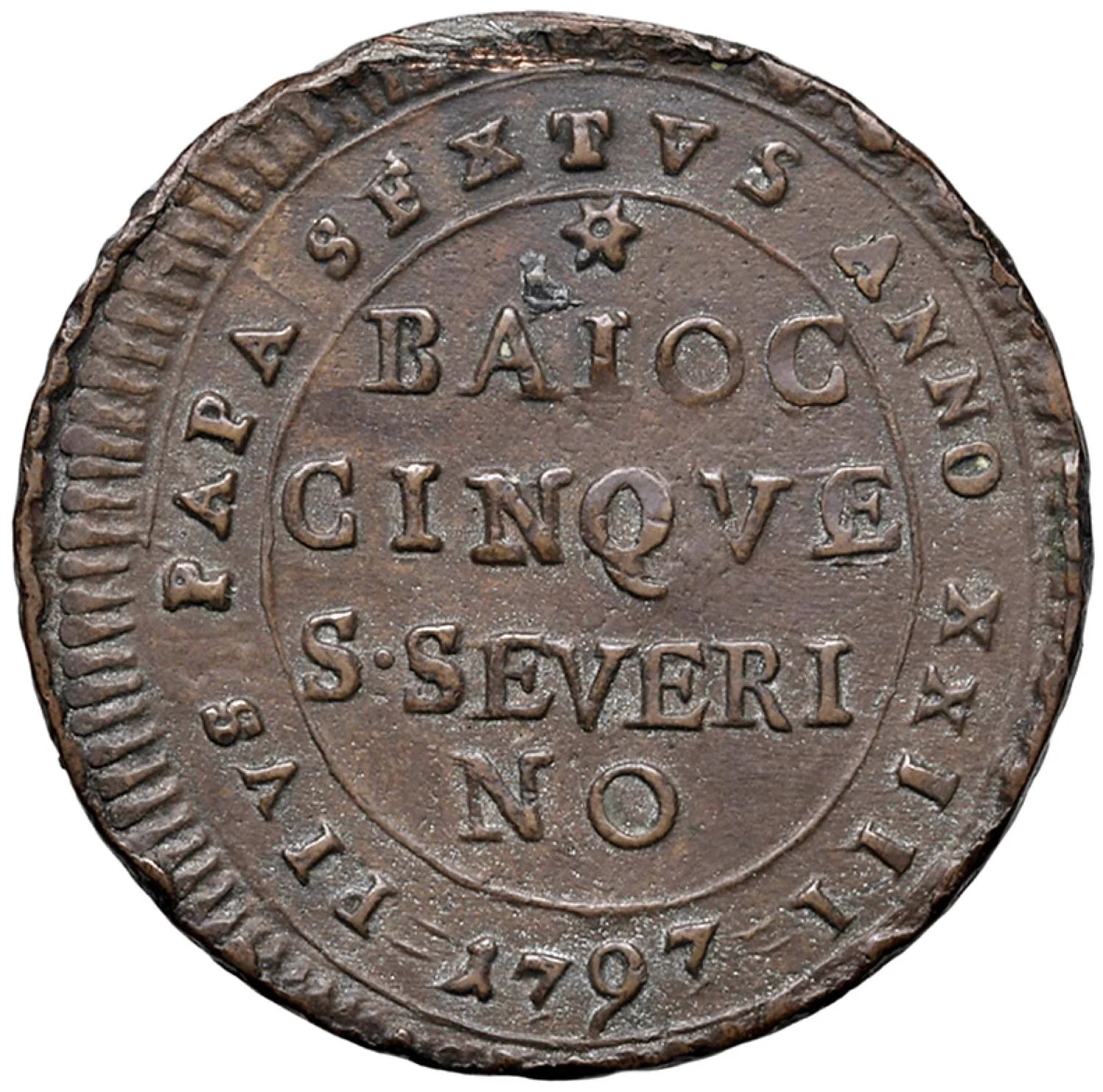
Description:
Circle value, date below.
Inscription:
PIVS PAPA SEXTVS ANNO XXIII
BAIOC
CINQVE
S·SEVERI
NO
1797
BAIOC
CINQVE
S·SEVERI
NO
1797
Script: Latin
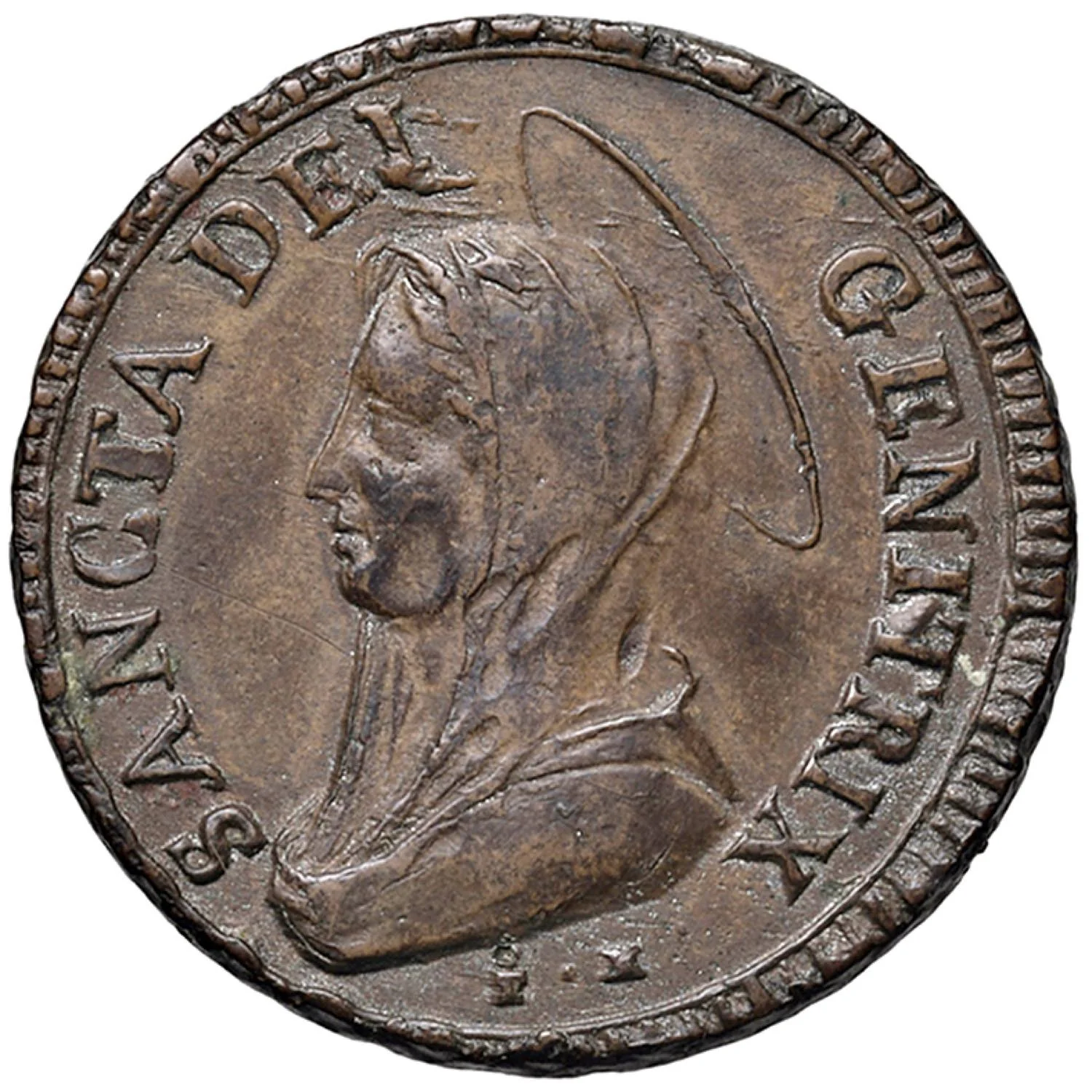
Reverse
Edge
Stringed
Mints
| Name | Mark |
|---|---|
| San Severino Marche | — |
Mintings
| Year | Mint Mark | Mintage | Quality | Collection |
|---|---|---|---|---|
| 1797 | — | — |
Historical background
In 1797, the Italian town of San Severino found itself at a turbulent crossroads, caught in the wider political and monetary chaos following the French Revolutionary Wars. The town, located in the Marche region, was part of the Papal States, which had been invaded by French forces under Napoleon Bonaparte in 1796. This invasion led to the establishment of the short-lived "Repubblica Anconitana" in 1797, a French-sponsored sister republic that absorbed San Severino. The collapse of papal authority triggered a profound monetary crisis, as the old papal coinage system was destabilized and its legitimacy undermined.
The currency situation became highly fragmented and uncertain. While old Papal States scudi, baiocchi, and quattrini remained in physical circulation, their value and acceptance fluctuated wildly due to political insecurity and economic disruption. Simultaneously, the new republican authorities introduced their own revolutionary currency, the "lira anconitana," which was pegged to the French franc. This created a dual-system of competing currencies, where the populace had to navigate between the familiar but devalued papal coins and the new, politically charged republican money, which many distrusted.
This monetary confusion exacerbated severe economic hardship. Widespread requisitions by French troops had already drained local resources, leading to inflation and scarcity. The coexistence of two unstable currencies further hampered trade and daily commerce, as people hoarded older coins and debated the real value of the new ones. Thus, in San Severino in 1797, currency was not merely a medium of exchange but a tangible symbol of the profound and disruptive transition from centuries-old papal rule to an uncertain revolutionary future.
The currency situation became highly fragmented and uncertain. While old Papal States scudi, baiocchi, and quattrini remained in physical circulation, their value and acceptance fluctuated wildly due to political insecurity and economic disruption. Simultaneously, the new republican authorities introduced their own revolutionary currency, the "lira anconitana," which was pegged to the French franc. This created a dual-system of competing currencies, where the populace had to navigate between the familiar but devalued papal coins and the new, politically charged republican money, which many distrusted.
This monetary confusion exacerbated severe economic hardship. Widespread requisitions by French troops had already drained local resources, leading to inflation and scarcity. The coexistence of two unstable currencies further hampered trade and daily commerce, as people hoarded older coins and debated the real value of the new ones. Thus, in San Severino in 1797, currency was not merely a medium of exchange but a tangible symbol of the profound and disruptive transition from centuries-old papal rule to an uncertain revolutionary future.
✨ Legendary