

Italy

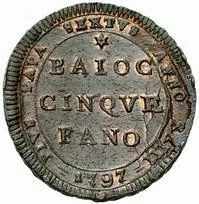
Obverse
Description:
Circle value, date below.
Inscription:
PIVS PAPA SEXTVS ANNO XXIII
BAIOC
CINQVE
FANO
1797
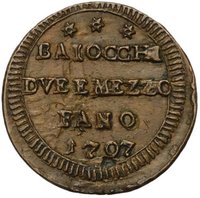
BAIOC
CINQVE
FANO
1797
Script: Latin
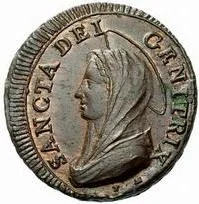
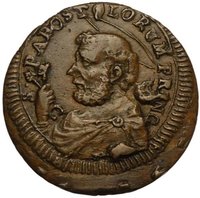
Reverse
Edge
Categories
| Person> Religious figure |
Mints
| Name | Mark |
|---|---|
| Fano | — |
Mintings
| Year | Mint Mark | Mintage | Quality | Collection |
|---|---|---|---|---|
| 1797 | — | — |
Historical background
In 1797, the Italian city-state of Fano, like much of the Italian Peninsula, was caught in the turbulent wake of the French Revolutionary Wars. Following Napoleon Bonaparte's successful Italian campaign of 1796-1797, the old political order was dismantled. Fano was incorporated into the newly established Papal Republic (Repubblica Romana), a French sister republic that replaced the temporal authority of the Pope. This radical political shift triggered an immediate and severe monetary crisis, as the new regime sought to assert economic control and fund its operations.
The currency situation became characterized by chaos and devaluation. The French authorities imposed heavy war indemnities and requisitioned precious metals, draining the area of sound coinage. They introduced mandatory territorial loans and began issuing large quantities of paper money—assignats and later mandats territoriaux—which were forced into circulation. These notes, backed by seized ecclesiastical and noble properties, were deeply distrusted by the local population. Consequently, they rapidly depreciated, leading to rampant inflation where prices for basic goods soared and traditional silver-based coinage disappeared from daily transactions.
This period saw a fragmented and unreliable monetary environment. While the unstable French paper notes were legally imposed, the populace desperately clung to any remaining stable currency, such as old Papal scudi or foreign coins, for savings and clandestine trade. The collapse of familiar monetary systems, combined with requisitions and economic hardship, caused widespread distress and popular resentment against the French-backed republic, underscoring how currency instability was a direct and deeply felt consequence of revolutionary occupation.
The currency situation became characterized by chaos and devaluation. The French authorities imposed heavy war indemnities and requisitioned precious metals, draining the area of sound coinage. They introduced mandatory territorial loans and began issuing large quantities of paper money—assignats and later mandats territoriaux—which were forced into circulation. These notes, backed by seized ecclesiastical and noble properties, were deeply distrusted by the local population. Consequently, they rapidly depreciated, leading to rampant inflation where prices for basic goods soared and traditional silver-based coinage disappeared from daily transactions.
This period saw a fragmented and unreliable monetary environment. While the unstable French paper notes were legally imposed, the populace desperately clung to any remaining stable currency, such as old Papal scudi or foreign coins, for savings and clandestine trade. The collapse of familiar monetary systems, combined with requisitions and economic hardship, caused widespread distress and popular resentment against the French-backed republic, underscoring how currency instability was a direct and deeply felt consequence of revolutionary occupation.
✨ Legendary