

1 quattrino – Matelica
Add to wishlist
Italy
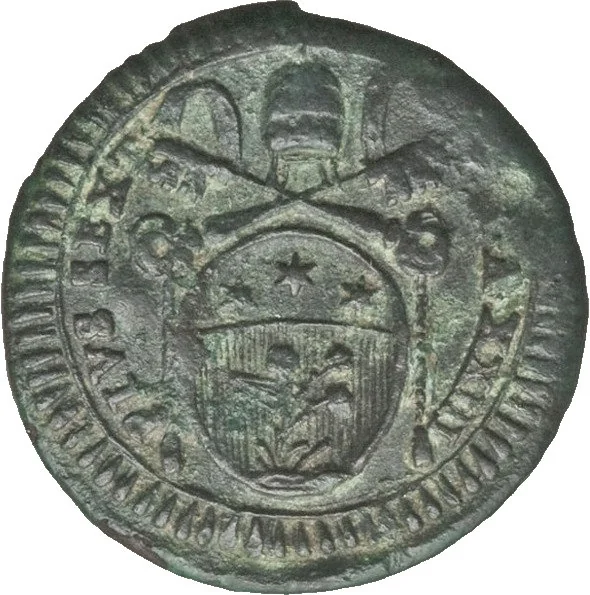
Obverse
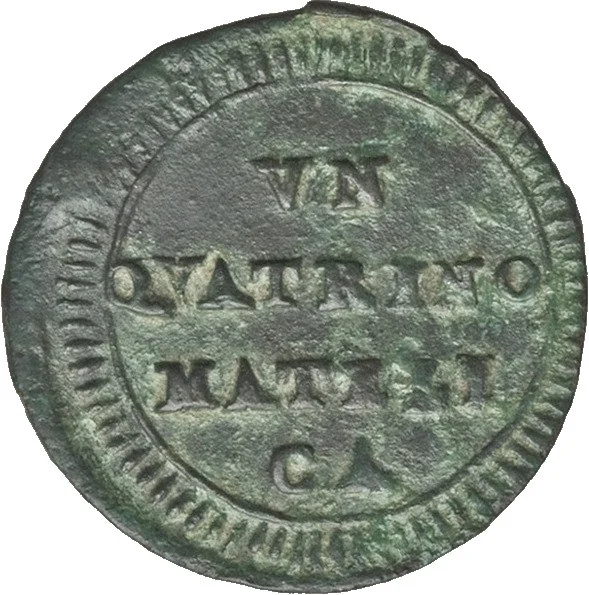
Reverse
Edge
Categories
| Symbol> Crown |
| Symbols> Coat of Arms |
Mints
| Name | Mark |
|---|---|
| Matelica | — |
Mintings
| Year | Mint Mark | Mintage | Quality | Collection |
|---|---|---|---|---|
| 1797 | — | — |
Historical background
In 1797, the small Italian comune of Matelica, located within the Papal States, found itself in a complex and unstable monetary environment, a direct consequence of the wider political upheaval of the French Revolutionary Wars. The French invasion of Italy in 1796, led by Napoleon Bonaparte, had dismantled the old political order. By early 1797, the French had established the Roman Republic in February, replacing papal authority. While Matelica was now nominally part of this new republic, the transition was chaotic, creating a vacuum in monetary control where multiple currencies circulated simultaneously and lost value.
The currency situation was characterized by a confusing coexistence of old and new systems. The traditional papal scudo and its subsidiary coins remained in physical circulation but were increasingly distrusted as the papal government that guaranteed them had fallen. Alongside these, the new French-backed authorities introduced the Roman Republic scudo, which was pegged to the French franc. More pressingly, the French military also circulated vast quantities of mandats territoriaux (land warrants), a rapidly depreciating French paper currency, and forced requisitions were often paid with this nearly worthless paper, causing local prices to soar and fostering a deep resentment toward the occupiers.
This period was one of severe economic hardship for Matelica's residents. The rapid depreciation of the mandats, coupled with the general uncertainty over the value of any coinage, led to widespread inflation, hoarding of precious metal coins, and a retreat into barter for basic goods. The instability was not merely economic but a symptom of the profound social and political dislocation caused by the fall of the Papal States. The currency chaos of 1797 in Matelica, therefore, reflects the painful birth pangs of a new political era, where the collapse of ancient sovereignty first manifested in the loss of reliable money in the marketplace.
The currency situation was characterized by a confusing coexistence of old and new systems. The traditional papal scudo and its subsidiary coins remained in physical circulation but were increasingly distrusted as the papal government that guaranteed them had fallen. Alongside these, the new French-backed authorities introduced the Roman Republic scudo, which was pegged to the French franc. More pressingly, the French military also circulated vast quantities of mandats territoriaux (land warrants), a rapidly depreciating French paper currency, and forced requisitions were often paid with this nearly worthless paper, causing local prices to soar and fostering a deep resentment toward the occupiers.
This period was one of severe economic hardship for Matelica's residents. The rapid depreciation of the mandats, coupled with the general uncertainty over the value of any coinage, led to widespread inflation, hoarding of precious metal coins, and a retreat into barter for basic goods. The instability was not merely economic but a symptom of the profound social and political dislocation caused by the fall of the Papal States. The currency chaos of 1797 in Matelica, therefore, reflects the painful birth pangs of a new political era, where the collapse of ancient sovereignty first manifested in the loss of reliable money in the marketplace.
✨ Legendary