

3 Findik – Ottoman Empire
Turkey
Context
Years: 1774–1789
Country: Turkey 
Issuer: Ottoman Empire
Ruler: Abdul Hamid I
Currency:
(1688—1844)
Demonetized: Yes
Material
References
KM: #Click to copy to clipboard434
Numista: #88874
Value
Bullion value: $1741.93
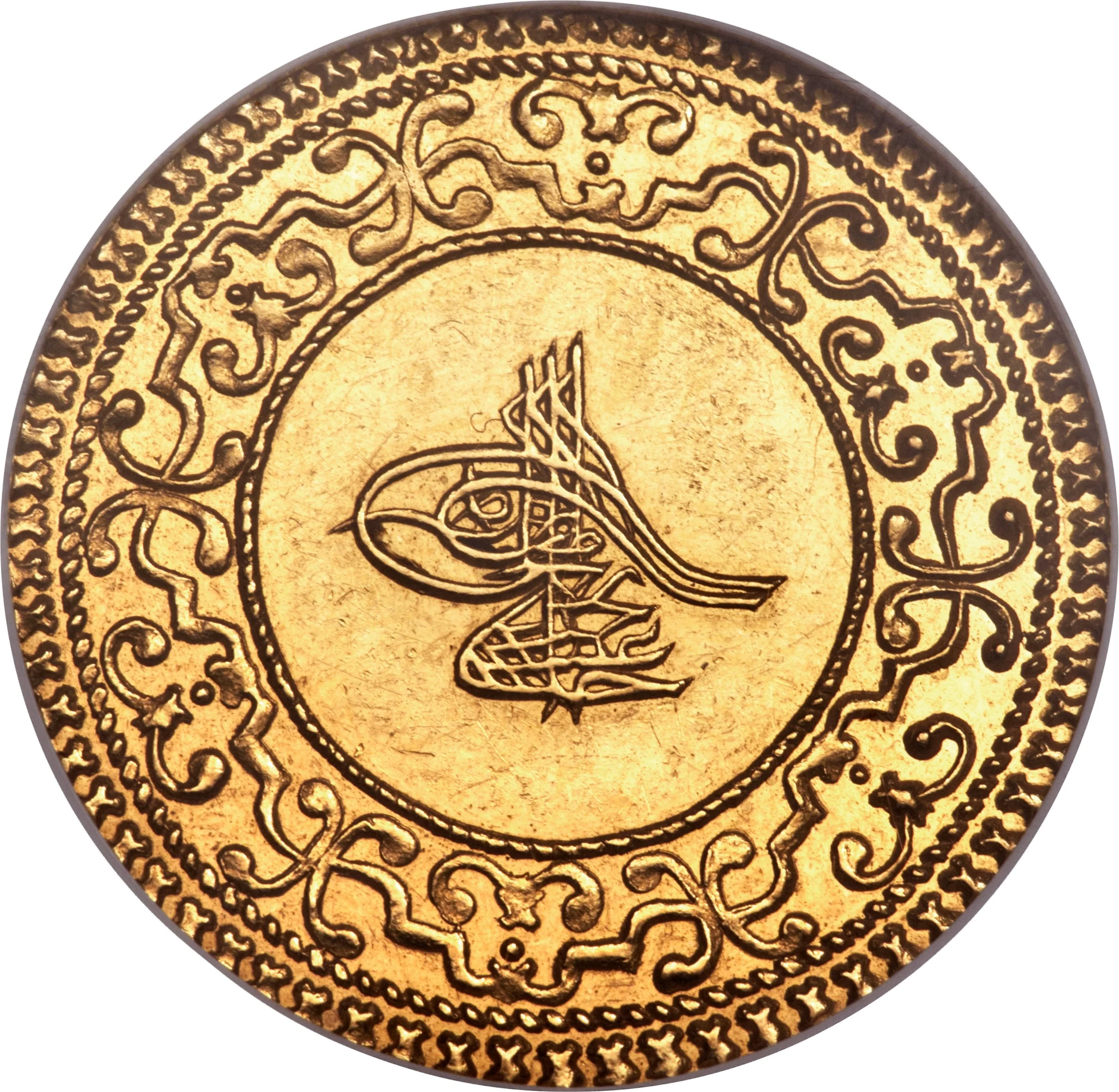
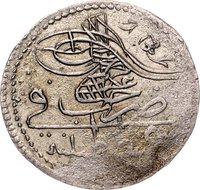
Obverse
Description:
Sultan's tugrah with arabesque border.
Script: Arabic
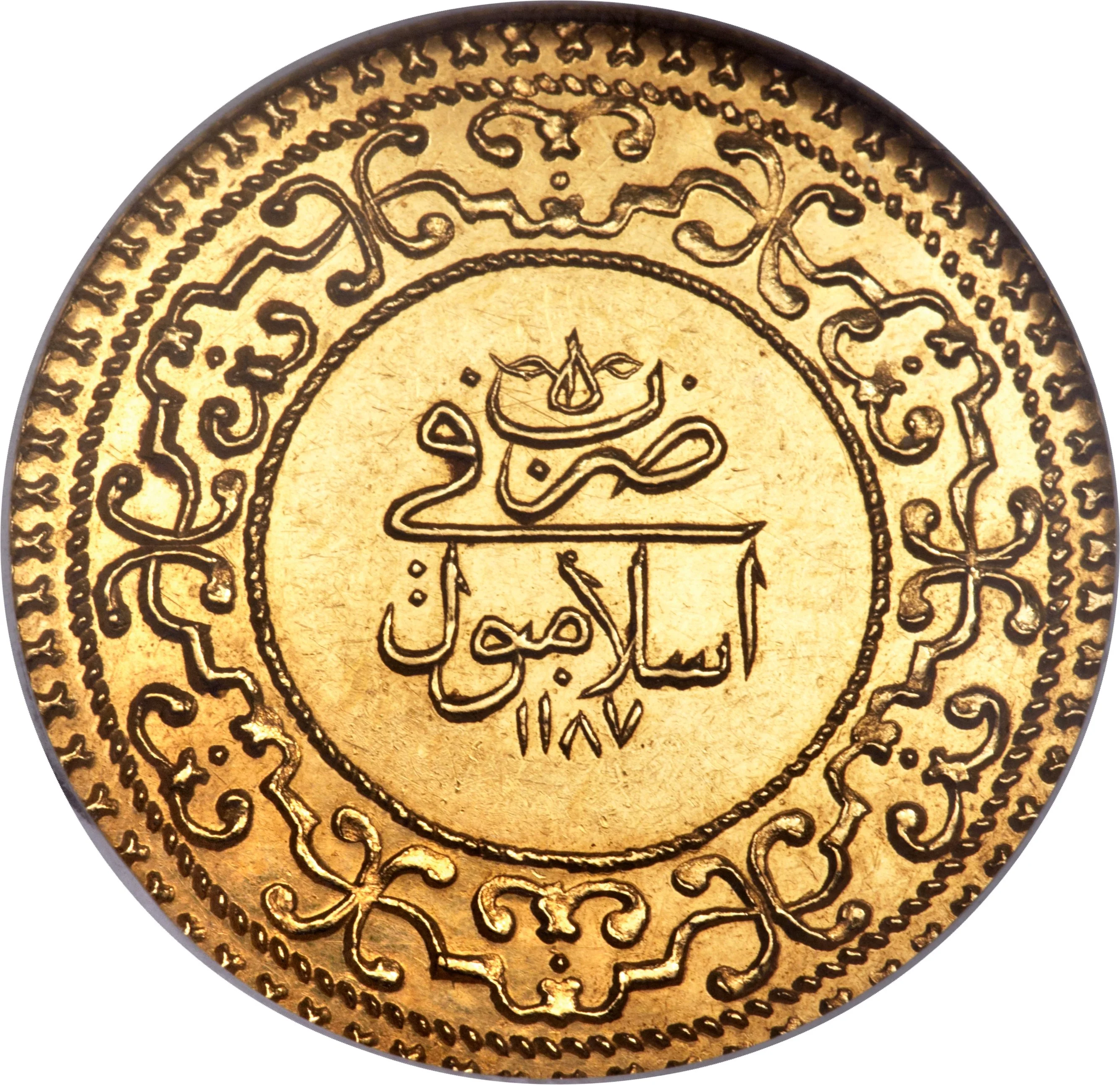
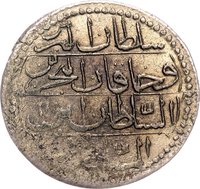
Reverse
Description:
Mark: mint and accession year; arabesque border.
Inscription:
ب
ضر
في
إسلمبول
١١٨٧
ضر
في
إسلمبول
١١٨٧
Script: Arabic
Edge
Mints
| Name | Mark |
|---|---|
| Constantinople | — |
Mintings
| Year | Mint Mark | Mintage | Quality | Collection |
|---|---|---|---|---|
| — | — | — |
Historical background
By 1774, the Ottoman Empire's currency system was in a state of profound crisis, a direct reflection of its broader military and fiscal decline. The empire had just concluded the disastrous Russo-Turkish War (1768-1774) with the Treaty of Küçük Kaynarca, which resulted in massive territorial losses, a large war indemnity owed to Russia, and the granting of significant commercial and diplomatic privileges to European powers. This defeat shattered imperial prestige and drained the treasury, forcing the state to resort to extreme fiscal measures that debased the already fragile monetary system.
The core of the problem was the chronic debasement of the primary silver coin, the akçe, and its successor, the kuruş (piastre). For over a century, the Porte had repeatedly lowered the silver content of its coinage to finance budget deficits, especially during wartime. By 1774, this practice had led to severe inflation, a loss of public confidence in the currency, and a bewildering multiplicity of coins in circulation—older, purer coins were hoarded while newer, debased ones were traded at a discount. This created a chaotic "bad money drives out good" (Gresham's Law) environment that disrupted trade and tax collection.
Consequently, the monetary landscape was fragmented and unstable. Alongside the official Ottoman coinage, a plethora of foreign currencies—most notably the Austrian thalers and Dutch lion dollars—circulated widely, prized for their reliable silver content. The empire's inability to control its own monetary space underscored its weakening economic sovereignty. The situation in 1774 thus marked a critical juncture, where the Ottoman state's financial distress, exposed by military defeat, necessitated urgent but elusive reforms to stabilize a currency system that was both a cause and a symptom of imperial decay.
The core of the problem was the chronic debasement of the primary silver coin, the akçe, and its successor, the kuruş (piastre). For over a century, the Porte had repeatedly lowered the silver content of its coinage to finance budget deficits, especially during wartime. By 1774, this practice had led to severe inflation, a loss of public confidence in the currency, and a bewildering multiplicity of coins in circulation—older, purer coins were hoarded while newer, debased ones were traded at a discount. This created a chaotic "bad money drives out good" (Gresham's Law) environment that disrupted trade and tax collection.
Consequently, the monetary landscape was fragmented and unstable. Alongside the official Ottoman coinage, a plethora of foreign currencies—most notably the Austrian thalers and Dutch lion dollars—circulated widely, prized for their reliable silver content. The empire's inability to control its own monetary space underscored its weakening economic sovereignty. The situation in 1774 thus marked a critical juncture, where the Ottoman state's financial distress, exposed by military defeat, necessitated urgent but elusive reforms to stabilize a currency system that was both a cause and a symptom of imperial decay.
✨ Legendary