

1 Pistole – Scotland
United Kingdom
Context
Year: 1701
Country: United Kingdom 
Issuer: Scotland 
Ruler: William II
Currency:
(1136—1707)
Demonetized: Yes
Material
References
KM: #Click to copy to clipboard146
Numista: #88201
Value
Bullion value: $1045.06
Obverse
Description:
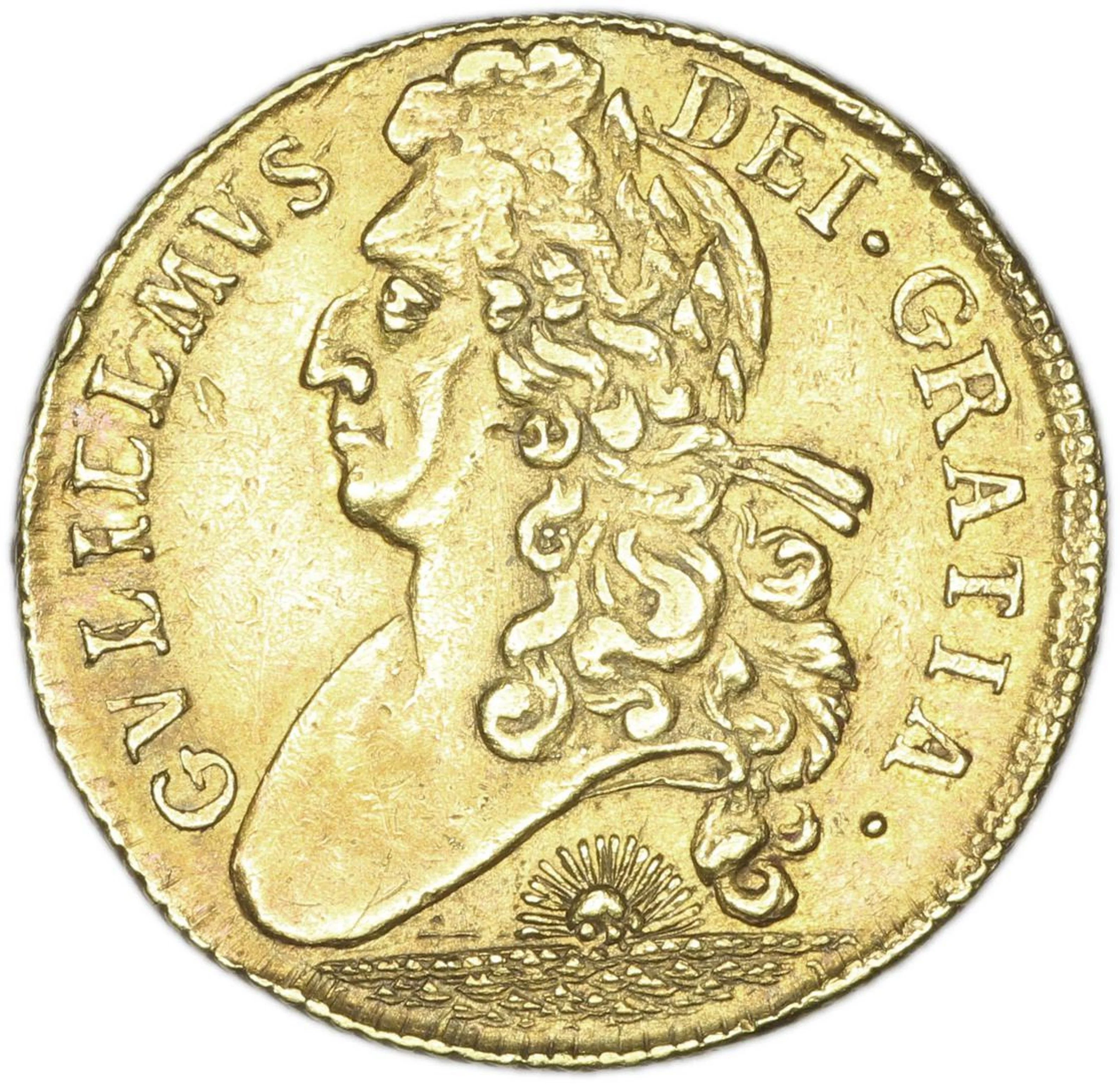
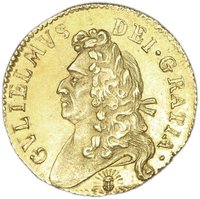
Bust of William II facing left, with a sunrise over the sea below.
Inscription:
GVLIELMVS DEI . GRATIA .
Script: Latin
Reverse
Description:
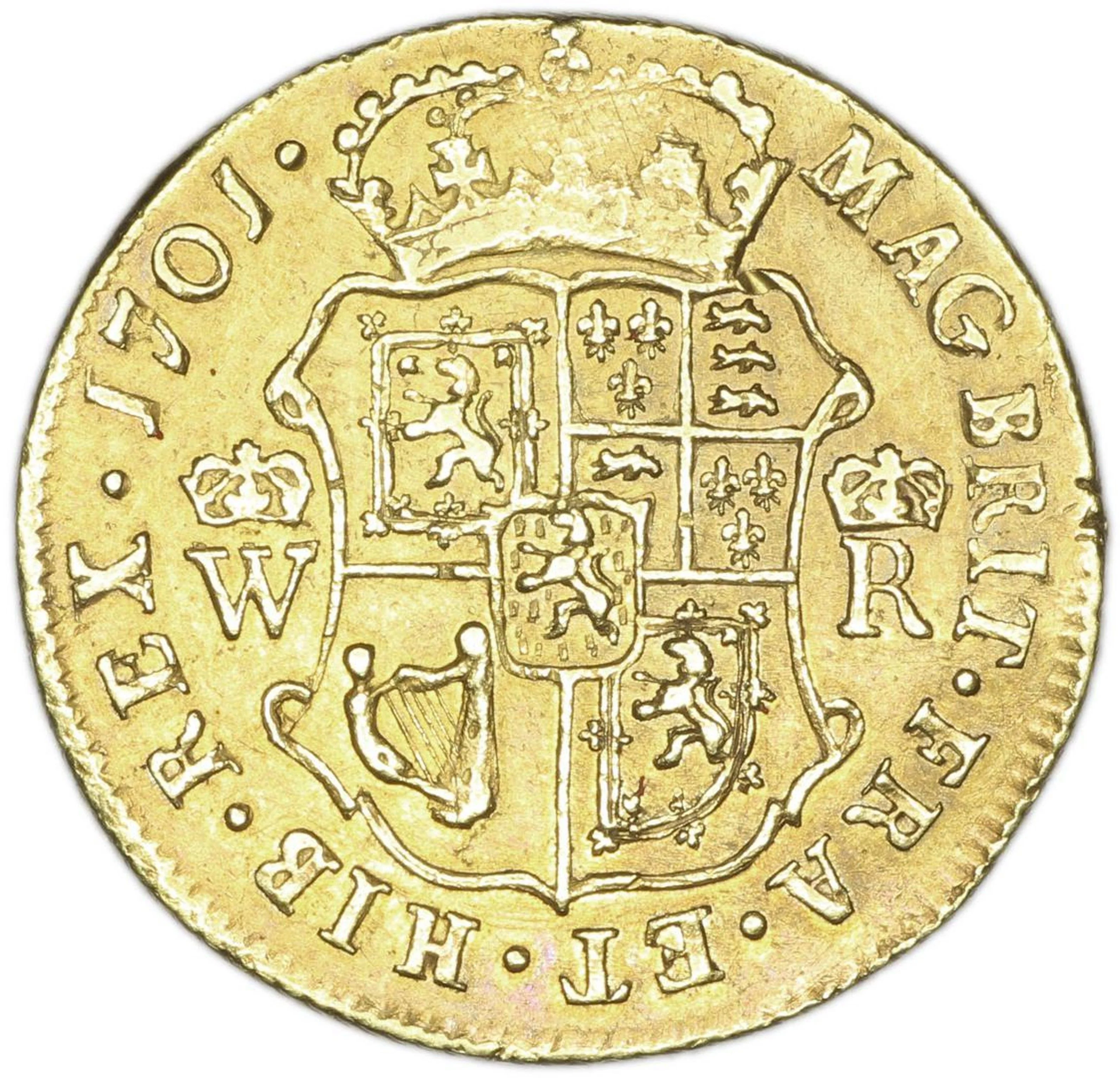
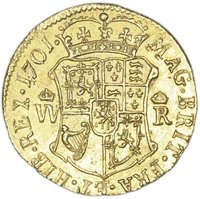
Royal coat of arms.
Inscription:
MAG BRIT · FRA · ET · HIB · REX · 1701 ·
Script: Latin
Edge
Mints
| Name | Mark |
|---|---|
| Edinburgh | — |
Mintings
| Year | Mint Mark | Mintage | Quality | Collection |
|---|---|---|---|---|
| 1701 | — | — |
Historical background
In 1701, Scotland's currency situation was complex and deeply intertwined with its precarious political and economic position. The Kingdom of Scotland operated its own monetary system, distinct from its powerful southern neighbour, England. The primary unit was the Scottish pound (£ Scots), but its value was not on a par with the English pound sterling; it was severely debased, trading at a fixed rate of £12 Scots to £1 sterling. This reflected Scotland's weaker economy, trade deficits, and a history of coinage debasements in the 16th and 17th centuries. In practice, a confusing mix of domestic and foreign coins circulated, including French louis d'or, Dutch guilders, and Spanish dollars, essential for international trade.
This monetary instability was a symptom of a larger crisis, most acutely felt after the catastrophic failure of the Darien Scheme in 1700. The venture had drained Scotland of a significant portion of its liquid capital, exacerbating a severe shortage of specie (coin) in circulation. This coin famine crippled everyday commerce and investment, fuelling widespread economic depression and social hardship. The monetary system was not only weak but was also seen as a barrier to economic recovery and modernisation, leaving Scotland financially vulnerable.
The year 1701 was therefore a pivotal moment on the path to the Acts of Union in 1707. Scotland's monetary woes were a central argument for unionists, who contended that only political integration could solve the crisis. They argued that adopting the stable and robust English sterling, gaining access to England's colonial trade, and sharing the burden of the English national debt were essential for Scottish prosperity. Thus, the currency situation of 1701 was not merely a financial issue but a key political pressure point that would help drive the two kingdoms toward a parliamentary union within the decade.
This monetary instability was a symptom of a larger crisis, most acutely felt after the catastrophic failure of the Darien Scheme in 1700. The venture had drained Scotland of a significant portion of its liquid capital, exacerbating a severe shortage of specie (coin) in circulation. This coin famine crippled everyday commerce and investment, fuelling widespread economic depression and social hardship. The monetary system was not only weak but was also seen as a barrier to economic recovery and modernisation, leaving Scotland financially vulnerable.
The year 1701 was therefore a pivotal moment on the path to the Acts of Union in 1707. Scotland's monetary woes were a central argument for unionists, who contended that only political integration could solve the crisis. They argued that adopting the stable and robust English sterling, gaining access to England's colonial trade, and sharing the burden of the English national debt were essential for Scottish prosperity. Thus, the currency situation of 1701 was not merely a financial issue but a key political pressure point that would help drive the two kingdoms toward a parliamentary union within the decade.
✨ Legendary