

1 groschen – Polish–Lithuanian Commonwealth
Add to wishlist
Poland
Context
Years: 1765–1795
Country: Poland
Issuer: Polish–Lithuanian Commonwealth
Ruler: Stanisław II Augustus
Currency:
(1573—1795)
Demonetized: Yes
Total mintage: 40,268,000
Material
References
KM: #
Numista: #8802
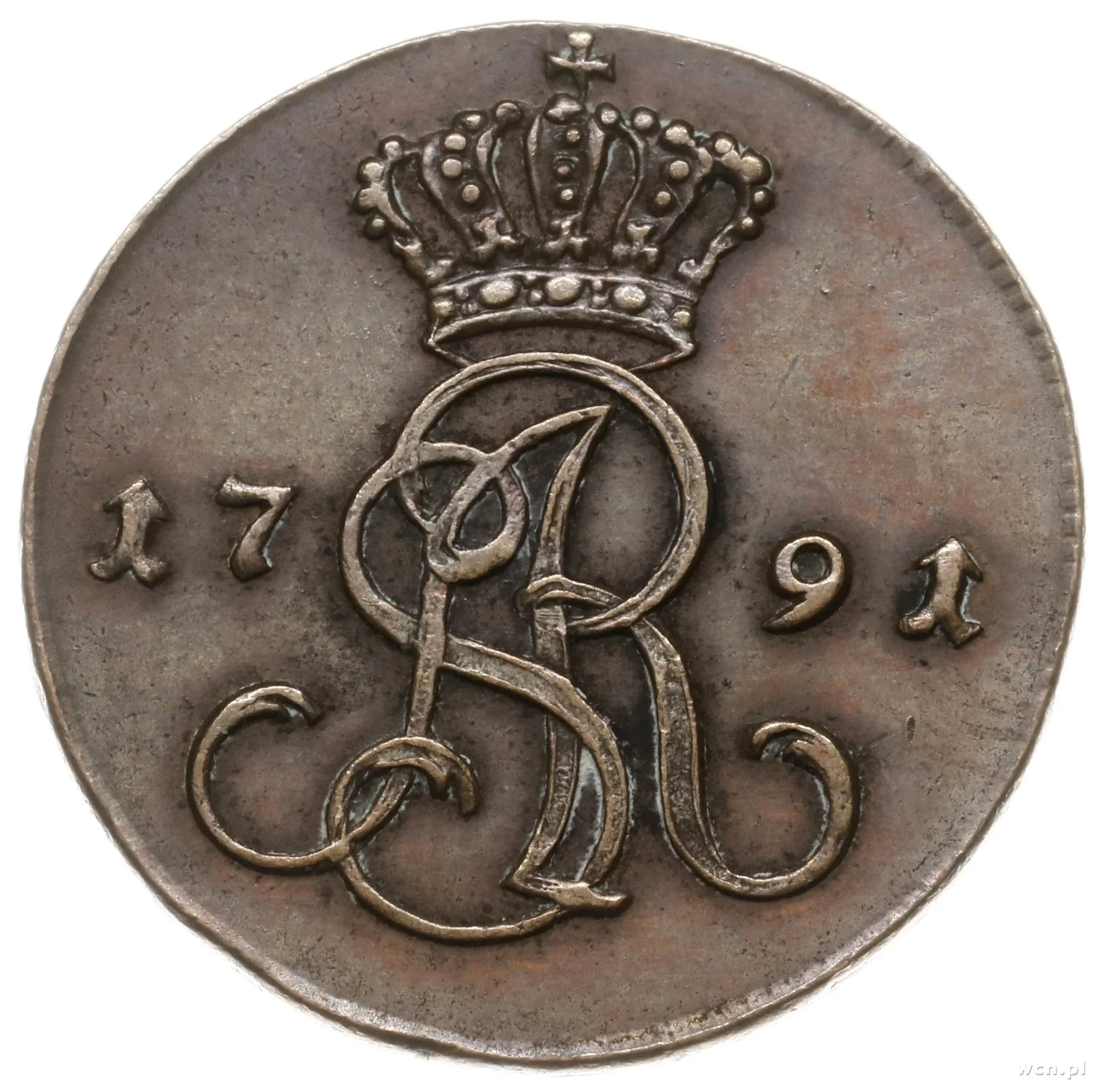
Obverse
Description:
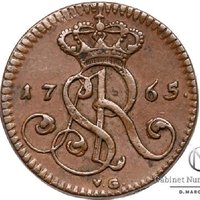
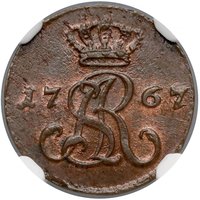
Stanisław August Poniatowski's signature. Crown above.
Inscription:
SAR 1791
Script: Latin
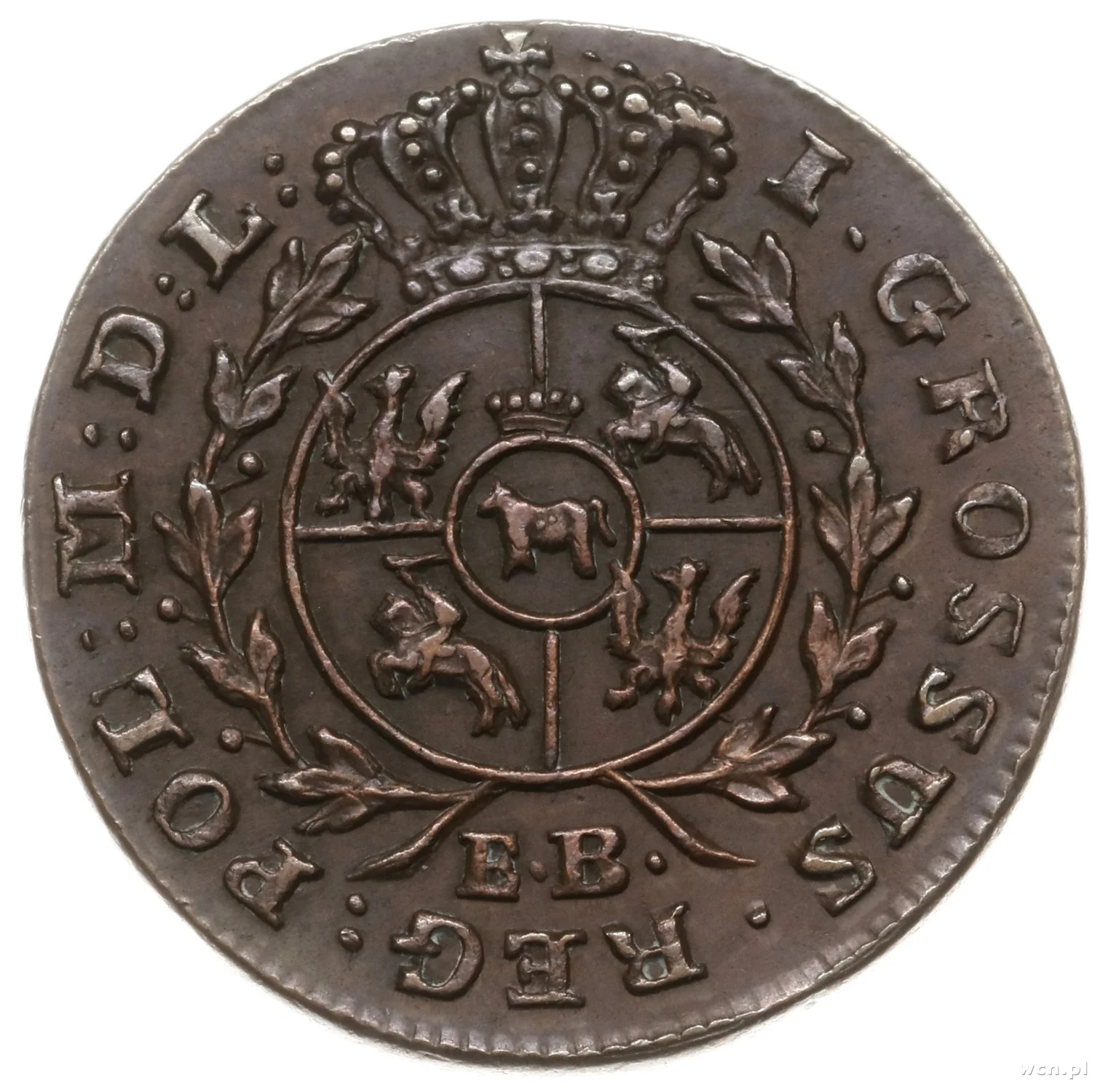
Reverse
Description:
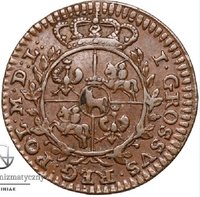
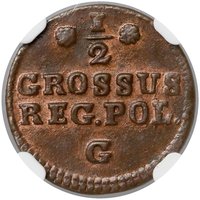
Crowned Poland-Lithuania coat of arms with encircling lettering.
Inscription:
I GROSSVS REG POL M D L
Script: Latin
Edge
Plain
Mints
| Name | Mark |
|---|---|
| Mint of Poland | — |
Mintings
| Year | Mint Mark | Mintage | Quality | Collection |
|---|---|---|---|---|
| 1765 | — | — | ||
| 1765 | g | — | ||
| 1766 | g | — | ||
| 1767 | g | — | ||
| 1768 | g | — | ||
| 1769 | g | — | ||
| 1770 | g | — | ||
| 1771 | g | — | ||
| 1772 | g | — | ||
| 1772 | AP | 358,000 | ||
| 1773 | AP | 218,000 | ||
| 1774 | AP | 196,000 | ||
| 1774 | EB | — | ||
| 1775 | EB | 1,650,000 | ||
| 1776 | AP | 2,045,000 | ||
| 1776 | EB | — | ||
| 1777 | AP | 1,425,000 | ||
| 1777 | EB | — | ||
| 1778 | EB | 1,138,000 | ||
| 1779 | EB | 1,175,000 | ||
| 1780 | EB | 523,000 | ||
| 1781 | EB | 300,000 | ||
| 1782 | EB | 285,000 | ||
| 1783 | EB | 897,000 | ||
| 1784 | EB | 609,000 | ||
| 1785 | EB | 795,000 | ||
| 1786 | EB | 178,000 | ||
| 1787 | EB | 3,636,000 | ||
| 1788 | EB | 4,060,000 | ||
| 1789 | EB | 1,966,000 | ||
| 1790 | EB | 5,763,000 | ||
| 1791 | EB | 3,220,000 | ||
| 1791 | MV | — | ||
| 1792 | MV | — | ||
| 1792 | ЕВ | 4,524,000 | ||
| 1793 | MV | 2,823,000 | ||
| 1794 | MV | 2,484,000 | ||
| 1795 | MV | — |
Historical background
In 1765, the currency situation of the Polish–Lithuanian Commonwealth was dire and symptomatic of the broader political decay of the state. The monetary system was chaotic, characterized by a severe debasement of the coinage. The primary unit, the złoty, was not a physical coin but an accounting unit, while the actual circulating coins, like the copper szeląg and silver tymf, were minted with significantly lower intrinsic value than their nominal worth. This practice, driven by the state's chronic fiscal shortfalls and the need to fund military operations, led to rampant inflation, loss of public trust in the currency, and economic destabilization, particularly harming the peasantry and townspeople.
The root of this crisis lay in the Commonwealth's uniquely weak central authority. The nobility (szlachta), guarding their "Golden Liberty," resisted most taxation and fiscal reforms, leaving the treasury perpetually empty. To raise revenue, the Crown often leased the right to mint coins to private individuals or foreign interests, who further debased the currency for profit. Furthermore, vast quantities of counterfeit coins, especially from neighboring Prussia, flooded the market, exacerbating the collapse. The monetary chaos discouraged trade and investment, deepening the economic stagnation of the once-powerful Commonwealth.
Recognizing the severity of the crisis, King Stanisław August Poniatowski, newly elected in 1764, made monetary reform an immediate priority. In 1765, he undertook a significant step by founding the Mennica Warszawska (Warsaw Mint) as a state institution to regain control over the coinage. One of its first acts was the introduction of a new, stable silver coin, the tymf bearing the king's portrait, in an attempt to restore confidence. However, these early reforms, while well-intentioned, were only partially successful. They faced entrenched opposition from magnates benefiting from the chaos and could not overcome the fundamental political weaknesses that would soon lead to the First Partition of Poland in 1772.
The root of this crisis lay in the Commonwealth's uniquely weak central authority. The nobility (szlachta), guarding their "Golden Liberty," resisted most taxation and fiscal reforms, leaving the treasury perpetually empty. To raise revenue, the Crown often leased the right to mint coins to private individuals or foreign interests, who further debased the currency for profit. Furthermore, vast quantities of counterfeit coins, especially from neighboring Prussia, flooded the market, exacerbating the collapse. The monetary chaos discouraged trade and investment, deepening the economic stagnation of the once-powerful Commonwealth.
Recognizing the severity of the crisis, King Stanisław August Poniatowski, newly elected in 1764, made monetary reform an immediate priority. In 1765, he undertook a significant step by founding the Mennica Warszawska (Warsaw Mint) as a state institution to regain control over the coinage. One of its first acts was the introduction of a new, stable silver coin, the tymf bearing the king's portrait, in an attempt to restore confidence. However, these early reforms, while well-intentioned, were only partially successful. They faced entrenched opposition from magnates benefiting from the chaos and could not overcome the fundamental political weaknesses that would soon lead to the First Partition of Poland in 1772.
🌱 Fairly Common