

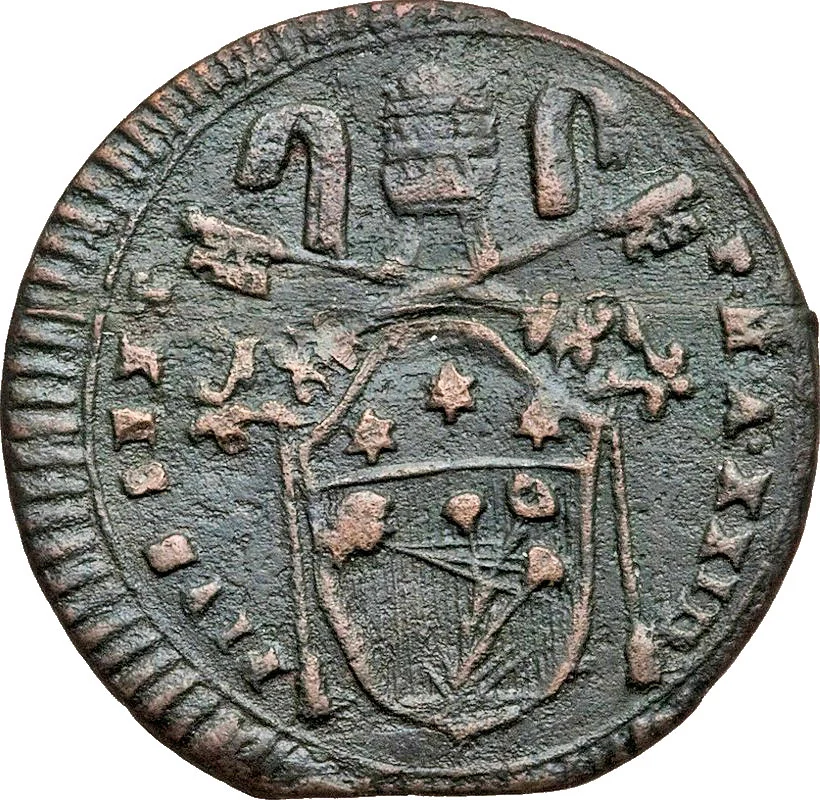
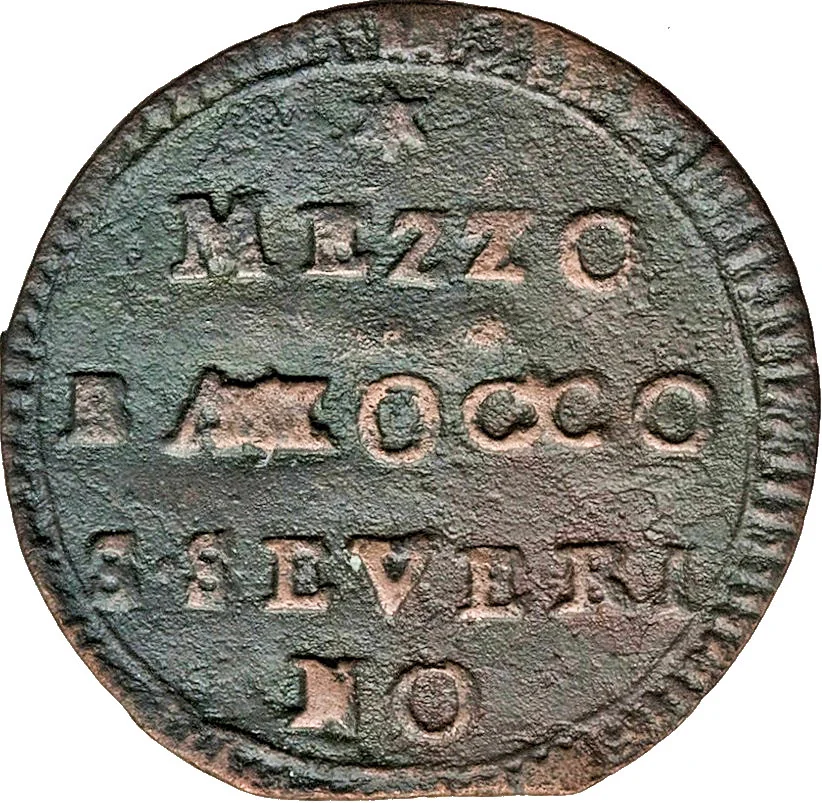
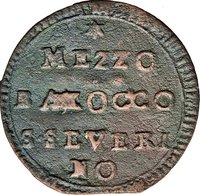
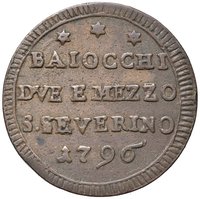
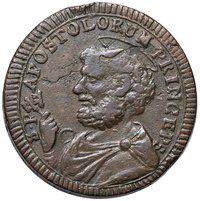
½ Baiocco – San Severino
Italy
Context
Years: 1796–1797
Year: 1797
Country: Italy 
Issuer: San Severino
Ruler: Pius VI
Currency:
(1534—1835)
Demonetized: Yes
Material
References
KM: #Click to copy to clipboard2
Numista: #87801
Obverse
Reverse
Edge
Mints
| Name | Mark |
|---|---|
| San Severino Marche | — |
Mintings
| Year | Mint Mark | Mintage | Quality | Collection |
|---|---|---|---|---|
| 1796 | — | — | ||
| 1797 | — | — |
Historical background
In 1796, San Severino, a town in the Marche region of the Papal States, was caught in the turbulent monetary transition triggered by the French Revolutionary Wars. Following Napoleon Bonaparte’s invasion of Italy in 1796, the French army imposed heavy war contributions and began replacing local currencies with French-backed money. In San Severino, as elsewhere, this created a chaotic dual-circulation system. The traditional scudo and baiocco of the Papal States still circulated but were increasingly unstable, while new French-issued lira and soldi entered the economy, often at forced exchange rates that favored the occupiers.
This monetary upheaval was exacerbated by severe inflation and scarcity. The French demands for requisitions and indemnities drained hard currency and precious metals from the local economy. To meet these exactions, local authorities and institutions were forced to issue promissory notes and low-quality token coinage, further eroding public trust. For the merchants and peasants of San Severino, this meant daily market transactions became fraught with uncertainty, as the value of coins could fluctuate wildly and counterfeit specimens proliferated.
Ultimately, the currency situation in San Severino in 1796 was a microcosm of the collapse of the old papal economic order under military pressure. It was not merely a financial crisis but a profound social disruption, where the very medium of exchange became a tool of subjugation and a symbol of instability. This period laid the groundwork for the more formal annexation of the region into the French-controlled Roman Republic in 1798, which would systematically impose a unified, decimal-based currency to supplant the ancient papal system entirely.
This monetary upheaval was exacerbated by severe inflation and scarcity. The French demands for requisitions and indemnities drained hard currency and precious metals from the local economy. To meet these exactions, local authorities and institutions were forced to issue promissory notes and low-quality token coinage, further eroding public trust. For the merchants and peasants of San Severino, this meant daily market transactions became fraught with uncertainty, as the value of coins could fluctuate wildly and counterfeit specimens proliferated.
Ultimately, the currency situation in San Severino in 1796 was a microcosm of the collapse of the old papal economic order under military pressure. It was not merely a financial crisis but a profound social disruption, where the very medium of exchange became a tool of subjugation and a symbol of instability. This period laid the groundwork for the more formal annexation of the region into the French-controlled Roman Republic in 1798, which would systematically impose a unified, decimal-based currency to supplant the ancient papal system entirely.
💎 Extremely Rare