

½ grosso – Republic of Ragusa
Add to wishlist
Croatia
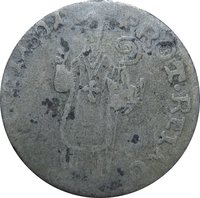
Obverse
Description:
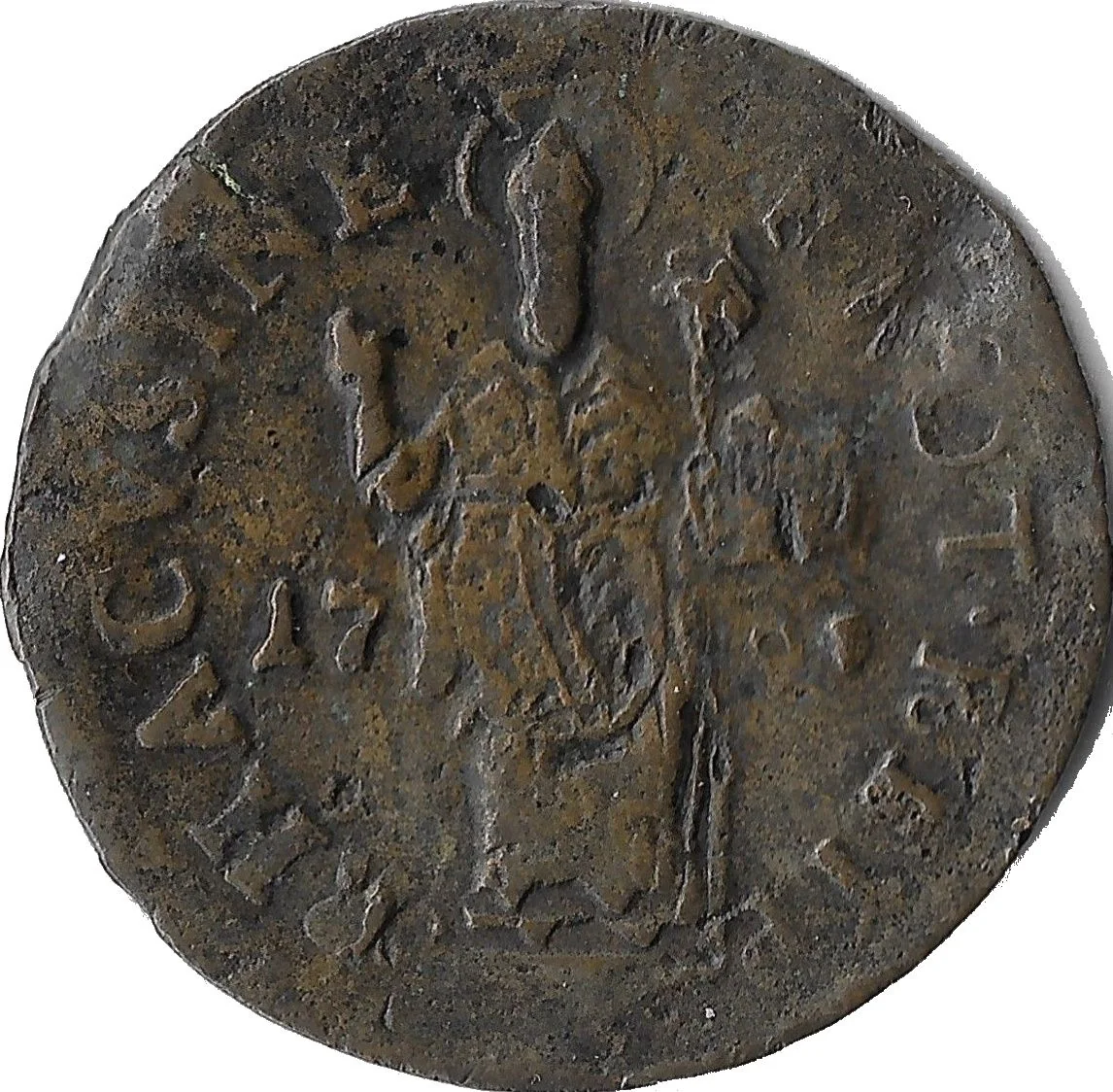
St. Blase facing forward with an aureole, surrounded by lettering, the year flanking him.
Inscription:
PROT・REIP・RHACVSINE
Script: Latin
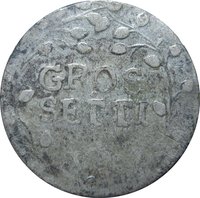
Reverse
Description:
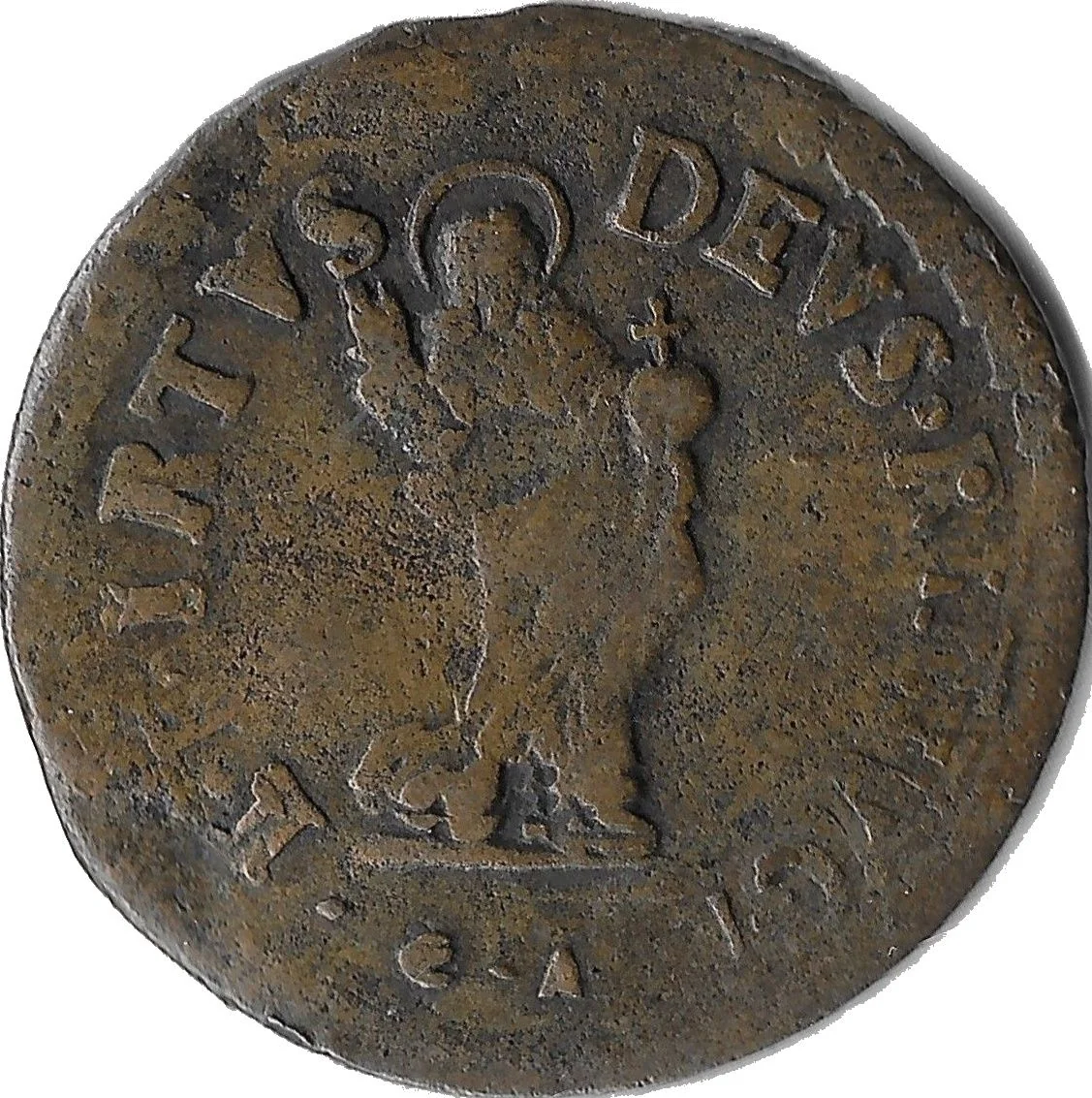
Christ facing, haloed, holding a globe. Mint mark "G" or "GA" below. Lettering surrounds.
Inscription:
DEUS REFVGI・ET VIRTUS
Script: Latin
Edge
Mintings
| Year | Mint Mark | Mintage | Quality | Collection |
|---|---|---|---|---|
| 1795 | — | — | ||
| 1795 | G | — | ||
| 1795 | GA | — | ||
| 1796 | — | — | ||
| 1796 | G | — | ||
| 1796 | GA | — |
Historical background
In 1795, the Republic of Ragusa (modern-day Dubrovnik, Croatia) was navigating a complex and precarious monetary environment, emblematic of its unique geopolitical position. As a small, neutral maritime republic, Ragusa's economy was deeply integrated into Mediterranean trade networks, making it a conduit for a multitude of foreign currencies. The most dominant circulating coins were the Tallero (or Thaler) of Maria Theresa, the Venetian Zecchino (sequin) and Ducat, and the Ottoman Kuruş (piastre). This multiplicity reflected Ragusa's delicate balancing act between the Ottoman Empire, to which it paid an annual tribute, and the commercial influence of Venice and the Habsburg lands.
Officially, the republic minted its own small silver and billon coins, such as the grossetto and soldo, but these were primarily for local fractional use. The state lacked the resources to issue large silver or gold coins in significant quantities, leaving high-value trade and treasury reserves dependent on foreign specie. Consequently, the Ragusan government maintained a detailed official tariff list, the tariffa, which fixed the exchange rates between these various foreign coins and the notional accounting unit, the Ragusan Perpero. This system was crucial for stabilizing commerce, tax collection, and financial contracts in a marketplace flooded with heterogeneous coinage.
The year 1795 fell within a period of growing external pressure and economic strain. While the republic formally maintained its sovereignty, the winds of the French Revolutionary Wars were intensifying, disrupting Mediterranean trade routes and creating monetary instability across Europe. The reliance on foreign coinage made Ragusa's economy vulnerable to shifts in the supply and debasement of those currencies. Thus, the currency situation of 1795 was one of managed fragility—a sophisticated system of valuation built atop a dependency that would soon be tested, as Ragusa's independence would be forcibly ended by Napoleon's forces just a decade later in 1808.
Officially, the republic minted its own small silver and billon coins, such as the grossetto and soldo, but these were primarily for local fractional use. The state lacked the resources to issue large silver or gold coins in significant quantities, leaving high-value trade and treasury reserves dependent on foreign specie. Consequently, the Ragusan government maintained a detailed official tariff list, the tariffa, which fixed the exchange rates between these various foreign coins and the notional accounting unit, the Ragusan Perpero. This system was crucial for stabilizing commerce, tax collection, and financial contracts in a marketplace flooded with heterogeneous coinage.
The year 1795 fell within a period of growing external pressure and economic strain. While the republic formally maintained its sovereignty, the winds of the French Revolutionary Wars were intensifying, disrupting Mediterranean trade routes and creating monetary instability across Europe. The reliance on foreign coinage made Ragusa's economy vulnerable to shifts in the supply and debasement of those currencies. Thus, the currency situation of 1795 was one of managed fragility—a sophisticated system of valuation built atop a dependency that would soon be tested, as Ragusa's independence would be forcibly ended by Napoleon's forces just a decade later in 1808.
✨ Legendary