

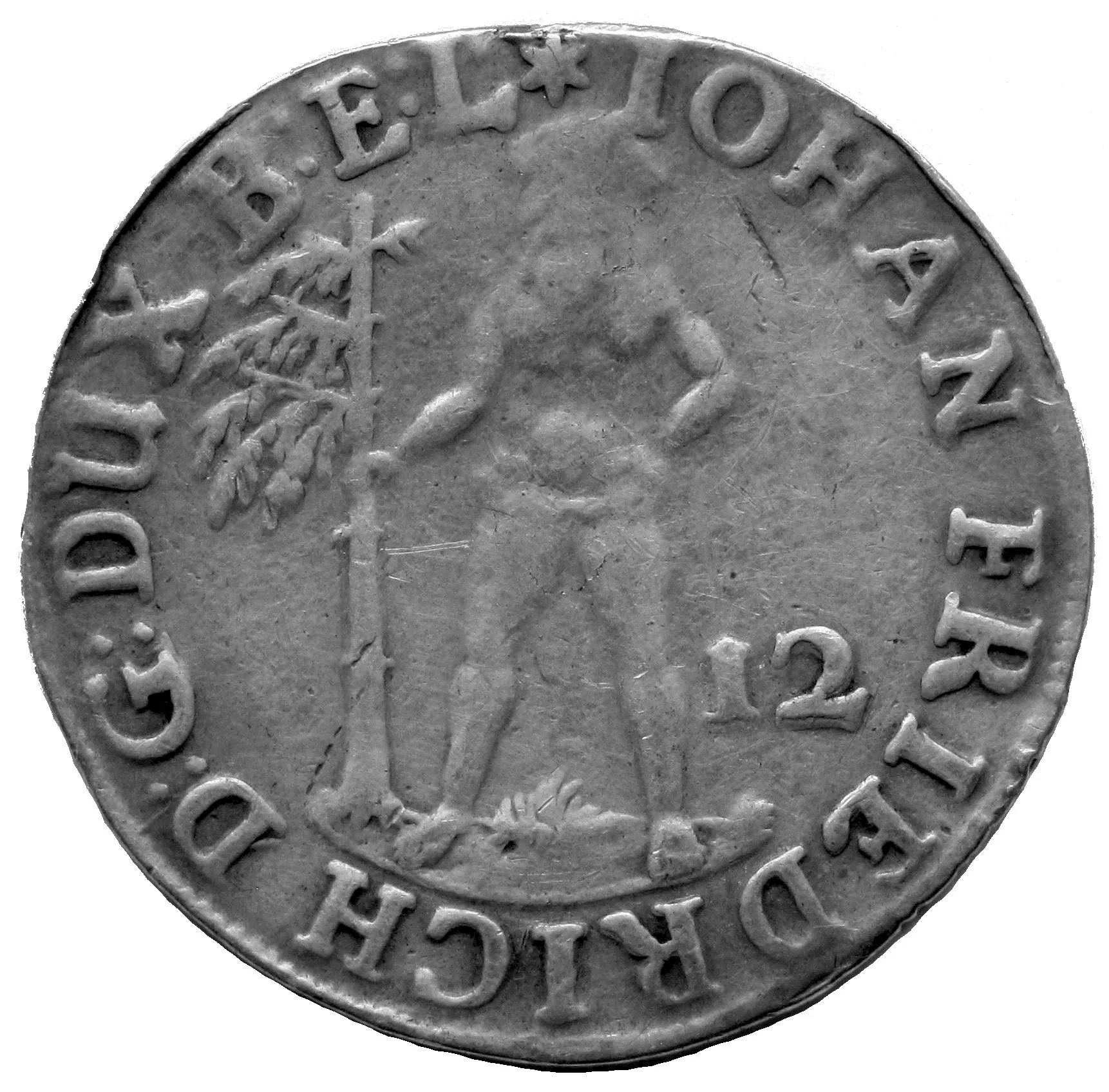
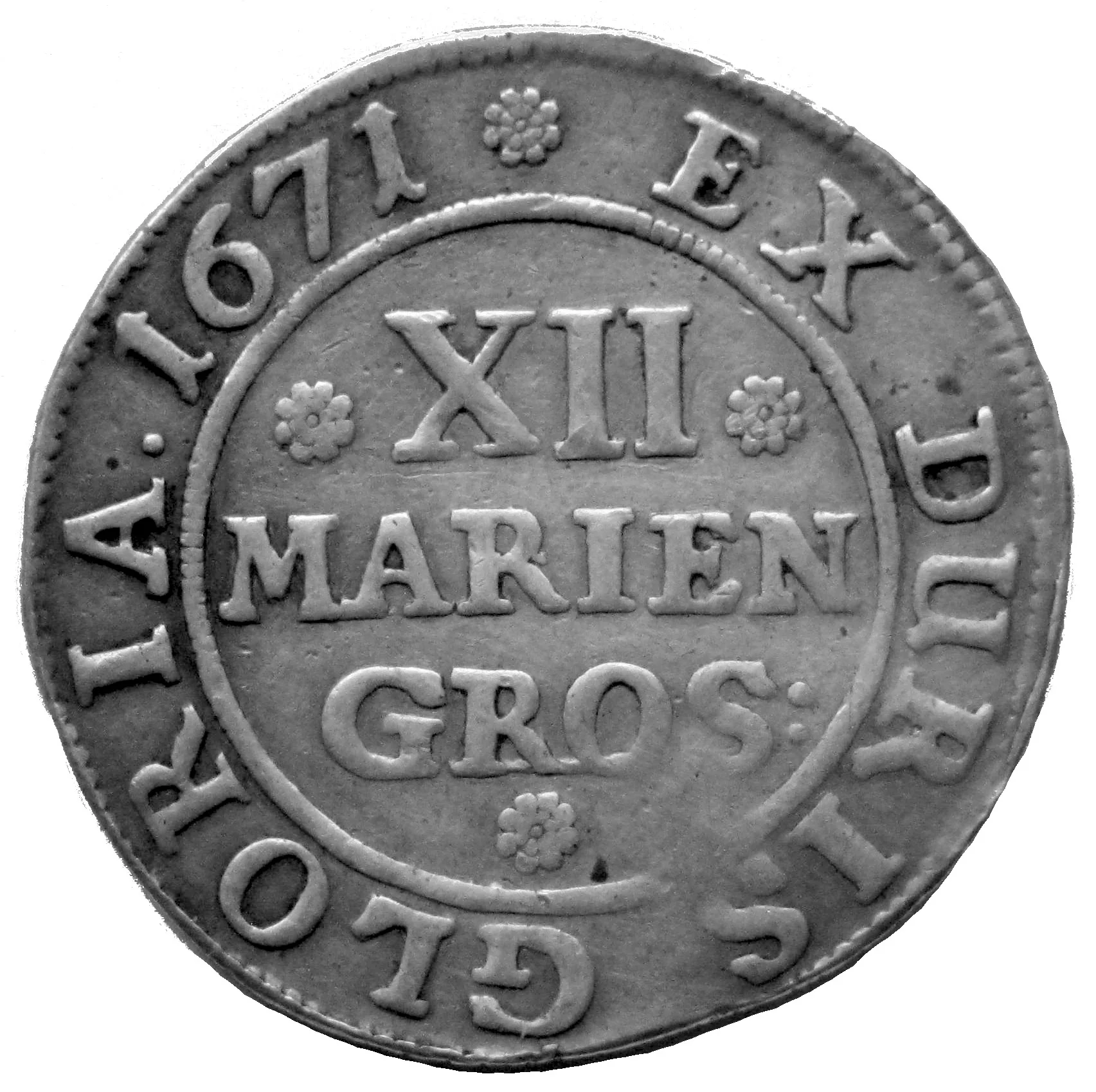
12 Mariengroschen – Brunswick-Lüneburg-Calenberg
Germany
Context
Years: 1669–1679
Country: Germany 
Issuer: Brunswick-Lüneburg-Calenberg
Ruler: John Frederick
Currency:
Demonetized: Yes
Material
References
KM: #Click to copy to clipboard136
Numista: #85937
Value
Bullion value: $19.19
Obverse
Reverse
Description:
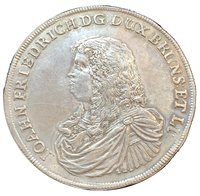
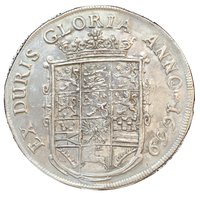
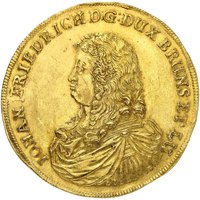
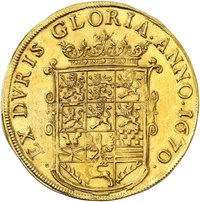
Denomination in circle, dates in surrounding legend.
Inscription:
🏵EX DURIS GLORIA. 1671
🏵 XII 🏵
MARIEN
GROS:
🏵
🏵 XII 🏵
MARIEN
GROS:
🏵
Script: Latin
Edge
Mintings
| Year | Mint Mark | Mintage | Quality | Collection |
|---|---|---|---|---|
| 1669 | — | — | ||
| 1670 | — | — | ||
| 1671 | — | — | ||
| 1672 | — | — | ||
| 1673 | — | — | ||
| 1674 | — | — | ||
| 1675 | — | — | ||
| 1676 | — | — | ||
| 1677 | — | — | ||
| 1678 | — | — | ||
| 1679 | — | — |
Historical background
In 1669, the Duchy of Brunswick-Lüneburg, specifically the Principality of Calenberg, was grappling with a severe and chronic monetary crisis typical of the Holy Roman Empire in the 17th century. The fundamental problem was the proliferation of debased coinage, as various territorial rulers, including the Calenberg line, engaged in competitive currency devaluation known as Kipper- und Wipperzeit practices. By reducing the precious metal content in coins while maintaining their face value, rulers sought short-term profit to finance state expenditures, but this flooded the economy with unstable, low-quality money, destroying public trust.
The situation was exacerbated by the fragmented political landscape, as neighboring states like the Bishopric of Hildesheim and the City of Brunswick minted their own competing currencies, creating a chaotic monetary zone. For Calenberg, this led to Gresham's Law in full effect: "bad" debated coins drove "good" full-weight coins out of circulation, as people hoarded silver or used it for foreign trade. This instability crippled commerce, as merchants faced unpredictable exchange rates and losses, while the population suffered from hidden inflation as the real purchasing power of their coins eroded.
Duke Johann Friedrich, ruling Calenberg from 1665, recognized the need for reform. The year 1669 fell within a period of attempted stabilization, where efforts were made to agree on common minting standards with neighboring territories. However, creating a uniform and trustworthy currency was a protracted political struggle. The background for 1669 is thus one of lingering monetary disorder, with the authorities seeking cooperative solutions to restore confidence in the currency, a necessary foundation for economic recovery and state finance in the aftermath of the Thirty Years' War.
The situation was exacerbated by the fragmented political landscape, as neighboring states like the Bishopric of Hildesheim and the City of Brunswick minted their own competing currencies, creating a chaotic monetary zone. For Calenberg, this led to Gresham's Law in full effect: "bad" debated coins drove "good" full-weight coins out of circulation, as people hoarded silver or used it for foreign trade. This instability crippled commerce, as merchants faced unpredictable exchange rates and losses, while the population suffered from hidden inflation as the real purchasing power of their coins eroded.
Duke Johann Friedrich, ruling Calenberg from 1665, recognized the need for reform. The year 1669 fell within a period of attempted stabilization, where efforts were made to agree on common minting standards with neighboring territories. However, creating a uniform and trustworthy currency was a protracted political struggle. The background for 1669 is thus one of lingering monetary disorder, with the authorities seeking cooperative solutions to restore confidence in the currency, a necessary foundation for economic recovery and state finance in the aftermath of the Thirty Years' War.
💎 Extremely Rare