

1 Giulio – Papal States
Vatican City
Context
Years: 1763–1765
Country: Vatican City 
Issuer: Papal States
Ruler: Clement XIII
Currency:
(1534—1835)
Demonetized: Yes
Material
References
KM: #Click to copy to clipboard1004
Numista: #84906
Value
Bullion value: $7.06
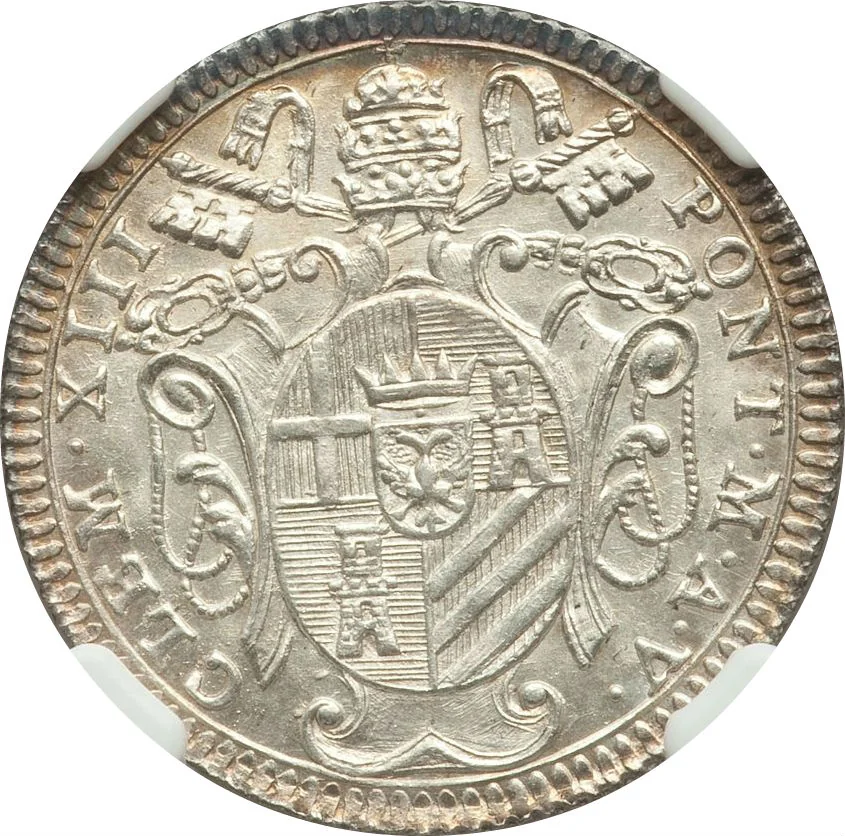
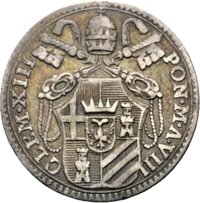
Obverse
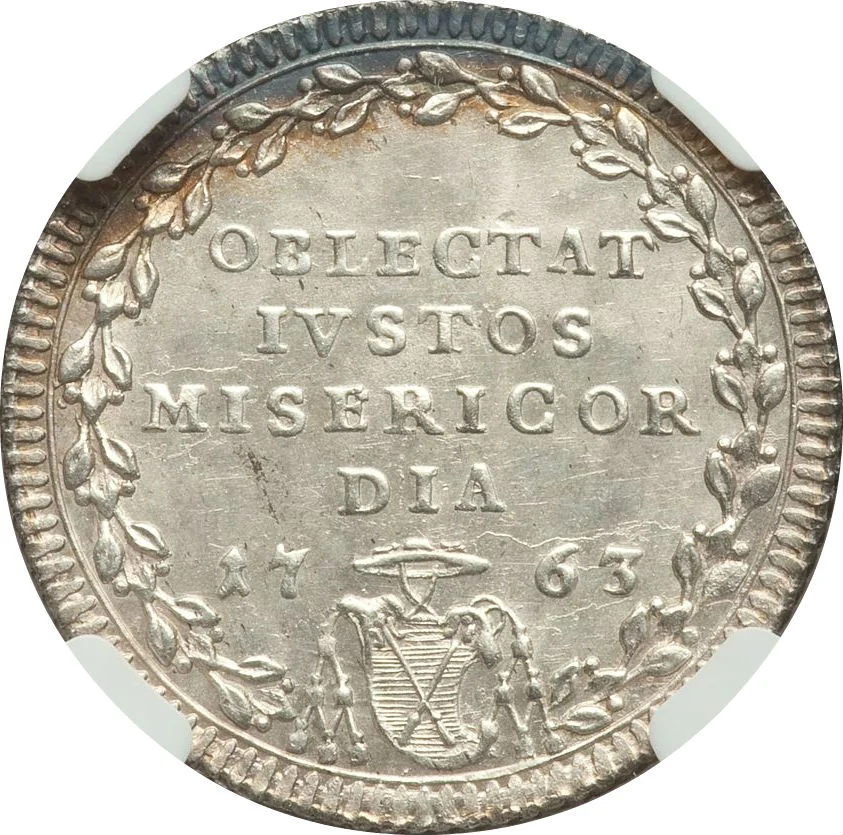
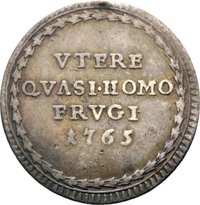
Reverse
Description:
Dated inscription within wreath.
Inscription:
OBLECTAT
IVSTOS
MISERICOR
DIA
17 63
IVSTOS
MISERICOR
DIA
17 63
Script: Latin
Edge
Stringed
Mints
| Name | Mark |
|---|---|
| Rome | — |
Mintings
| Year | Mint Mark | Mintage | Quality | Collection |
|---|---|---|---|---|
| 1763 | — | — | ||
| 1764 | — | — | ||
| 1765 | — | — |
Historical background
In 1763, the Papal States, a patchwork of central Italian territories under the sovereign temporal rule of the Pope, operated within a complex and archaic monetary system typical of the ancien régime. The primary unit of account was the scudo (plural: scudi), divided into 100 baiochi, each of which was further divided into 10 quattrini. However, the actual circulating coinage was a bewildering array of physical coins from various mints (including Rome, Bologna, and Ancona) and from different eras, alongside significant quantities of foreign specie, particularly Spanish silver pieces of eight. This created a chronic problem of valuation, as the intrinsic metal value of older or foreign coins often differed from their official face value, leading to frequent recoinages, fraud, and market confusion.
The financial situation of the Papal government itself was a key driver of monetary instability. Persistent budget deficits, fueled by administrative costs, patronage, and grand artistic projects, often led the Camera Apostolica (the papal treasury) to engage in debasement—reducing the silver content in newly minted coins while mandating they circulate at the old face value. This practice, essentially a form of inflation tax, eroded public trust in the currency and encouraged hoarding of full-weight coins (Gresham's Law in action). Furthermore, the Papal States lacked a central banking institution, so credit was limited, and large transactions often relied on bills of exchange handled by private bankers, distancing the state from effective monetary policy.
Overall, the currency situation in 1763 was one of fragile complexity. It was a system straining under the weight of pre-modern finance, lacking uniformity and stability, and heavily influenced by the fiscal needs of the papal government. This instability hindered commerce and reflected the broader economic stagnation of the region, which stood in contrast to the financial innovations occurring in contemporary northern European states. The system would remain largely unchanged until the upheavals of the Napoleonic era forced a complete restructuring.
The financial situation of the Papal government itself was a key driver of monetary instability. Persistent budget deficits, fueled by administrative costs, patronage, and grand artistic projects, often led the Camera Apostolica (the papal treasury) to engage in debasement—reducing the silver content in newly minted coins while mandating they circulate at the old face value. This practice, essentially a form of inflation tax, eroded public trust in the currency and encouraged hoarding of full-weight coins (Gresham's Law in action). Furthermore, the Papal States lacked a central banking institution, so credit was limited, and large transactions often relied on bills of exchange handled by private bankers, distancing the state from effective monetary policy.
Overall, the currency situation in 1763 was one of fragile complexity. It was a system straining under the weight of pre-modern finance, lacking uniformity and stability, and heavily influenced by the fiscal needs of the papal government. This instability hindered commerce and reflected the broader economic stagnation of the region, which stood in contrast to the financial innovations occurring in contemporary northern European states. The system would remain largely unchanged until the upheavals of the Napoleonic era forced a complete restructuring.
💎 Extremely Rare