

1 Zecchino – Porcia
Italy

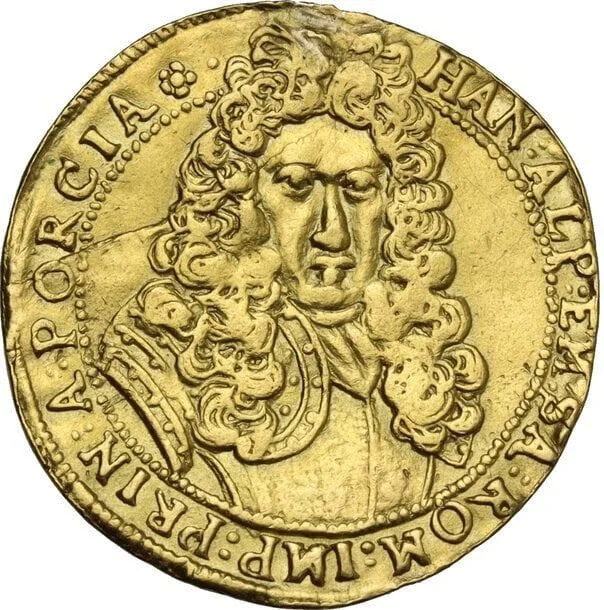
Obverse
Description:
Armored bust in long wig.
Inscription:
HAN. ALP. EM. SA. ROM. IMP. PRIN. A. PORCIA.
Script: Latin
Engraver: Michael Miller
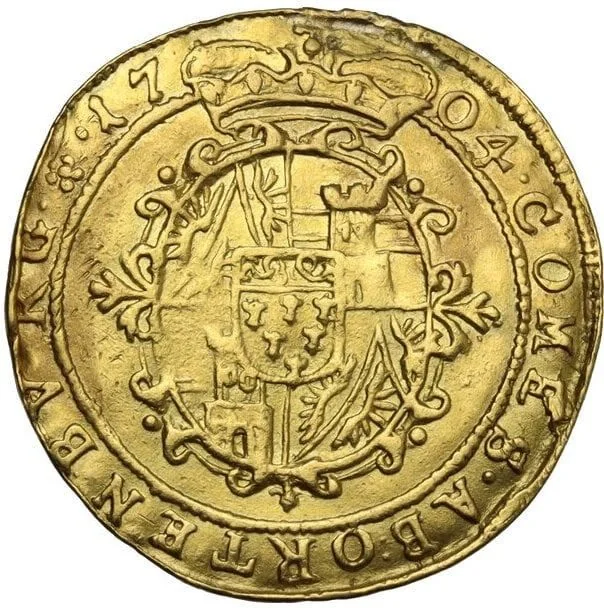
Reverse
Description:
Shield with four-fold arms and central shield in baroque frame, date in upper margin.
Inscription:
COMES. AB(:)ORTENBV(-)RG.
Script: Latin
Engraver: Michael Miller
Edge
Categories
| Object> Armour |
| Symbols> Coat of Arms |
Mints
| Name | Mark |
|---|---|
| Sankt Veit | — |
Mintings
| Year | Mint Mark | Mintage | Quality | Collection |
|---|---|---|---|---|
| 1704 | — | — |
Historical background
In 1704, the Kingdom of Porcia found itself in a protracted monetary crisis, a direct consequence of the costly War of the Sable Succession (1698-1703). To finance its military campaigns, the royal treasury had resorted to the widespread debasement of the silver crown, the kingdom's primary coin. By reducing the precious metal content while maintaining its face value, the crown created short-term funds but flooded the economy with inferior currency. This led to rampant inflation, a severe loss of public confidence in the coinage, and the hoarding of older, purer crowns, which vanished from daily circulation.
The domestic turmoil was exacerbated by a disruptive imbalance in international trade. Porcia's chief export, high-quality wool, faced steep tariffs from rival power Mercantia, creating a trade deficit that drained silver bullion out of the country. This external drain, combined with internal debasement, resulted in a critical shortage of sound money. In response, a chaotic multi-currency system emerged in market towns and ports: foreign silver thalers and ducats circulated at a premium, barter became common in rural districts, and various private tokens were issued by desperate merchant guilds to facilitate local trade.
Facing economic paralysis and dwindling sovereign authority, King Alaric IV and his council enacted the Currency Reformation Act of 1704. This sweeping decree aimed to restore stability by recalling all debased crowns for re-minting at the historic, pre-war standard of purity. To attract bullion, the act also legalized the circulation of certain foreign coins at fixed exchange rates and established a royal bank, granted the sole right to issue paper notes backed by the new coinage. The success of this bold reform, however, hinged entirely on public trust and the kingdom's ability to stabilize its trade, leaving Porcia's financial future precarious as the year drew to a close.
The domestic turmoil was exacerbated by a disruptive imbalance in international trade. Porcia's chief export, high-quality wool, faced steep tariffs from rival power Mercantia, creating a trade deficit that drained silver bullion out of the country. This external drain, combined with internal debasement, resulted in a critical shortage of sound money. In response, a chaotic multi-currency system emerged in market towns and ports: foreign silver thalers and ducats circulated at a premium, barter became common in rural districts, and various private tokens were issued by desperate merchant guilds to facilitate local trade.
Facing economic paralysis and dwindling sovereign authority, King Alaric IV and his council enacted the Currency Reformation Act of 1704. This sweeping decree aimed to restore stability by recalling all debased crowns for re-minting at the historic, pre-war standard of purity. To attract bullion, the act also legalized the circulation of certain foreign coins at fixed exchange rates and established a royal bank, granted the sole right to issue paper notes backed by the new coinage. The success of this bold reform, however, hinged entirely on public trust and the kingdom's ability to stabilize its trade, leaving Porcia's financial future precarious as the year drew to a close.
✨ Legendary