

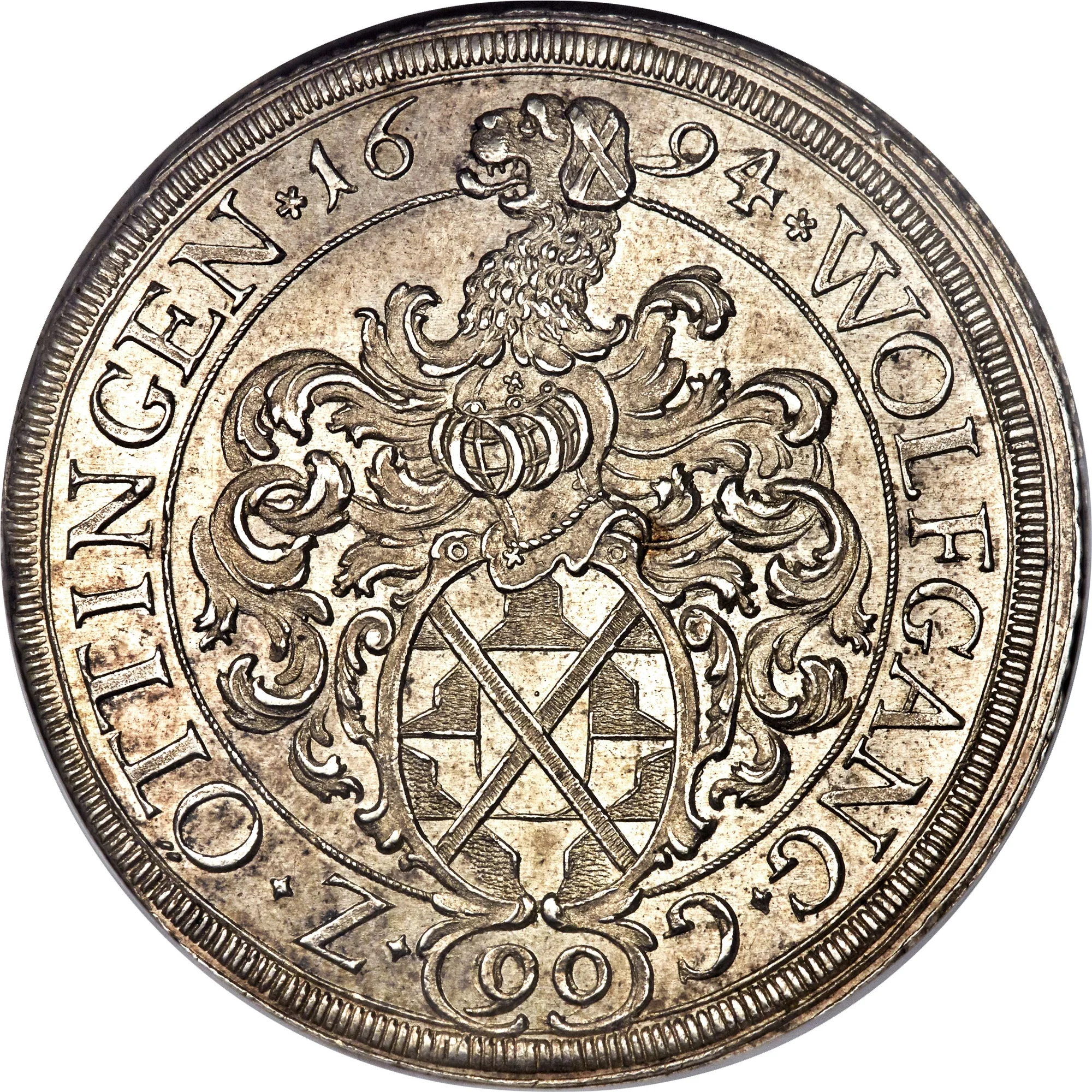
1 Thaler – Öttingen-Wallerstein
Germany

Obverse
Description:
Helmet with dog-head crest over shield, date above, '90' Kreuzer below.
Inscription:
WOLFGANG. C - Z. ÖTTINGEN*1694*
(90)
(90)
Script: Latin
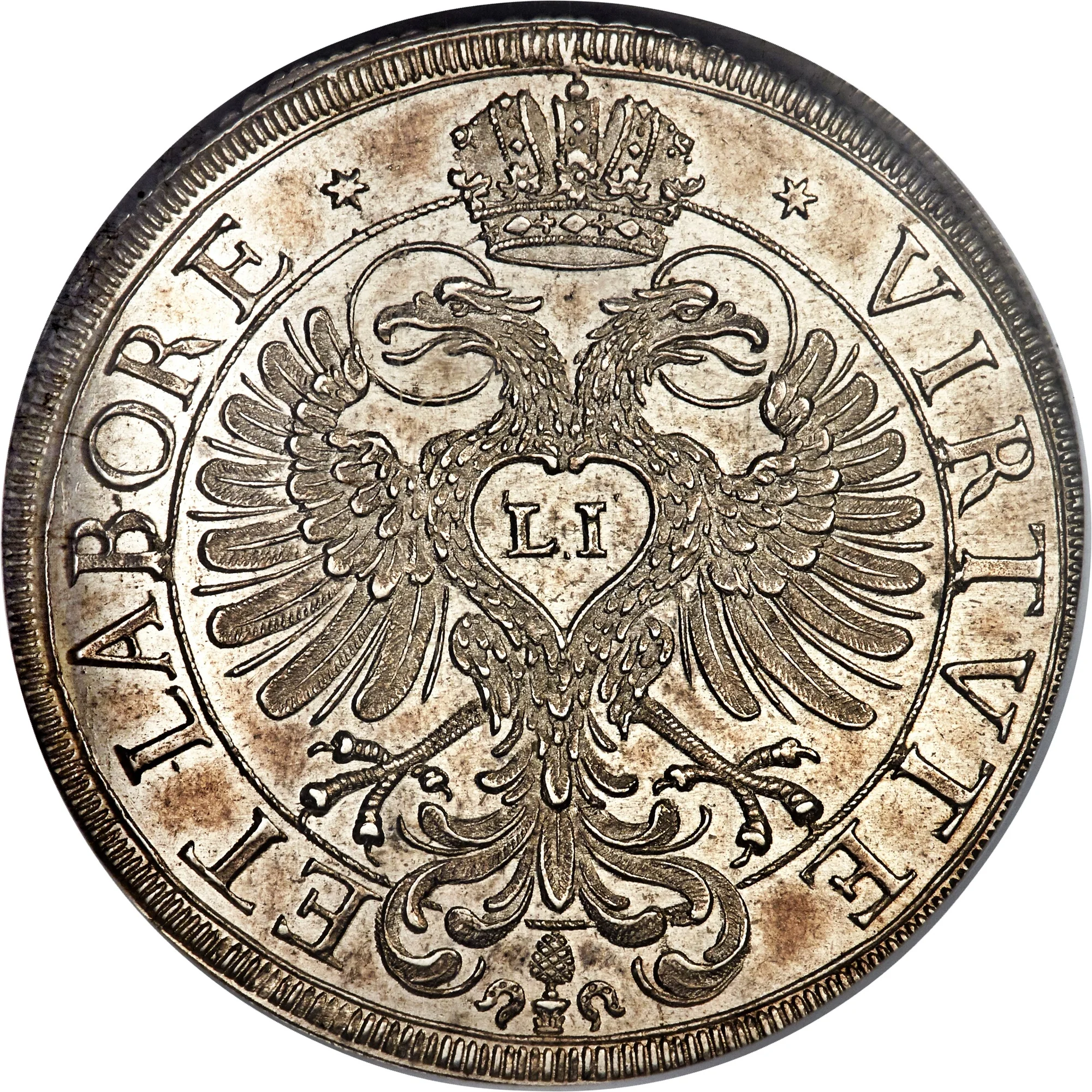
Reverse
Description:
Imperial eagle with crowned breast shield bearing "LI."
Inscription:
* VIRTVTE - ET LABORE *
Script: Latin
Edge
Mintings
| Year | Mint Mark | Mintage | Quality | Collection |
|---|---|---|---|---|
| 1694 | — | — |
Historical background
In 1694, the County of Öttingen-Wallerstein, like many small German states within the Holy Roman Empire, faced significant monetary instability. This was part of a wider crisis known as the Kipper- und Wipperzeit, a period of rampant currency debasement that had plagued the empire for decades. Princes and counts, often financially strained from the costs of court life and military obligations, sought to raise funds by reducing the precious metal content in their coinage while nominally maintaining its face value. This created a chaotic patchwork of currencies of varying worth, leading to inflation, loss of public trust, and harmful speculation.
Specifically for Öttingen-Wallerstein, the year 1694 falls within the reign of Count Philipp Karl (1663–1720). His territory, while not a major minting power, was certainly engaged in the monetary system of the region. The county would have been awash in not only its own minor coinage but also the debased coins from neighboring states, causing severe difficulties in trade and taxation. The economic disruption was compounded by the broader aftermath of the Thirty Years' War and the ongoing military demands of the Habsburg emperors, which placed continuous fiscal pressure on all imperial estates.
Consequently, the currency situation was characterized by confusion and devaluation. Efforts at imperial reform, like the Reichsmünzordnung (imperial minting ordinances), repeatedly failed to establish lasting order. For merchants and peasants in Öttingen-Wallerstein, this meant daily transactions were fraught with uncertainty, as the value of coins could differ by their origin and metal content. This instability ultimately undermined local economic development and reinforced the count's dependence on traditional agrarian revenues and the political maneuvering required to navigate the empire's complex financial landscape.
Specifically for Öttingen-Wallerstein, the year 1694 falls within the reign of Count Philipp Karl (1663–1720). His territory, while not a major minting power, was certainly engaged in the monetary system of the region. The county would have been awash in not only its own minor coinage but also the debased coins from neighboring states, causing severe difficulties in trade and taxation. The economic disruption was compounded by the broader aftermath of the Thirty Years' War and the ongoing military demands of the Habsburg emperors, which placed continuous fiscal pressure on all imperial estates.
Consequently, the currency situation was characterized by confusion and devaluation. Efforts at imperial reform, like the Reichsmünzordnung (imperial minting ordinances), repeatedly failed to establish lasting order. For merchants and peasants in Öttingen-Wallerstein, this meant daily transactions were fraught with uncertainty, as the value of coins could differ by their origin and metal content. This instability ultimately undermined local economic development and reinforced the count's dependence on traditional agrarian revenues and the political maneuvering required to navigate the empire's complex financial landscape.
✨ Legendary