

Cruzado Novo – Portugal
Portugal
Context
Material
References
KM: #Click to copy to clipboard282
Numista: #83579
Value
Bullion value: $38.40
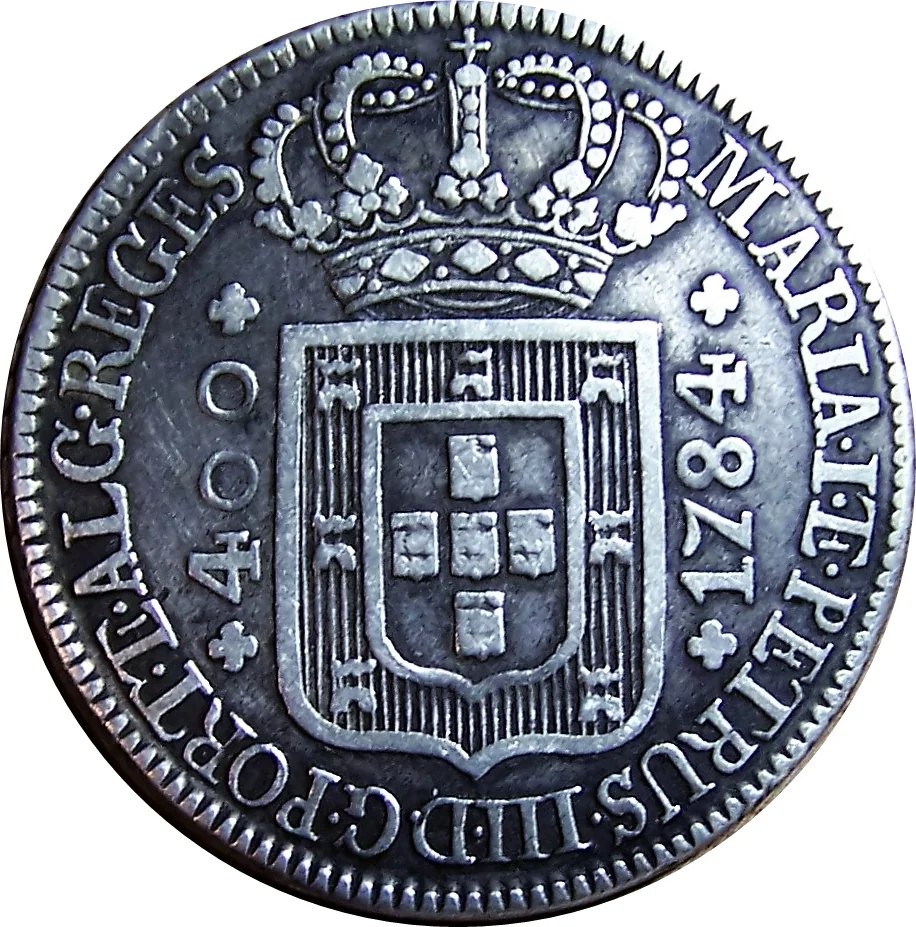
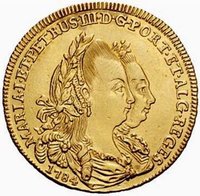
Obverse
Inscription:
MARIA.I.ET.PETRUS.III.D.G.PORT.ET.ALG.REGES
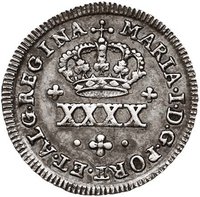
400
1784
400
1784
Script: Latin
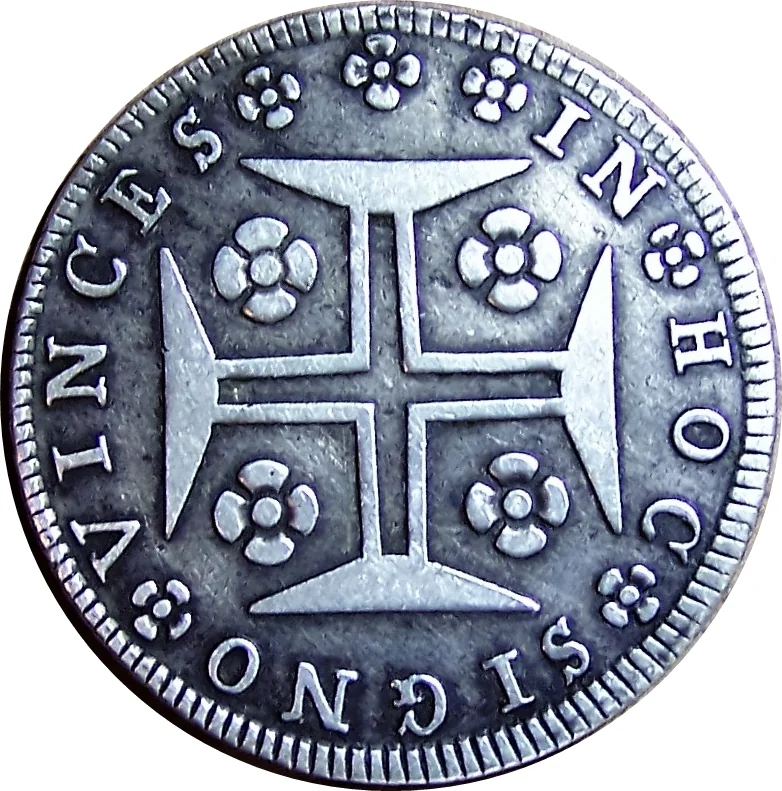
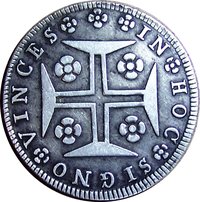
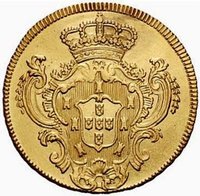
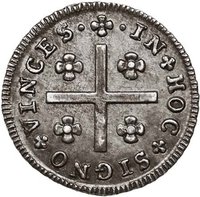
Reverse
Inscription:
IN HOC SIGNO VINCES
Script: Latin
Edge
Rope shaped
Mints
| Name | Mark |
|---|---|
| Imprensa Nacional - Casa da Moeda | — |
Mintings
| Year | Mint Mark | Mintage | Quality | Collection |
|---|---|---|---|---|
| 1779 | — | — | ||
| 1780 | — | — | ||
| 1781 | — | — | ||
| 1782 | — | — | ||
| 1784 | — | — | ||
| 1785 | — | 11,288 |
Historical background
In 1779, Portugal's currency situation was characterized by a complex and often unstable system, heavily influenced by the economic policies of the Prime Minister, the Marquis of Pombal, and the lasting impact of the 1755 Lisbon earthquake. The primary unit was the Portuguese real (plural: réis), with values often expressed in the thousands (milréis). However, the monetary landscape was a patchwork of both domestic and foreign coins. Gold coins like the moeda (worth 4,800 réis) and the peça (worth 6,400 réis) were used for large transactions and foreign trade, while silver and copper coins facilitated everyday commerce. A significant influx of Brazilian gold in the earlier part of the century had initially brought wealth but also contributed to inflation and a reliance on colonial resources.
The state of the currency was directly tied to Portugal's profound economic difficulties. The kingdom was deeply in debt from rebuilding Lisbon and financing the military, particularly during the ongoing War of the Spanish Succession (1775-1783), which strained the treasury. To raise funds, the Crown frequently resorted to debasement—reducing the precious metal content in coins—and issuing token copper currency. This led to a loss of confidence, frequent shortages of small change, and a disparity between the official face value of coins and their intrinsic metal value, causing disorder in trade and prices.
Furthermore, Portugal's economy was heavily dependent on trade with its colony, Brazil, and was constrained by the mercantilist policies of the time. The circulation of foreign coins, particularly Spanish silver pesos and gold from Brazil, was common, reflecting Portugal's integration into Atlantic trade networks but also its vulnerability to external flows. In essence, the currency situation in 1779 reflected a monarchy struggling to manage its finances, with a monetary system that was functional yet fragile, underpinned by colonial wealth but burdened by war debt and inflationary practices.
The state of the currency was directly tied to Portugal's profound economic difficulties. The kingdom was deeply in debt from rebuilding Lisbon and financing the military, particularly during the ongoing War of the Spanish Succession (1775-1783), which strained the treasury. To raise funds, the Crown frequently resorted to debasement—reducing the precious metal content in coins—and issuing token copper currency. This led to a loss of confidence, frequent shortages of small change, and a disparity between the official face value of coins and their intrinsic metal value, causing disorder in trade and prices.
Furthermore, Portugal's economy was heavily dependent on trade with its colony, Brazil, and was constrained by the mercantilist policies of the time. The circulation of foreign coins, particularly Spanish silver pesos and gold from Brazil, was common, reflecting Portugal's integration into Atlantic trade networks but also its vulnerability to external flows. In essence, the currency situation in 1779 reflected a monarchy struggling to manage its finances, with a monetary system that was functional yet fragile, underpinned by colonial wealth but burdened by war debt and inflationary practices.
💎 Extremely Rare