

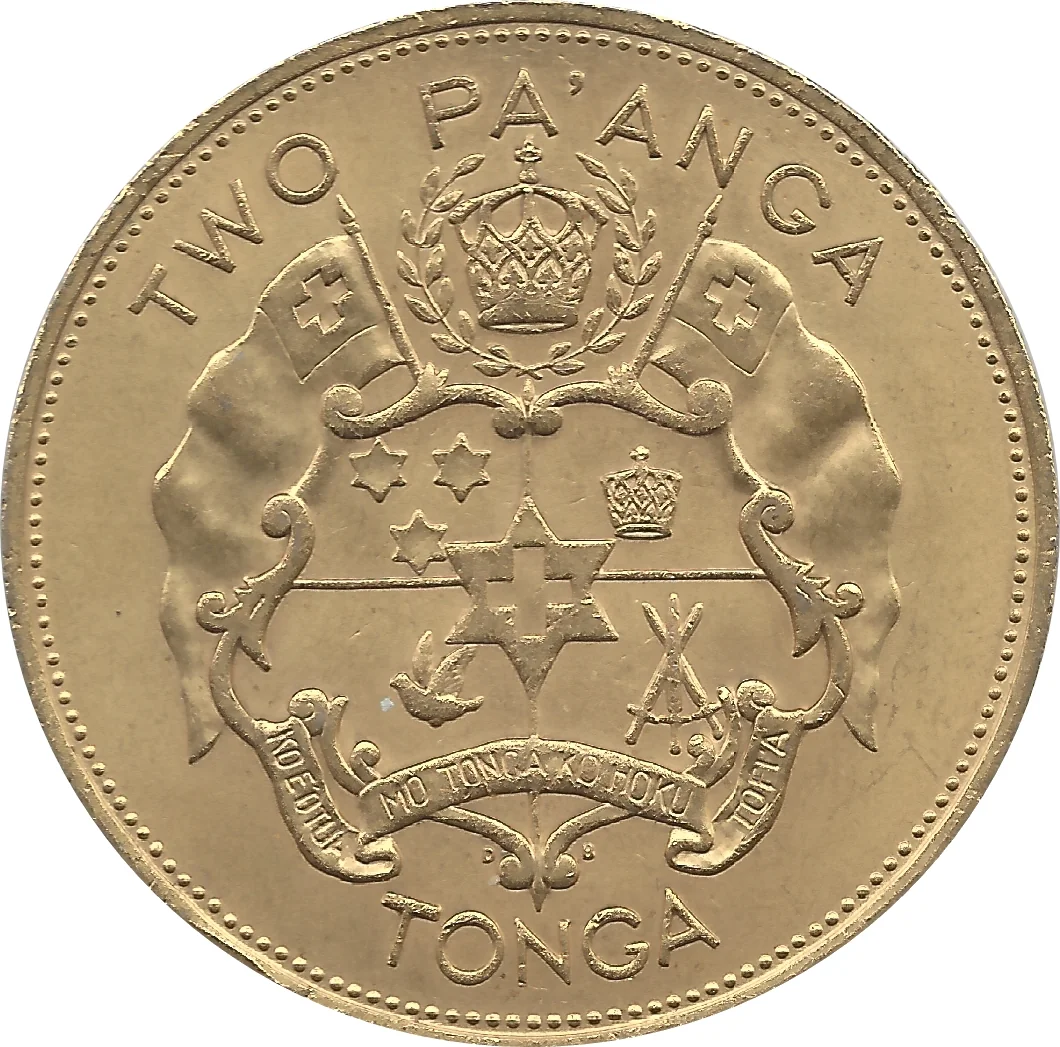
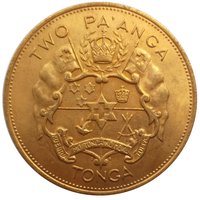
2 paʻanga – Tonga
Add to wishlist
Non-circulating coins
Commemoration: Investiture 1971
Tonga
Context
Material
References
KM: #
Numista: #120073
Value
Exchange value: 2 TOP
Obverse
Description:
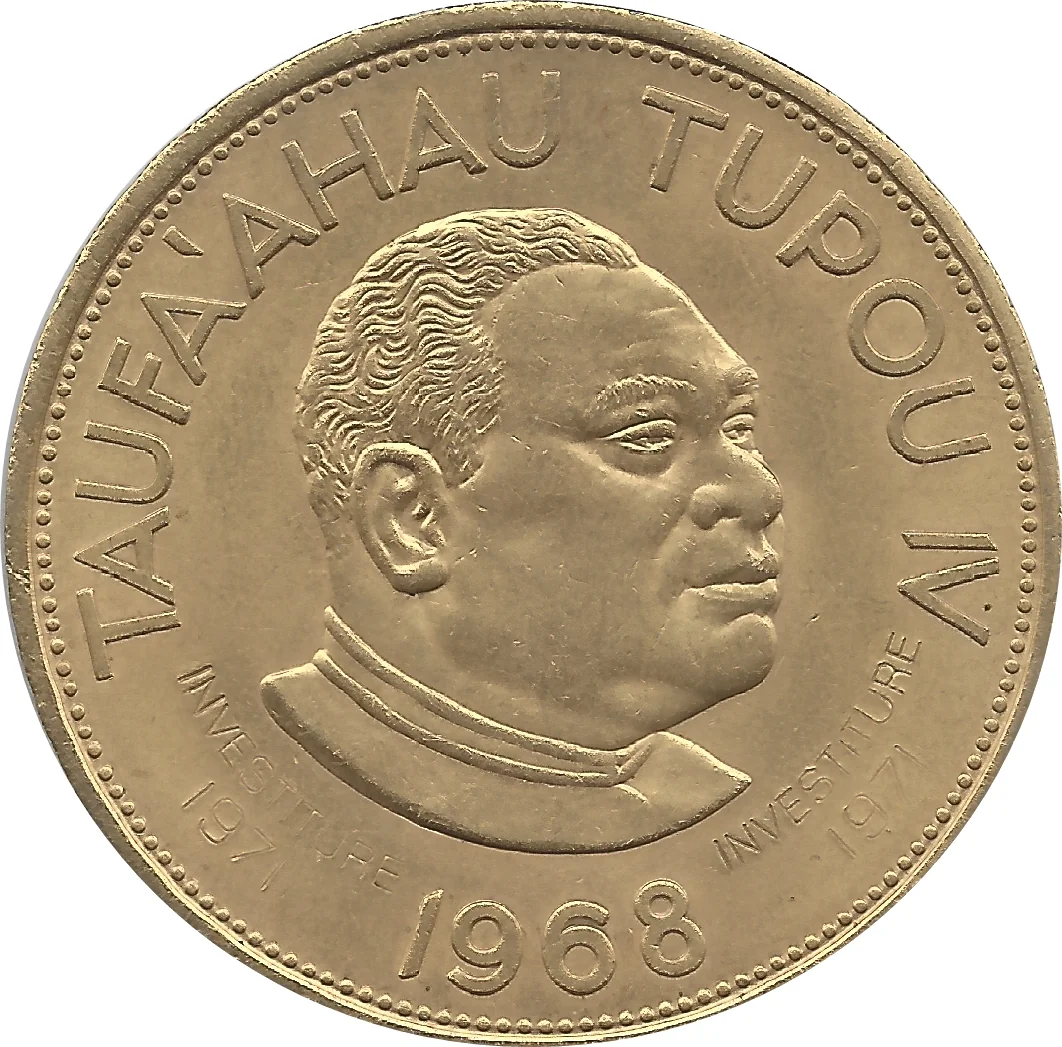
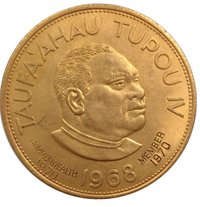
Bust of King Taufa'ahau Tupou IV, dated and countermarked "Investiture 1971".
Inscription:
TAUFA'AHAU TUPOU IV
INVESTITURE 1971
1968
INVESTITURE 1971
1968
Script: Latin
Reverse
Edge
Milled
Mintings
| Year | Mint Mark | Mintage | Quality | Collection |
|---|---|---|---|---|
| 1968 | — | 3,000 | ||
| 1968 | — | 1,000 | Proof |
Historical background
In 1968, the Kingdom of Tonga operated under a unique and somewhat complex currency arrangement, a legacy of its historical ties as a British-protected state. The official legal tender was the Tongan pound (£), which was pegged at par with the British pound sterling. This system meant that British coins and banknotes circulated freely alongside locally issued Tongan currency. The Tongan pound itself was subdivided into 20 shillings, each of 12 pence, adhering to the traditional British imperial system.
However, this was a period of significant transition. Planning was already underway for a major decimalisation reform, which would come to fruition just a few years later. The economic rationale was to modernise the monetary system, simplify transactions, and assert a stronger national financial identity. The groundwork for introducing a new decimal currency, the pa'anga, divided into 100 seniti, was being laid, with the changeover officially set for April 1967 but with a transition period where both systems coexisted.
Therefore, the currency situation in 1968 was one of duality and impending change. While transactions could still be conducted in pounds, shillings, and pence using both British and Tongan notes, the new pa'anga and seniti coins and notes were increasingly entering circulation. This period effectively served as a practical, real-world test of the new decimal system, preparing the population for the full retirement of the old imperial currency and solidifying the pa'anga as the sole symbol of Tongan sovereignty in monetary affairs.
However, this was a period of significant transition. Planning was already underway for a major decimalisation reform, which would come to fruition just a few years later. The economic rationale was to modernise the monetary system, simplify transactions, and assert a stronger national financial identity. The groundwork for introducing a new decimal currency, the pa'anga, divided into 100 seniti, was being laid, with the changeover officially set for April 1967 but with a transition period where both systems coexisted.
Therefore, the currency situation in 1968 was one of duality and impending change. While transactions could still be conducted in pounds, shillings, and pence using both British and Tongan notes, the new pa'anga and seniti coins and notes were increasingly entering circulation. This period effectively served as a practical, real-world test of the new decimal system, preparing the population for the full retirement of the old imperial currency and solidifying the pa'anga as the sole symbol of Tongan sovereignty in monetary affairs.
💎 Very Rare