

1 speciedaler – Norway
Add to wishlist
Norway
Context
Years: 1776–1785
Issuer: Norway
Ruler: Christian VII
Currency:
(1746—1814)
Demonetized: Yes
Total mintage: 578,100
Material
References
KM: #
Numista: #82373
Value
Bullion value: $63.14
Obverse
Description:
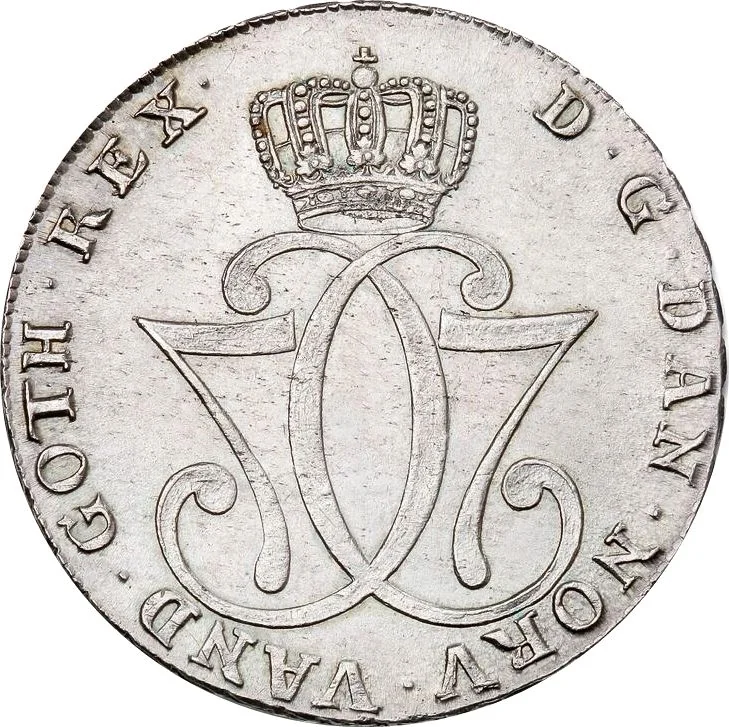
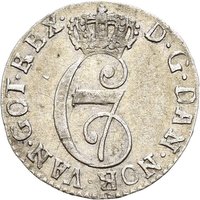
Crowned mirrored monogram of Christian VII within an inscription and beaded border.
Inscription:
· D · G · DAN · NORV · VAND · GOTH · REX ·
Script: Latin
Reverse
Description:
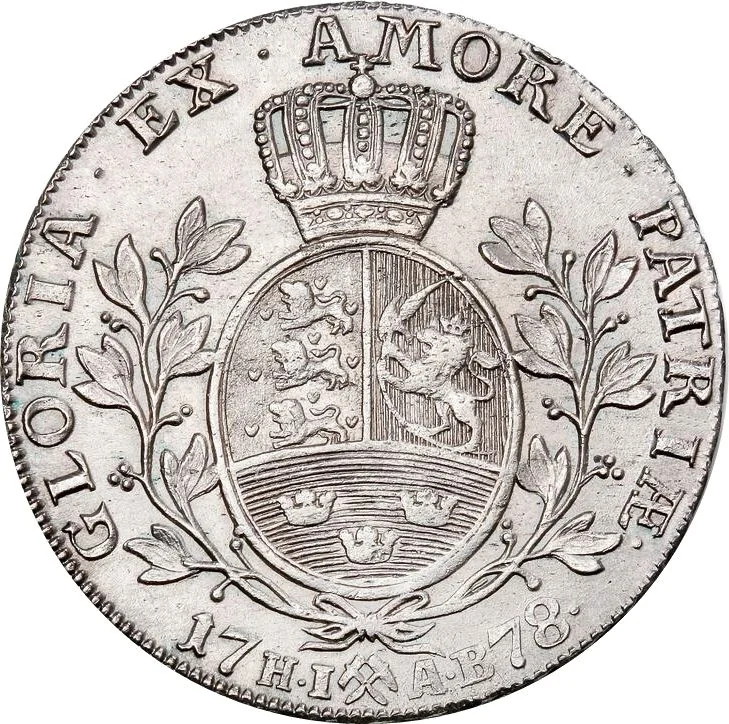
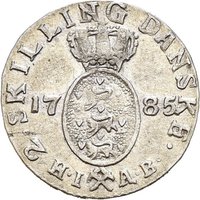
Danish-Norwegian-Holstein crowned coat of arms in a shield, flanked by laurel branches tied below. Surrounding inscription. Date and mintmaster initials flank mintmark under the bow. Beaded edge.
Inscription:
·GLORIA · EX · AMORE · PATRIÆ·
·17 H·I ⚒ A·B 78·
·17 H·I ⚒ A·B 78·
Script: Latin
Edge
Mints
| Name | Mark |
|---|---|
| Norwegian Mint | — |
Mintings
| Year | Mint Mark | Mintage | Quality | Collection |
|---|---|---|---|---|
| 1776 | — | 206,400 | ||
| 1777 | — | 127,000 | ||
| 1778 | — | 137,700 | ||
| 1779 | — | 64,000 | ||
| 1781 | — | 43,000 | ||
| 1785 | — | — |
Historical background
In 1776, Norway, then in a union with Denmark under the Danish crown, operated within a complex and strained monetary system. The official currency was the Danish rigsdaler, divided into 96 skilling. However, this system was not uniform; a severe shortage of official coinage, particularly small change for everyday transactions, had plagued the economy for decades. This scarcity led to the widespread use of a confusing array of substitutes, including foreign coins (like German and Dutch), private token coins issued by merchants and mines, and even physical goods used in barter, especially in remote rural areas.
The underlying economic pressures were significant. Norway's economy was heavily dependent on exports like timber, fish, and metals, but it remained largely under Danish mercantile control through the Kongelig Oktroi (Royal Charter). Revenues flowed to Copenhagen, while Norway faced trade restrictions and often bore the brunt of financing the union's wars. The Seven Years' War (1756-1763) had left Denmark-Norway with substantial debt, leading to inflationary pressures. Furthermore, the global economic turmoil following the American Revolution in 1776 began affecting European trade networks, introducing new uncertainties for Norwegian exporters.
Consequently, 1776 fell within a period of monetary instability and transition. The Danish state made sporadic attempts to reform the currency, but a comprehensive solution remained elusive. The lack of a reliable, standardized coinage hindered commerce and highlighted Norway's subordinate economic position. This fragmented monetary landscape would persist until the major banking and currency reforms initiated after the Napoleonic Wars, which ultimately led to Norway establishing its own central bank and distinct currency, the speciedaler, in 1816.
The underlying economic pressures were significant. Norway's economy was heavily dependent on exports like timber, fish, and metals, but it remained largely under Danish mercantile control through the Kongelig Oktroi (Royal Charter). Revenues flowed to Copenhagen, while Norway faced trade restrictions and often bore the brunt of financing the union's wars. The Seven Years' War (1756-1763) had left Denmark-Norway with substantial debt, leading to inflationary pressures. Furthermore, the global economic turmoil following the American Revolution in 1776 began affecting European trade networks, introducing new uncertainties for Norwegian exporters.
Consequently, 1776 fell within a period of monetary instability and transition. The Danish state made sporadic attempts to reform the currency, but a comprehensive solution remained elusive. The lack of a reliable, standardized coinage hindered commerce and highlighted Norway's subordinate economic position. This fragmented monetary landscape would persist until the major banking and currency reforms initiated after the Napoleonic Wars, which ultimately led to Norway establishing its own central bank and distinct currency, the speciedaler, in 1816.
💎 Extremely Rare