

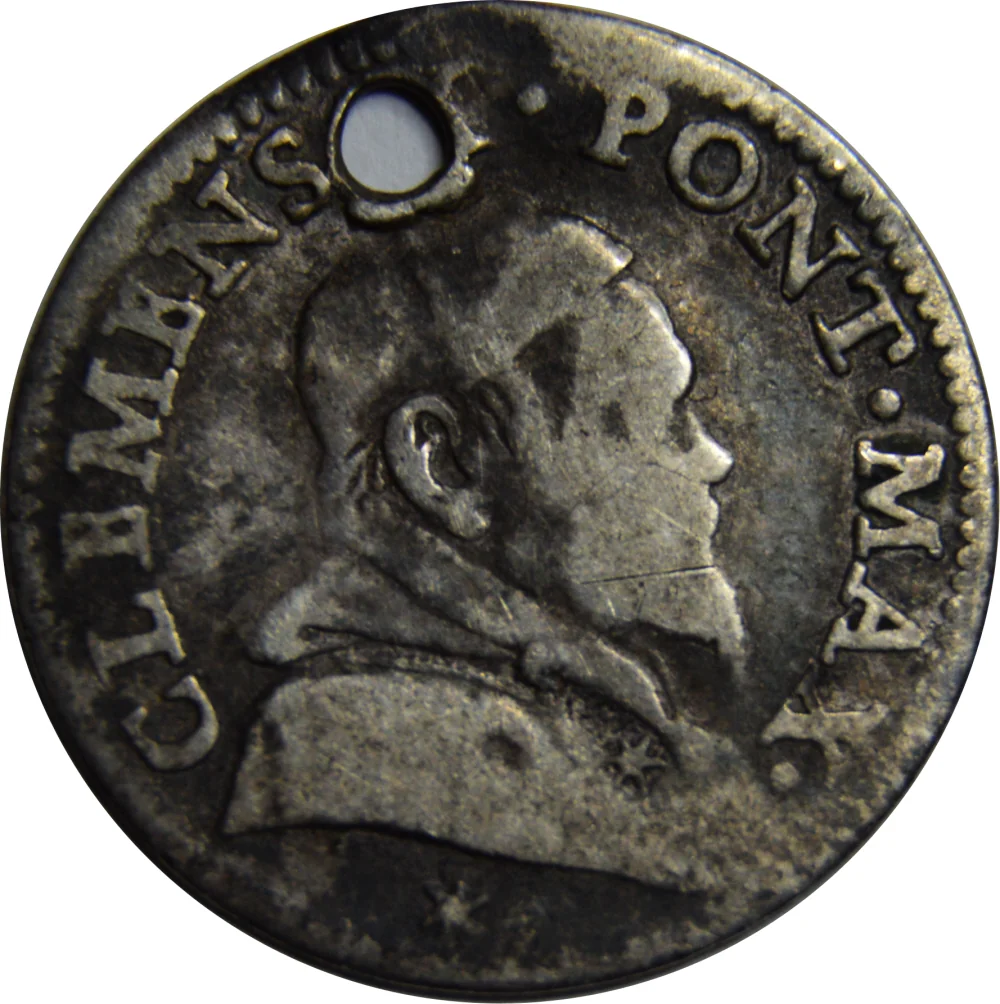
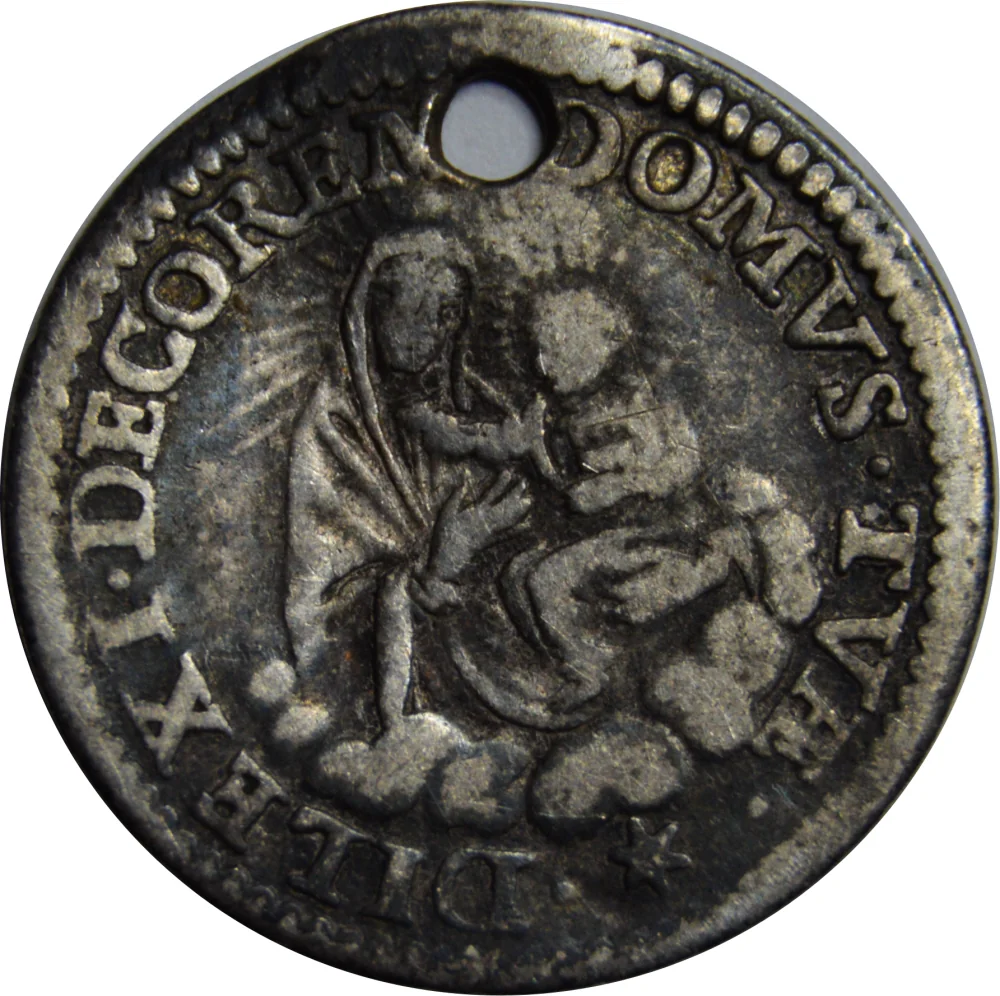
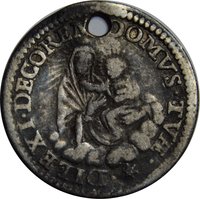
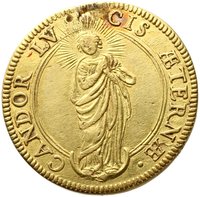
1 Grosso – Papal States
Vatican City
Context
Years: 1660–1676
Country: Vatican City 
Issuer: Papal States
Ruler: Clement X
Currency:
(1534—1835)
Demonetized: Yes
Material
References
KM: #Click to copy to clipboard337
Numista: #80612
Value
Bullion value: $3.72
Obverse
Reverse
Edge
Plain
Categories
| Person> Monarch |
| Person> Religious figure |
| Object> Hat |
| Mustache/Beard |
Mintings
| Year | Mint Mark | Mintage | Quality | Collection |
|---|---|---|---|---|
| — | — | — |
Historical background
By 1660, the Papal States' monetary system was a complex and fragmented inheritance of centuries of piecemeal reforms. The primary unit was the scudo, a large silver coin, which existed alongside a bewildering array of subsidiary coins in copper (baiocchi and quattrini) and billon (debased silver). Crucially, the value of these coins was not fixed by their metal content alone but by official papal edicts, known as bolle, which could periodically revalue them. This created a dual system: moneta di conto (money of account, used for bookkeeping) and moneta effettiva (physical coins in circulation), which often differed in value, leading to confusion and instability.
The period was marked by significant currency debasement and inflationary pressure. Facing persistent fiscal shortfalls from declining tax revenues and the immense costs of urban projects and administration, the Apostolic Chamber frequently resorted to reducing the silver content in coins or altering their official valuation. This practice, while providing short-term liquidity, eroded public trust and disrupted commerce. Merchants and bankers in Rome, a major European financial hub, had to constantly navigate fluctuating exchange rates between papal currency and the more stable coins of neighboring states like the Spanish real or the Florentine piastra.
Pope Alexander VII (reigned 1655-1667), in power in 1660, was aware of these monetary disorders but was largely preoccupied with his ambitious architectural and urban programs in Rome. While his reign saw some attempts at fiscal austerity, no comprehensive monetary reform was enacted during this specific year. The system remained one of managed instability, where the Pope's temporal need for revenue constantly undermined the currency's integrity, a tension that would persist until the sweeping reforms of Pope Innocent XII in the late 1690s. Thus, in 1660, the Papal States' currency was a tool of fiscal policy first and a stable medium of exchange second.
The period was marked by significant currency debasement and inflationary pressure. Facing persistent fiscal shortfalls from declining tax revenues and the immense costs of urban projects and administration, the Apostolic Chamber frequently resorted to reducing the silver content in coins or altering their official valuation. This practice, while providing short-term liquidity, eroded public trust and disrupted commerce. Merchants and bankers in Rome, a major European financial hub, had to constantly navigate fluctuating exchange rates between papal currency and the more stable coins of neighboring states like the Spanish real or the Florentine piastra.
Pope Alexander VII (reigned 1655-1667), in power in 1660, was aware of these monetary disorders but was largely preoccupied with his ambitious architectural and urban programs in Rome. While his reign saw some attempts at fiscal austerity, no comprehensive monetary reform was enacted during this specific year. The system remained one of managed instability, where the Pope's temporal need for revenue constantly undermined the currency's integrity, a tension that would persist until the sweeping reforms of Pope Innocent XII in the late 1690s. Thus, in 1660, the Papal States' currency was a tool of fiscal policy first and a stable medium of exchange second.
✨ Legendary