

30 kreuzer – Austrian Empire
Add to wishlist
Austria
Context
Year: 1737
Country: Austria
Issuer: Austrian Empire
Ruler: Charles VI
Currency:
(1520—1754)
Demonetized: Yes
Material
References
KM: #
Numista: #79550
Value
Bullion value: $18.25
Obverse
Description:
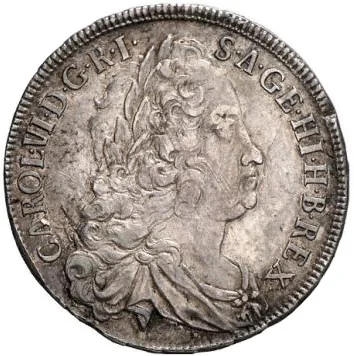
Laureate portrait right, head dividing legend.
Inscription:
CAROL VI D G R I / S A GE HI H B REX
Script: Latin
Reverse
Description:
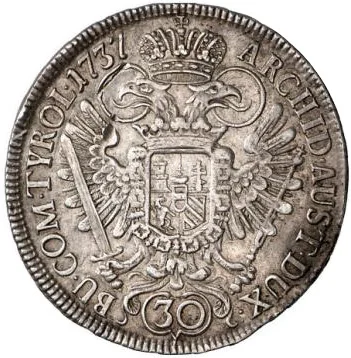
Double-headed imperial eagle with composite breast shield, central Austrian shield. Value below in dividing frame.
Inscription:
ARCHID AUST DUX (30) BU COM TYROL 1737
Script: Latin
Edge
Mints
| Name | Mark |
|---|---|
| Münze Österreich | — |
Mintings
| Year | Mint Mark | Mintage | Quality | Collection |
|---|---|---|---|---|
| 1737 | — | — |
Historical background
In 1737, the currency situation within the Habsburg-ruled Austrian Empire was complex and strained, a legacy of decades of near-continuous warfare, most recently the War of the Polish Succession (1733-1738). The state treasury was chronically depleted, leading to repeated debasements of the coinage. The primary silver coin, the Reichsthaler, and its fractional units like the Kreuzer, saw their precious metal content reduced to generate seigniorage revenue for the crown. This resulted in a proliferation of coins of varying intrinsic values, causing confusion in daily commerce and undermining public trust in the currency.
The monetary landscape was further fragmented by regional diversity. While the central authorities in Vienna issued coins, individual crown lands and even some cities retained the right to mint their own subsidiary coinage. This created a patchwork system where the value and acceptance of coins could differ significantly between, for example, Bohemia, Hungary, and the Austrian hereditary lands. The Empire also contended with a flood of foreign coins, particularly from the German states, circulating within its borders, which complicated trade and exchange.
These conditions placed a heavy burden on the economy, discouraging long-term investment and creating price instability. Merchants and bankers had to navigate a bewildering array of exchange rates, while the general population suffered from the effective devaluation of their money. The situation highlighted the Empire's need for greater fiscal and monetary centralization, a challenge that would preoccupy the Habsburg rulers for the rest of the century, culminating in the major reforms of Empress Maria Theresa and her successors.
The monetary landscape was further fragmented by regional diversity. While the central authorities in Vienna issued coins, individual crown lands and even some cities retained the right to mint their own subsidiary coinage. This created a patchwork system where the value and acceptance of coins could differ significantly between, for example, Bohemia, Hungary, and the Austrian hereditary lands. The Empire also contended with a flood of foreign coins, particularly from the German states, circulating within its borders, which complicated trade and exchange.
These conditions placed a heavy burden on the economy, discouraging long-term investment and creating price instability. Merchants and bankers had to navigate a bewildering array of exchange rates, while the general population suffered from the effective devaluation of their money. The situation highlighted the Empire's need for greater fiscal and monetary centralization, a challenge that would preoccupy the Habsburg rulers for the rest of the century, culminating in the major reforms of Empress Maria Theresa and her successors.
✨ Legendary