Logo Title
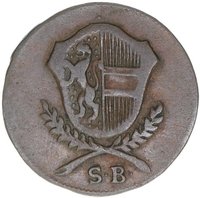
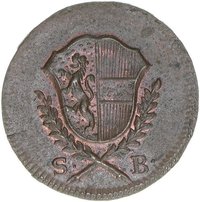
obverse
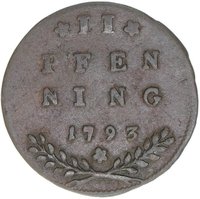
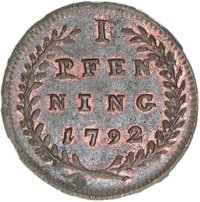
reverse
Numismatik Zöttl

2 Pfennigs – Bishopric of Salzburg

Context
Years: 1791–1793
Currency:
Demonetized: Yes
Material
Diameter: 19 mm
Weight: 2.7 g
Shape: Round
Composition: Copper
Magnetic: No
Alignment: Medal alignment
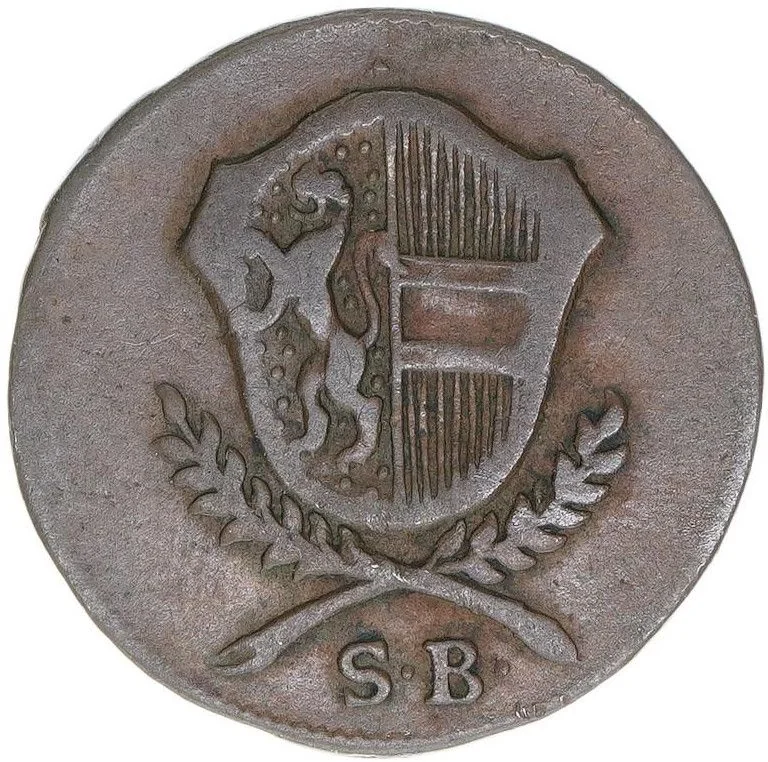
Obverse
OBVERSE ↑
flip
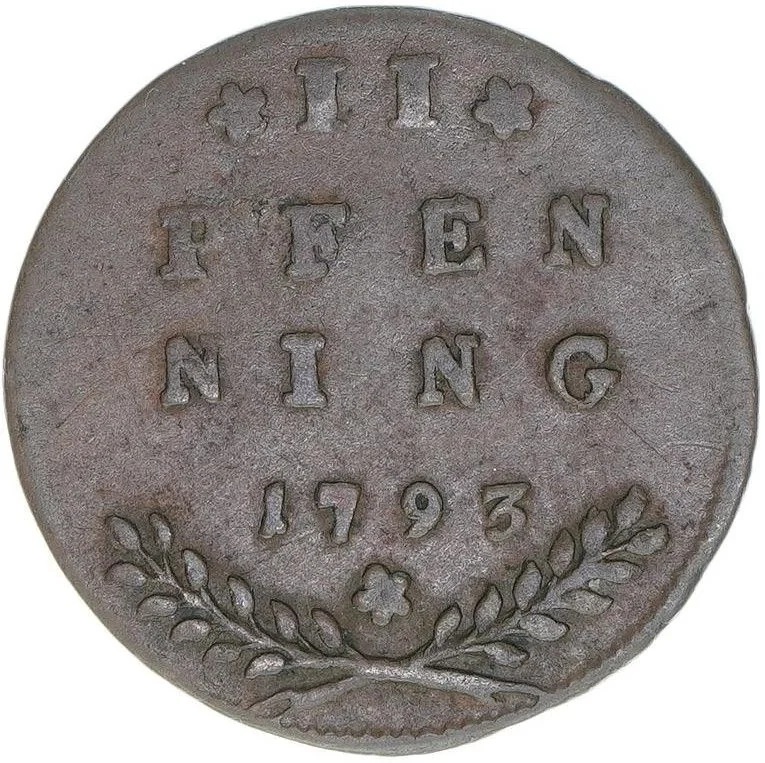
Reverse
REVERSE ↑
References
KM: #Click to copy to clipboard476.1
Numista: #79147

Obverse

Description:
Ornate shield with a rounded top, featuring the Salzburg arms, a wreath, and the letters "SB."
Inscription:
S. B.
Script: Latin

Reverse

Description:
Value and date in four lines,
a wreath below,
and a rosette under the date.
Inscription:
*II*

PFEN

NING

1793

*
Script: Latin

Edge


Mints

NameMark
Salzburg

Mintings

YearMint MarkMintageQualityCollection
1791
1793

Historical background

In 1791, the Prince-Archbishopric of Salzburg operated within the complex monetary landscape of the Holy Roman Empire. The region did not mint its own standard silver talers or gold coins for large-scale trade; instead, its currency system was dominated by the ubiquitous Reichsthaler and Gulden, as defined by the Imperial minting ordinances. However, Salzburg did produce its own subsidiary coinage, notably smaller silver coins like Kreuzers and Batzen, and heavily relied on a multitude of foreign coins circulating within its borders. This created a persistent environment of confusion and instability, as the value of these various coins fluctuated based on their metallic content and the credibility of the issuing authority.

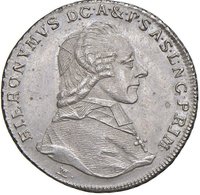
The local economy was further strained by the financial policies of the ruling Prince-Archbishop, Hieronymus von Colloredo. An enlightened reformer focused on modernizing the state, he faced constant budgetary pressures, including the need to fund his court, administrative projects, and architectural ambitions. To raise revenue, the mint in Salzburg periodically engaged in debasement—reducing the precious metal content in its locally minted coins while maintaining their face value. This practice, while providing short-term fiscal relief, eroded public trust, spurred inflation for everyday goods, and complicated commerce with neighboring territories whose currencies were stronger.

Thus, on the eve of the great European upheavals that would soon dissolve the Archbishopric itself (in 1803), Salzburg's currency situation was characterized by dependency and fragility. It was a system caught between imperial standards and local fiscal necessity, relying on a patchwork of foreign and often debased domestic coins. This monetary instability reflected the broader political and economic vulnerabilities of the ecclesiastical state just years before its secularization and absorption into the Habsburg Empire.
Legendary