

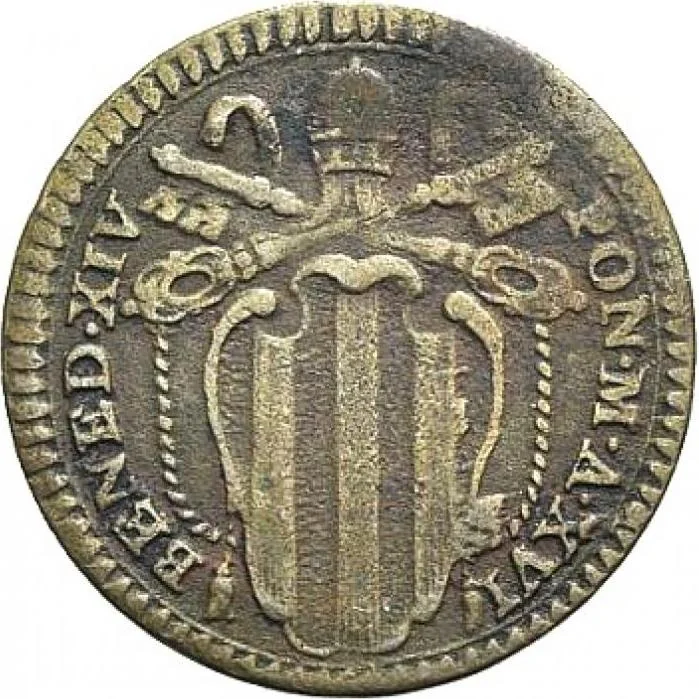
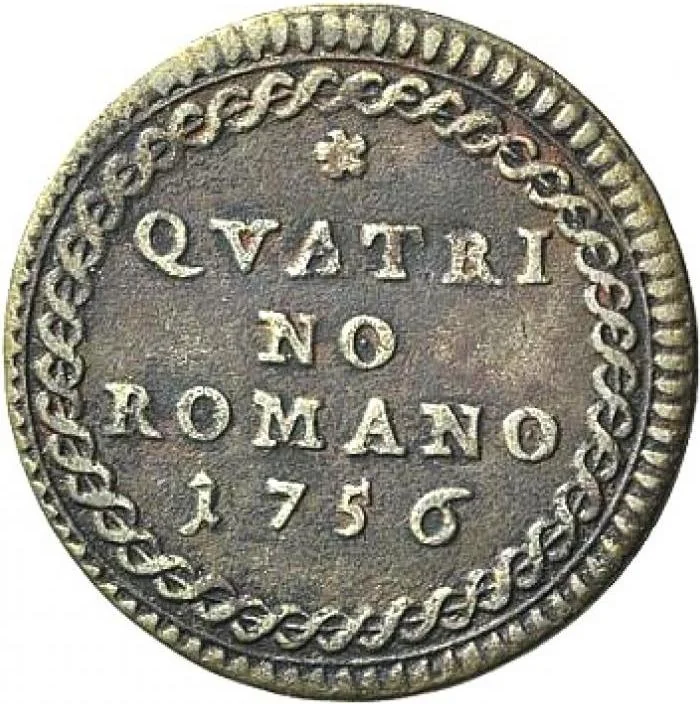
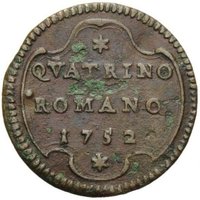
1 quattrino – Papal States
Add to wishlist
Vatican City
Context
Years: 1752–1756
Country: Vatican City
Issuer: Papal States
Ruler: Benedict XIV
Currency:
(1534—1835)
Demonetized: Yes
Material
References
KM: #
Numista: #119393
Obverse
Reverse
Edge
Plain
Categories
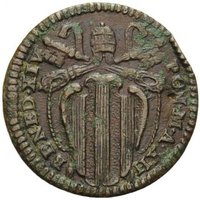
| Symbol> Crown |
| Symbols> Coat of Arms |
Mints
| Name | Mark |
|---|---|
| Rome | — |
Mintings
| Year | Mint Mark | Mintage | Quality | Collection |
|---|---|---|---|---|
| 1752 | — | — | ||
| 1754 | — | — | ||
| 1755 | — | — | ||
| 1756 | — | — |
Historical background
In 1752, the Papal States' monetary system was a complex and fragmented relic of medieval and Renaissance practices, reflecting its political structure as a collection of semi-autonomous cities and provinces. There was no single, unified Papal currency. Instead, the primary silver-based coin was the papal scudo (scudo Romano), which circulated alongside a multitude of older and regional coins, such as the baiocco and the grosso. The Roman Mint operated under the authority of the Camera Apostolica, but other papal legations like Bologna and Ferrara often issued their own subsidiary coinage, leading to a lack of standardization and varying exchange rates across the territory.
The system was fundamentally bimetallic, based on silver and gold, but suffered from chronic instability. A key problem was the frequent debasement of coinage, where the precious metal content was reduced to finance state expenditures or papal projects. This practice, along with the influx of foreign coins from trade, eroded public trust in the currency and complicated commerce. Furthermore, the value of coins was often officially set by proclamation (corso forzoso), which could diverge significantly from their intrinsic metal value, creating arbitrage opportunities and encouraging the hoarding or export of full-weight coins.
Pope Benedict XIV, reigning from 1740 to 1758, was aware of these monetary disorders and sought reform. His pontificate was marked by efforts to improve the Papal States' administration and finances. In the monetary sphere, he initiated studies and commissioned reports to understand the depth of the problem, laying the groundwork for future stabilization. However, in 1752, these reforms were still in their planning stages. The situation remained one of tangible confusion for merchants and citizens alike, emblematic of the broader challenges of governing the temporal papal territories in the mid-18th century.
The system was fundamentally bimetallic, based on silver and gold, but suffered from chronic instability. A key problem was the frequent debasement of coinage, where the precious metal content was reduced to finance state expenditures or papal projects. This practice, along with the influx of foreign coins from trade, eroded public trust in the currency and complicated commerce. Furthermore, the value of coins was often officially set by proclamation (corso forzoso), which could diverge significantly from their intrinsic metal value, creating arbitrage opportunities and encouraging the hoarding or export of full-weight coins.
Pope Benedict XIV, reigning from 1740 to 1758, was aware of these monetary disorders and sought reform. His pontificate was marked by efforts to improve the Papal States' administration and finances. In the monetary sphere, he initiated studies and commissioned reports to understand the depth of the problem, laying the groundwork for future stabilization. However, in 1752, these reforms were still in their planning stages. The situation remained one of tangible confusion for merchants and citizens alike, emblematic of the broader challenges of governing the temporal papal territories in the mid-18th century.
💎 Extremely Rare