

1 Speciedaler – Norway
Norway
Context
Year: 1664
Issuer: Norway 
Ruler: Frederick III
Currency:
(1523—1746)
Demonetized: Yes
Total mintage: 23,000
Material
References
KM: #Click to copy to clipboard70
Numista: #118949
Value
Bullion value: $72.60
Obverse
Description:
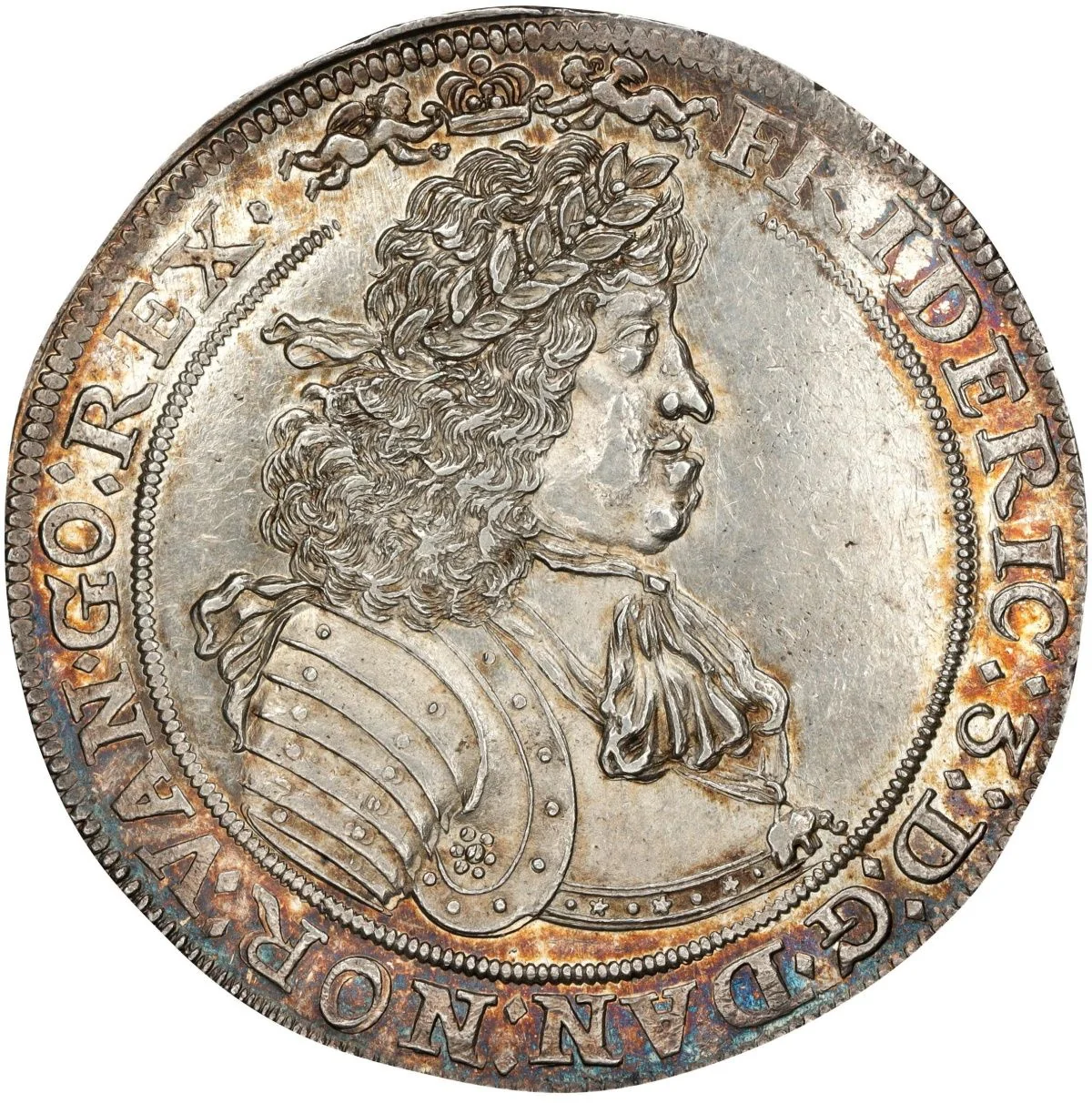
Bust of Frederick III with long hair and laurel wreath, facing right. Two angels above hold his crown, all within a beaded ring and inscription.
Inscription:
FRIDERIC:3:D:G·DAN:NOR:VAN·GO:REX·
Script: Latin
Engraver: Jeremias Hercules
Reverse
Description:
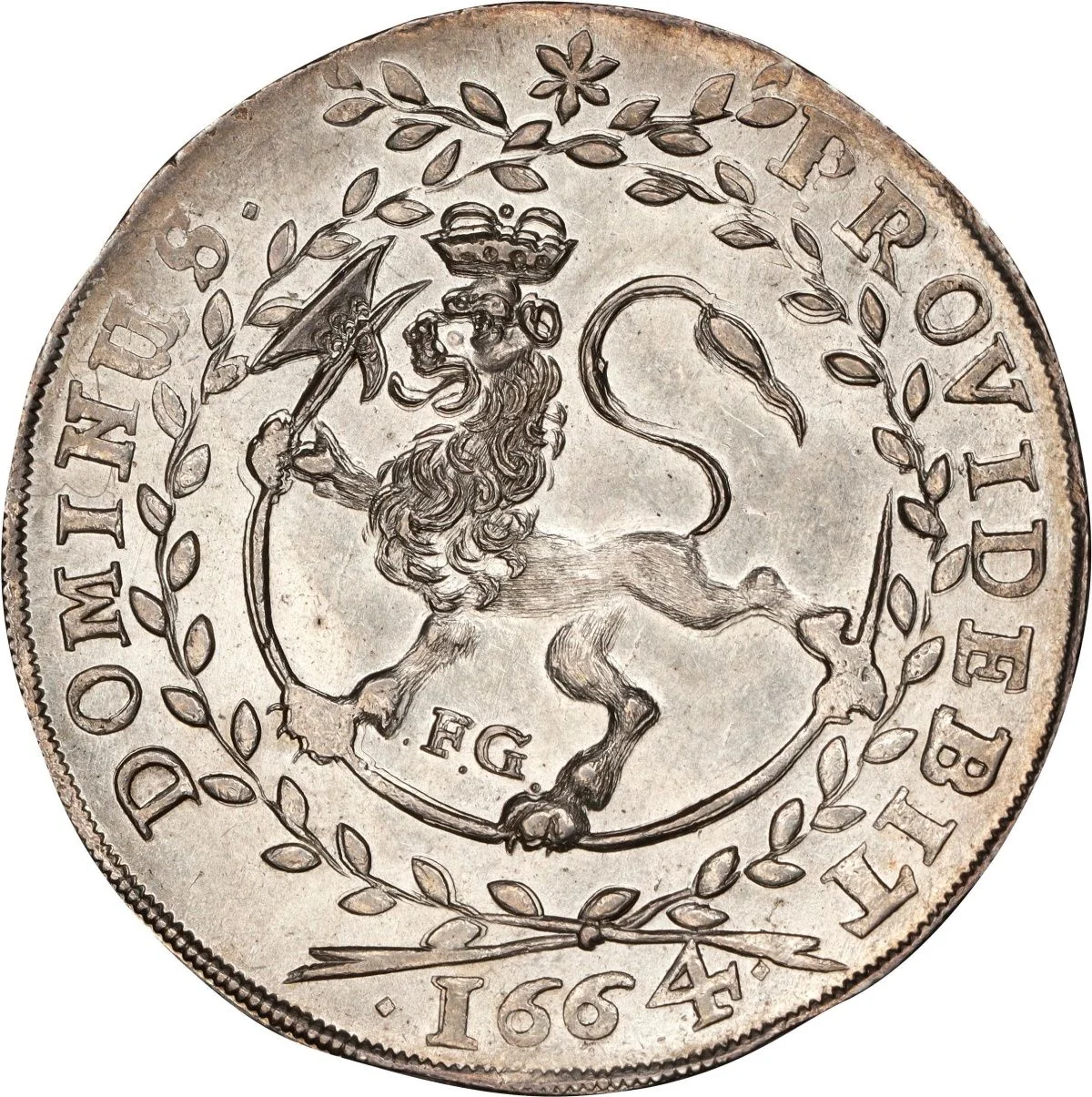
Rampant crowned lion left, holding a curved halberd, within a laurel wreath and inscription. Beaded rim.
Inscription:
DOMINUS·✽PROVIDEBIT
.F.G.
·1664·
.F.G.
·1664·
Script: Latin
Edge
Plain.
Categories
| Object> Cold weapons |
| Animal |
| Person> Monarch |
| Symbol> Crown |
| Religion> Religious objects |
| Symbols> Coat of Arms |
| Symbol> Wreath |
Mints
| Name | Mark |
|---|---|
| Christiania | — |
Mintings
| Year | Mint Mark | Mintage | Quality | Collection |
|---|---|---|---|---|
| 1664 | — | 23,000 |
Historical background
In 1664, Norway was part of the dual monarchy of Denmark-Norway, and its currency system was fundamentally dictated by Copenhagen. The primary circulating coin was the riksdaler, a large silver coin that served as the monetary standard. However, the reality of daily commerce was dominated by a chaotic mix of older, often debased, domestic coins and a vast array of foreign currency—particularly German, Dutch, and Danish issues—that circulated due to extensive trade. This proliferation of coins of varying silver content and legitimacy made transactions cumbersome and fostered widespread confusion and distrust.
The situation was exacerbated by a significant currency devaluation. In the preceding decades, the state had repeatedly reduced the silver content of minted coins to generate seigniorage revenue, especially to finance costly wars like the Torstenson War (1643-1645). By 1664, the intrinsic value of many coins in circulation was far below their face value, leading to inflation and economic strain. Merchants and the public struggled with the discrepancy between the official "bankdaler" (a unit of account) and the actual silver value of the physical "kurantdaler" coins they handled.
Recognizing the destabilizing effects, the Danish-Norwegian monarchy was in the early stages of attempting reform. A major monetary ordinance had been issued in 1625, but its effects had faded. The period around 1664 was one of transition, laying the groundwork for more systematic reforms that would follow, particularly under King Christian V in the late 1670s. These aimed to standardize the coinage, restrict foreign currency, and restore public confidence, but in 1664, Norway remained mired in a complex and unreliable monetary environment characteristic of pre-modern economies.
The situation was exacerbated by a significant currency devaluation. In the preceding decades, the state had repeatedly reduced the silver content of minted coins to generate seigniorage revenue, especially to finance costly wars like the Torstenson War (1643-1645). By 1664, the intrinsic value of many coins in circulation was far below their face value, leading to inflation and economic strain. Merchants and the public struggled with the discrepancy between the official "bankdaler" (a unit of account) and the actual silver value of the physical "kurantdaler" coins they handled.
Recognizing the destabilizing effects, the Danish-Norwegian monarchy was in the early stages of attempting reform. A major monetary ordinance had been issued in 1625, but its effects had faded. The period around 1664 was one of transition, laying the groundwork for more systematic reforms that would follow, particularly under King Christian V in the late 1670s. These aimed to standardize the coinage, restrict foreign currency, and restore public confidence, but in 1664, Norway remained mired in a complex and unreliable monetary environment characteristic of pre-modern economies.

✨ Legendary