

2 Speciedaler – Norway
Circulating commemorative coins
Commemoration: Frederik III sovereign King
Norway
Context
Material
References
KM: #Click to copy to clipboard65
Numista: #118901
Value
Bullion value: $141.29
Obverse
Description:
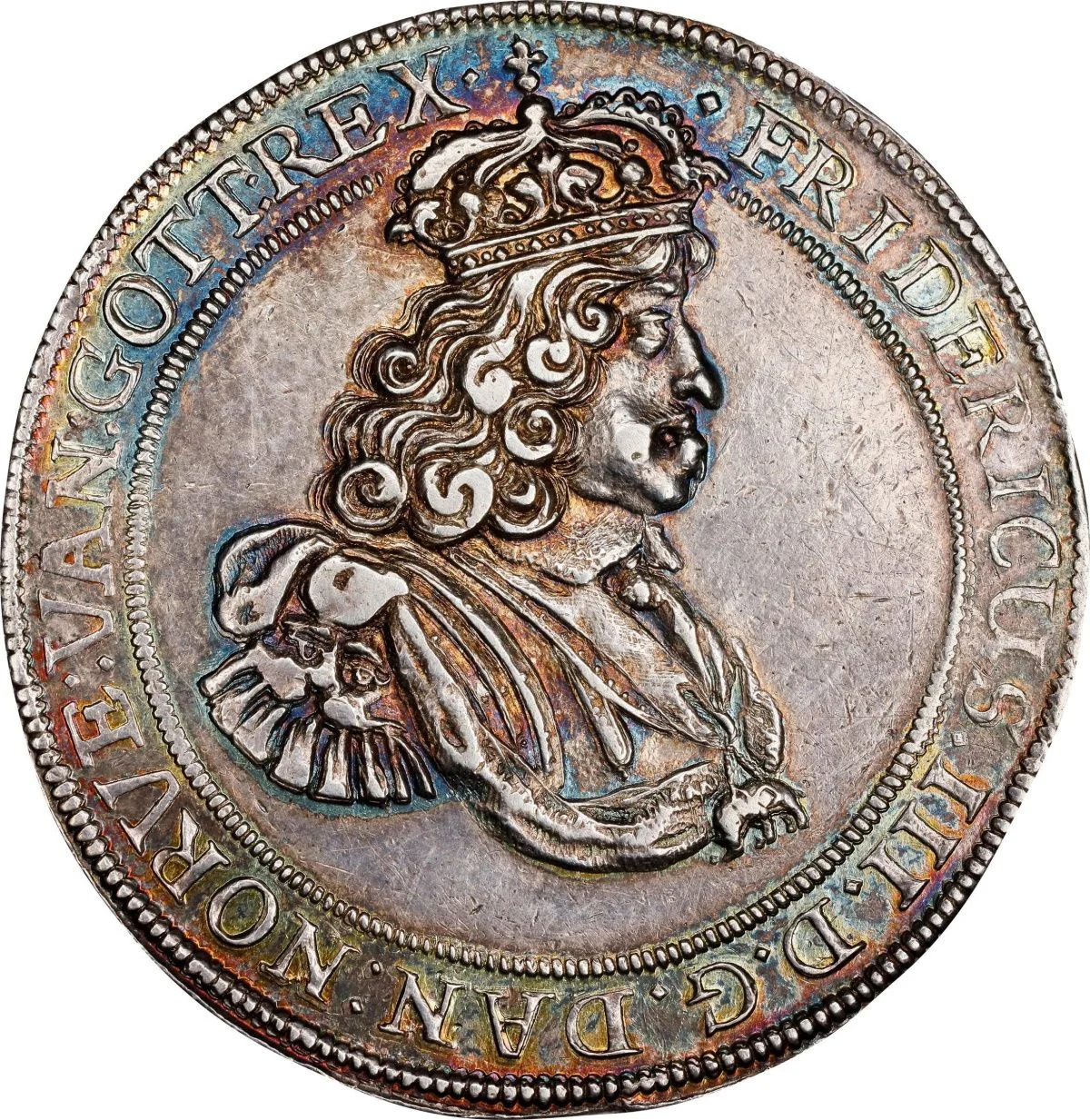
Right-facing crowned bust of Frederick III with long hair within a beaded circle and inscription. Beaded rim.
Inscription:
·FRIDERICUS.III.D.G.DAN:NORVE:VAN:GOTT:REX·
Script: Latin
Reverse
Description:
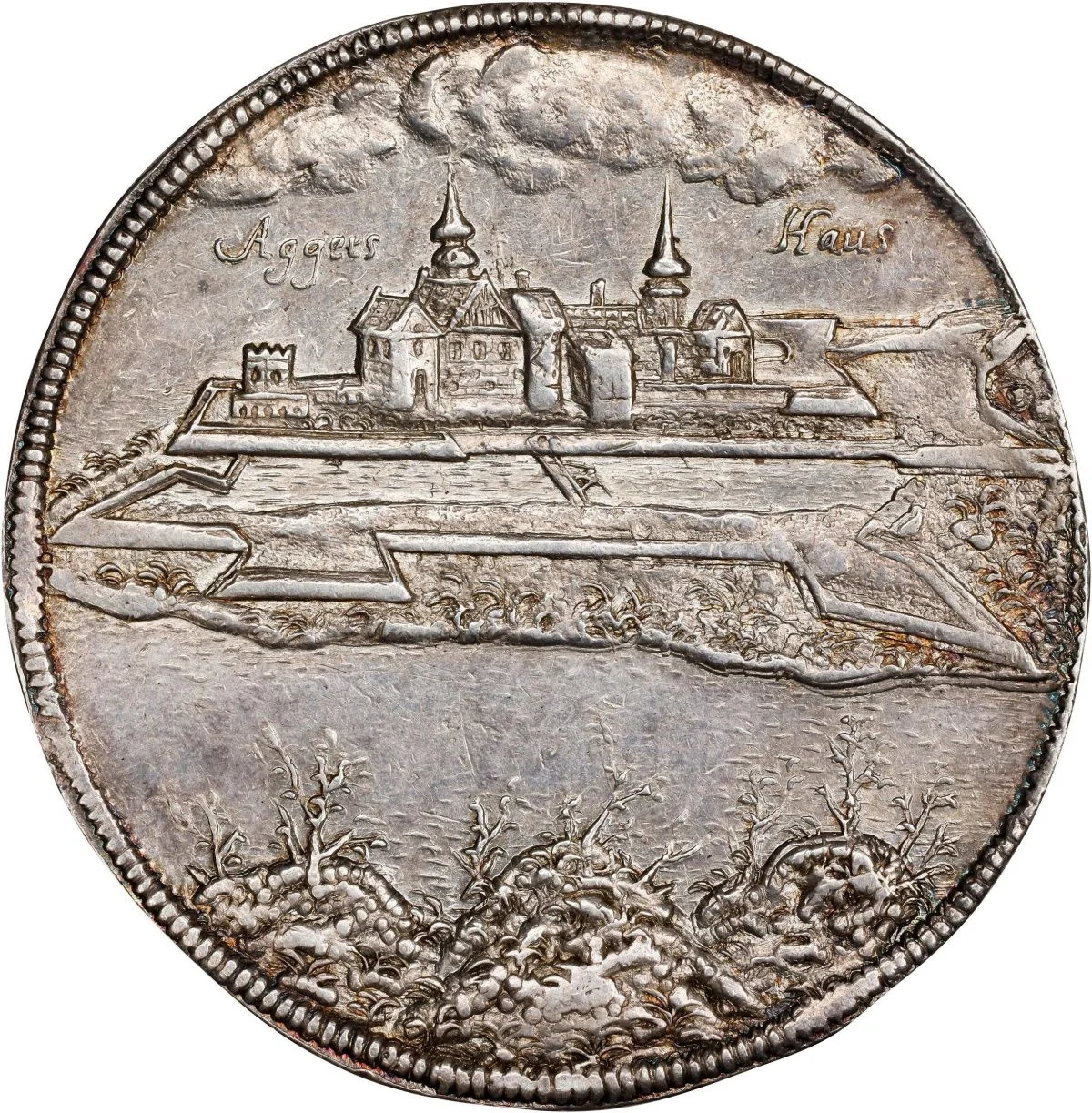
Akershus Fortress in Oslo sits on a sea-surrounded rocky headland, ringed by a beaded rampart.
Inscription:
Aggers Häus
Script: Latin
Edge
Plain.
Mints
| Name | Mark |
|---|---|
| Christiania | — |
Mintings
| Year | Mint Mark | Mintage | Quality | Collection |
|---|---|---|---|---|
| 1661 | — | — |
Historical background
In 1661, Norway found itself in a precarious monetary situation, deeply entangled with its political union with Denmark. The two kingdoms shared a currency system, but Norway suffered from a chronic shortage of minted coin, relying heavily on a chaotic mix of foreign coins, barter, and credit in daily trade. This scarcity was exacerbated by Norway's negative trade balance; it imported more finished goods than it exported in raw materials like timber and fish, causing an outflow of silver to pay foreign merchants. The primary circulating coin was the Danish skilling, but its value was unstable and its physical supply inadequate for the Norwegian economy.
The crisis culminated with the introduction of a deeply unpopular new currency in 1661: the kvikksølv (quicksilver) coin. Facing severe fiscal strain from wars with Sweden, the Danish-Norwegian monarchy, under King Frederik III, mandated that Norwegians surrender their existing silver coins and silver household items. In return, they received these new coins, which were made of a copper and silver alloy with a face value far exceeding their intrinsic metal worth. This was essentially a forced loan from the population to the crown, and the coins were immediately distrusted, leading to rapid inflation and widespread economic hardship.
This monetary manipulation occurred alongside a momentous political shift: the establishment of the absolute monarchy in 1660-1661, which formally dissolved Norway’s already weakened separate council of the realm. The currency debacle of 1661 thus stands as a stark symbol of Norway’s diminished sovereignty within the union. It highlighted how Copenhagen’s decisions, driven by Danish fiscal and military needs, could directly and painfully impact the Norwegian economy, fueling longstanding resentments and underscoring the kingdom’s subordinate financial status.
The crisis culminated with the introduction of a deeply unpopular new currency in 1661: the kvikksølv (quicksilver) coin. Facing severe fiscal strain from wars with Sweden, the Danish-Norwegian monarchy, under King Frederik III, mandated that Norwegians surrender their existing silver coins and silver household items. In return, they received these new coins, which were made of a copper and silver alloy with a face value far exceeding their intrinsic metal worth. This was essentially a forced loan from the population to the crown, and the coins were immediately distrusted, leading to rapid inflation and widespread economic hardship.
This monetary manipulation occurred alongside a momentous political shift: the establishment of the absolute monarchy in 1660-1661, which formally dissolved Norway’s already weakened separate council of the realm. The currency debacle of 1661 thus stands as a stark symbol of Norway’s diminished sovereignty within the union. It highlighted how Copenhagen’s decisions, driven by Danish fiscal and military needs, could directly and painfully impact the Norwegian economy, fueling longstanding resentments and underscoring the kingdom’s subordinate financial status.
✨ Legendary