

Iran
Context

Material
Diameter: 22.2 mm
Weight: 5.5 g
Silver weight: 5.50 g
Shape: Irregular round
Composition: Silver
Magnetic: No
Technique: Hammered
References
KM: #Click to copy to clipboard2683
Numista: #77291
Value
Bullion value: $15.95
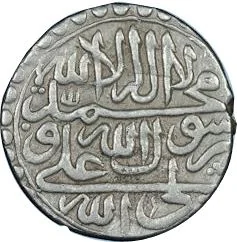
Obverse
Description:
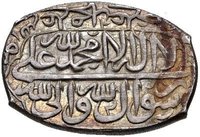
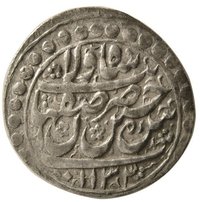
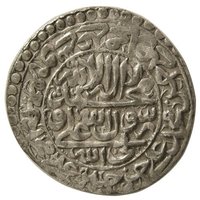
Shi'a symbol encircled by dots.
Script: Persian (nastaliq)
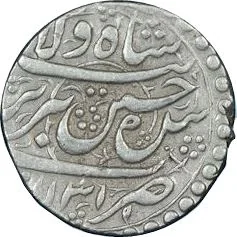
Reverse
Description:
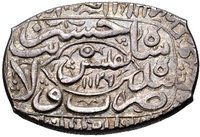
Central: mint name and date. Legend: "Bandeh Shah-e Velayat, Hussein."
Inscription:
bandeh shah-e velayat, Hussein
Script: Persian (nastaliq)
Edge
Mints
| Name | Mark |
|---|---|
| Tebriz | تبریز |
Mintings
| Year | Mint Mark | Mintage | Quality | Collection |
|---|---|---|---|---|
| 1717 | — | — | ||
| 1718 | — | — | ||
| 1719 | — | — | ||
| 1720 | — | — | ||
| 1721 | — | — | ||
| 1722 | — | — | ||
| 1723 | — | — |
Historical background
In 1717, the currency situation in the Safavid Empire was one of profound crisis and transition, stemming from decades of economic mismanagement and external pressure. The primary circulating currency was the silver abbasi and its fractional units, but their value was severely undermined by a critical shortage of precious metals, particularly silver. This shortage was caused by a catastrophic decline in the empire's chief export, silk, due to competition and lost markets, leading to a chronic trade deficit that drained bullion from the country. Furthermore, decades of extravagant court spending and military campaigns had depleted the royal treasury.
The vacuum of strong central authority exacerbated the monetary chaos. The reigning Shah, Sultan Husayn (r. 1694-1722), was a weak and ineffectual ruler, allowing provincial governors and mint masters to act with increasing autonomy. This led to widespread debasement of the coinage, where the silver content of coins was systematically reduced while their face value was maintained. Consequently, the public lost trust in the official currency, leading to rampant inflation, hoarding of older, purer coins (Gresham's Law in action), and a preference for barter in many regional markets, especially for large transactions.
This deteriorating monetary environment was a key symptom of the broader collapse of Safavid administrative and economic structures. The currency instability crippled trade, eroded state revenues, and caused significant hardship for soldiers, artisans, and the urban population who relied on cash transactions. Ultimately, the financial disarray of 1717 was a critical factor weakening the empire on the eve of the catastrophic Afghan invasion (1722), which would soon topple the Safavid dynasty and plunge Iran into decades of fragmentation and war.
The vacuum of strong central authority exacerbated the monetary chaos. The reigning Shah, Sultan Husayn (r. 1694-1722), was a weak and ineffectual ruler, allowing provincial governors and mint masters to act with increasing autonomy. This led to widespread debasement of the coinage, where the silver content of coins was systematically reduced while their face value was maintained. Consequently, the public lost trust in the official currency, leading to rampant inflation, hoarding of older, purer coins (Gresham's Law in action), and a preference for barter in many regional markets, especially for large transactions.
This deteriorating monetary environment was a key symptom of the broader collapse of Safavid administrative and economic structures. The currency instability crippled trade, eroded state revenues, and caused significant hardship for soldiers, artisans, and the urban population who relied on cash transactions. Ultimately, the financial disarray of 1717 was a critical factor weakening the empire on the eve of the catastrophic Afghan invasion (1722), which would soon topple the Safavid dynasty and plunge Iran into decades of fragmentation and war.
💎 Extremely Rare