Logo Title
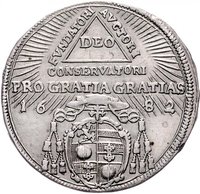
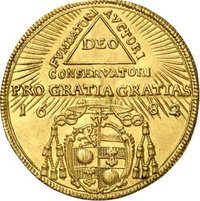
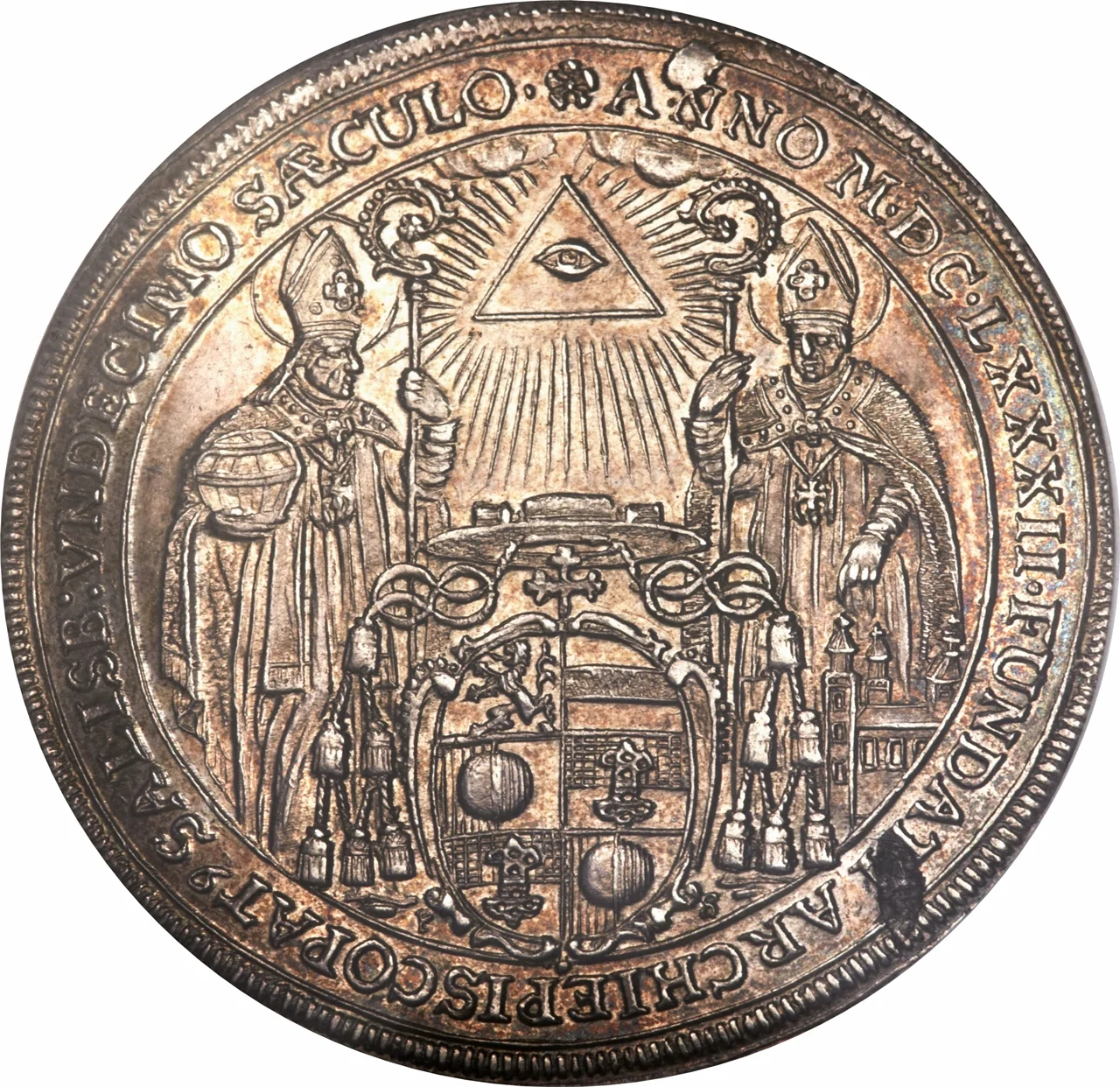
obverse
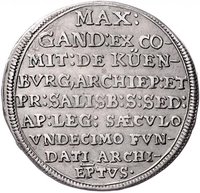
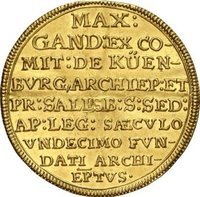
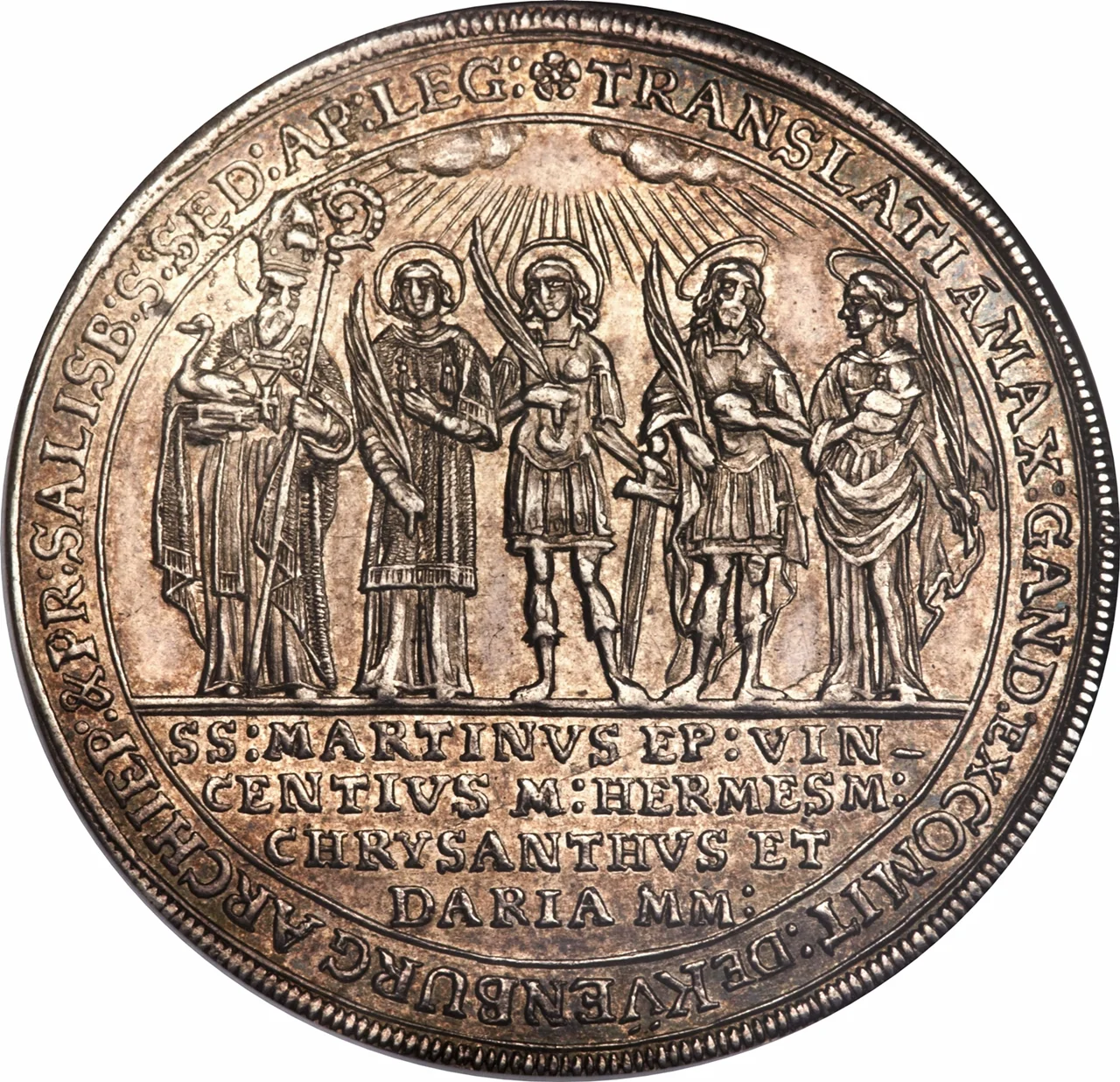
reverse
Heritage Auctions

1 Thaler - 1 Guldiner (Archbishopric of Salzburg) – Bishopric of Salzburg

Circulating commemorative coins
Commemoration: 1100th Anniversary of the Archbishopric of Salzburg
Context
Year: 1682
Currency:
Demonetized: Yes
Material
Diameter: 42 mm
Weight: 28.69 g
Silver weight: 28.69 g
Shape: Round
Composition: Silver
Magnetic: No
References
KM: #Click to copy to clipboard233
Numista: #76792
Value
Bullion value: $80.43

Obverse

Description:
St. Rupert and St. Virgilius flank the archbishop's arms beneath the Eye of God in a triangle. Circular legend. "PS" signature split below the shield. Zöttl# 1986.
Inscription:
ANNO MDCLXXXII FUNDATI ARCHIEPISCOPAT9 SALISB VNDECIMO SAECULO
Script: Latin

Reverse

Description:
Bishop and four figures stand beneath a sun and clouds. A legend is below a dividing line.
Inscription:
TRANSLATI A MAX GAND EX COMIT DE KÜENBURG ARCHIEP & PR SALISB S SED AP LEG

SS MARTINUS EP VINCENTIUS M HERMES M CHRISANTVS ET DARIA MM
Script: Latin

Edge

Mintings

YearMint MarkMintageQualityCollection
1682

Historical background

In 1682, the currency situation within the Prince-Archbishopric of Salzburg was characterized by the pervasive economic challenges of the Holy Roman Empire's Kleinstaaterei (small-state system). Salzburg, while a sovereign ecclesiastical principality, did not mint its own gold or silver coins. Instead, its monetary system relied heavily on the circulation of foreign coinage, particularly large silver Reichsthalers from major imperial mints and smaller regional silver coins like Kreuzers and Pfennigs. This created a complex and often unstable environment, as the value and purity of these many coin types fluctuated based on the policies of their issuing authorities.

The period was marked by the damaging practice of currency debasement. Prince-Archbishop Maximilian Gandolf von Kuenburg (ruled 1668–1687), facing significant debts from construction projects and the costs of courtly representation, had engaged in issuing debased coinage. By reducing the precious metal content in coins minted under Salzburg's authority (primarily smaller denominations), the state sought to generate immediate profit. This led to inflation, a loss of public trust, and the phenomenon of "good money" (full-weight foreign coins) being hoarded or exported, leaving the local economy with inferior currency.

Consequently, by 1682, Salzburg's merchants and populace contended with a dual problem: a confusing multiplicity of coins in circulation and the inflationary pressure of degraded official currency. While the Archbishopric attempted to regulate exchange rates through official Münztarife (currency ordinances), these were often ineffective against market forces. The situation reflected the broader monetary fragmentation of the Empire, where local fiscal pressures undermined regional economic stability, a challenge that would persist until more centralized monetary reforms were enacted in the following century.
💎 Extremely Rare