

1 Quattrino – Bologna
Italy

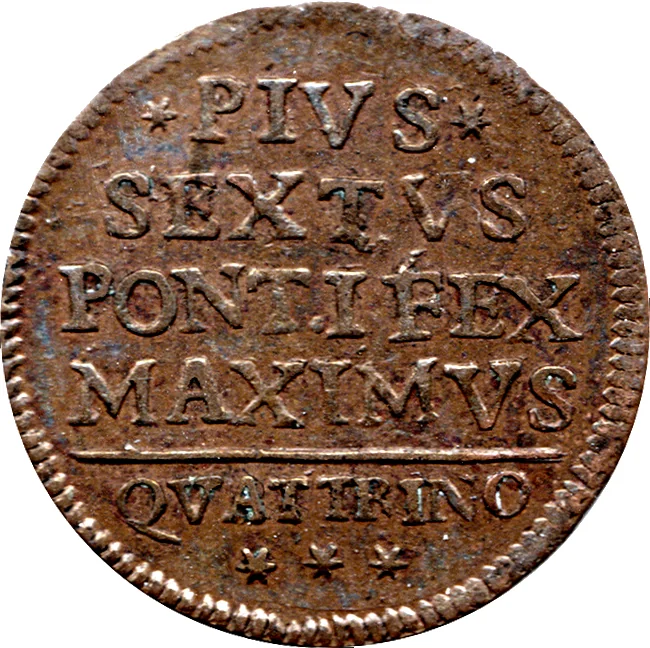
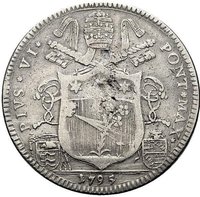
Obverse
Description:
Value and stars inscribed above.
Inscription:
·PIVS·
SEXTVS
PONT.IFEX
MAXIMVS
-------------
QVATTRINO
· · ·
SEXTVS
PONT.IFEX
MAXIMVS
-------------
QVATTRINO
· · ·
Script: Latin
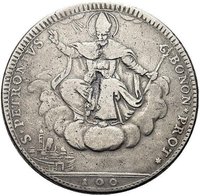
Reverse
Edge
Plain
Mints
| Name | Mark |
|---|---|
| Bologna | — |
Mintings
| Year | Mint Mark | Mintage | Quality | Collection |
|---|---|---|---|---|
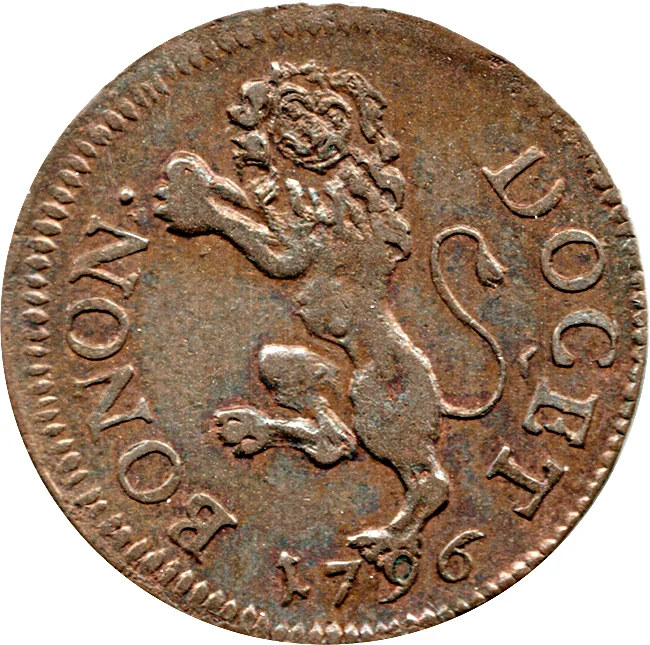
| 1796 | — | — |
Historical background
In 1796, Bologna found itself at a pivotal and chaotic juncture in its monetary history, caught between collapsing old systems and the imposition of a new revolutionary order. The city was part of the Papal States, and its official currency was the Papal scudo, divided into baiochi and quattrini. However, this system was notoriously complex and unstable, plagued by chronic shortages of small coinage for daily transactions and a circulation flooded with debased and foreign coins from neighboring states like Venice, Milan, and Tuscany. This created a confusing and inefficient marketplace where exchange rates fluctuated and trust in the value of coinage was low.
The situation was dramatically transformed in June 1796 with the arrival of Napoleon Bonaparte's French army. Following the Armistice of Bologna, a French-backed provisional government, the Magistrato dei Riformatori, was established. One of its first and most significant acts was to decree the replacement of the Papal monetary system with the new French revolutionary currency. The franc and its decimal divisions—the decime and centime—were introduced, symbolizing a radical break from the papal past and an alignment with modern, rational principles. Prices and wages were officially converted and published in the new currency.
Despite the official decree, the monetary reality on the ground in late 1796 was one of transition and hardship. The French authorities, requiring vast sums to sustain their military campaign, imposed heavy war indemnities and requisitioned goods, draining precious metal from the city. While the franc was the official unit of account, the physical scarcity of these new coins meant that older Papal and regional coins remained in reluctant circulation. This period was thus characterized by a messy duality of currencies, severe inflation driven by French demands, and a struggling populace navigating between the decreed new system and the persistent remnants of the old.
The situation was dramatically transformed in June 1796 with the arrival of Napoleon Bonaparte's French army. Following the Armistice of Bologna, a French-backed provisional government, the Magistrato dei Riformatori, was established. One of its first and most significant acts was to decree the replacement of the Papal monetary system with the new French revolutionary currency. The franc and its decimal divisions—the decime and centime—were introduced, symbolizing a radical break from the papal past and an alignment with modern, rational principles. Prices and wages were officially converted and published in the new currency.
Despite the official decree, the monetary reality on the ground in late 1796 was one of transition and hardship. The French authorities, requiring vast sums to sustain their military campaign, imposed heavy war indemnities and requisitioned goods, draining precious metal from the city. While the franc was the official unit of account, the physical scarcity of these new coins meant that older Papal and regional coins remained in reluctant circulation. This period was thus characterized by a messy duality of currencies, severe inflation driven by French demands, and a struggling populace navigating between the decreed new system and the persistent remnants of the old.
💎 Extremely Rare