Logo Title
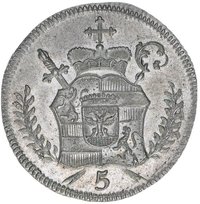
obverse
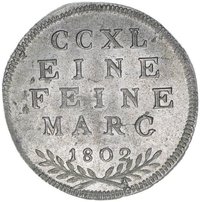
reverse
Numismatik Zöttl

5 Kreuzer – Bishopric of Salzburg

Context
Years: 1793–1802
Currency:
Demonetized: Yes
Material
Diameter: 22 mm
Weight: 2 g
Shape: Round
Composition: Billon
Technique: Milled
Alignment: Medal alignment
Obverse
OBVERSE ↑
flip
Reverse
REVERSE ↑
References
KM: #Click to copy to clipboard477
Numista: #73688

Obverse

Description:
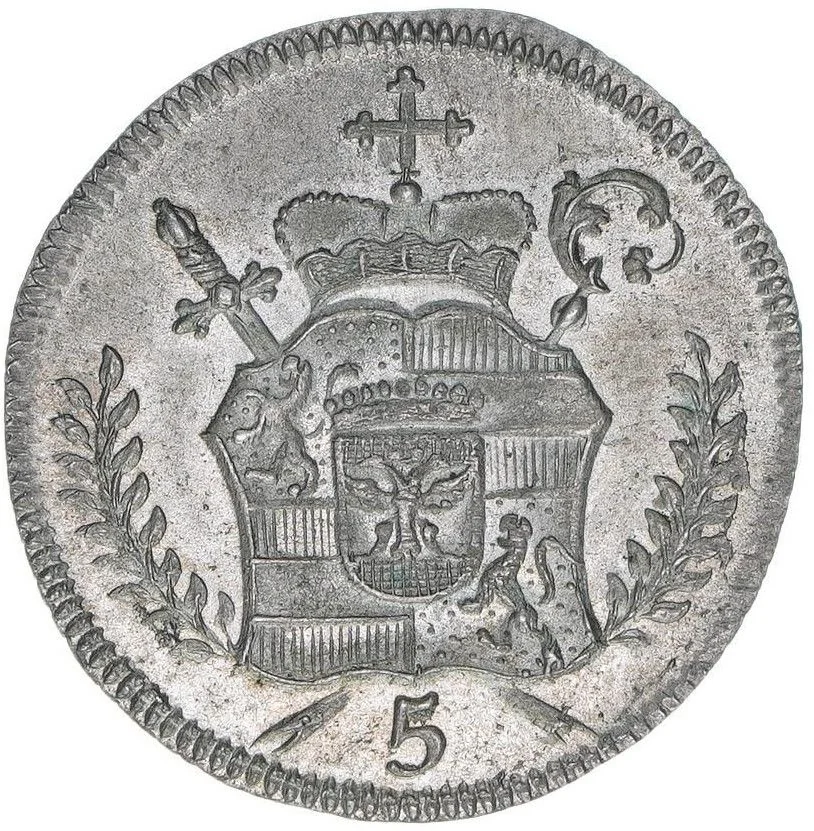
Salzburg arms under crown, cross above crossed crozier and sword. Central imperial eagle shield, flanked by wreaths, value below.
Inscription:
5
Script: Latin

Reverse

Description:
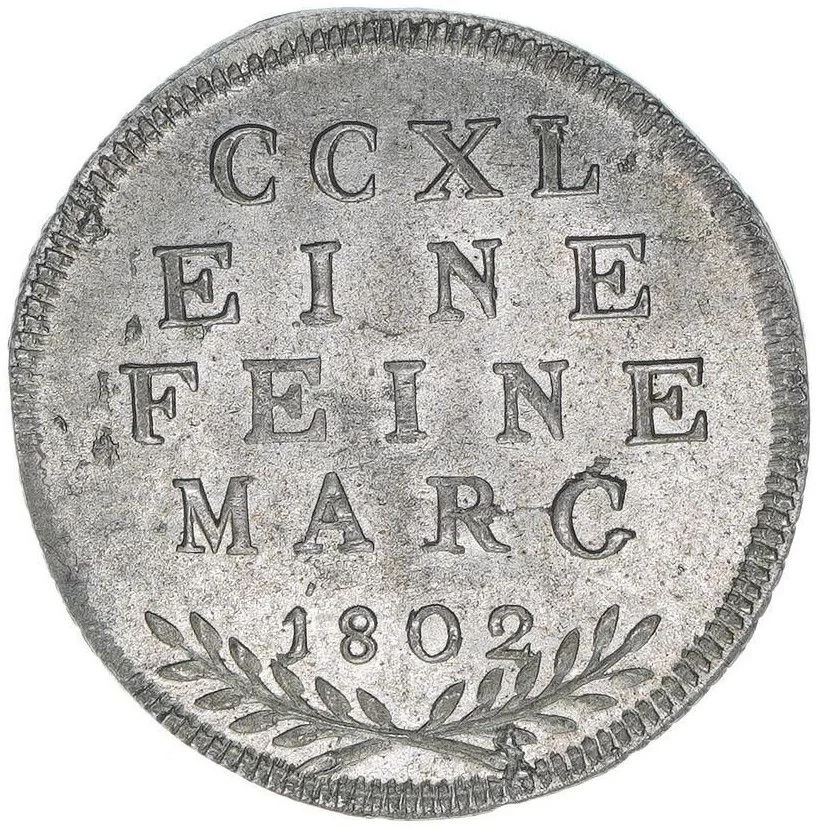
Mark and date above,
wreath below,
over five lines.
Inscription:
CCXL

EINE

FEINE

MARC (or MARK)

1802
Script: Latin

Edge

Mints

NameMark
Salzburg

Mintings

YearMint MarkMintageQualityCollection
1793
1794
1795
1796
1797
1798
1799
1800
1801
1802

Historical background

In 1793, the Prince-Archbishopric of Salzburg operated within the complex monetary landscape of the Holy Roman Empire. It did not mint its own major silver or gold coins but instead issued lower-denomination Kreuzer and Pfennig coins for local trade. The primary large-currency unit in circulation was the Conventionsthaler, a standardized silver coin adopted by the southern German states in 1753. This meant Salzburg's economy was tied to a regional monetary standard, where one Conventionsthaler was equal to 2.4 Gulden or 120 Kreuzer, providing a degree of stability in cross-border trade with neighboring Bavaria and Austria.

However, this stability was under growing strain. The period was marked by significant coin debasement across the Empire, as states engaged in near-constant warfare (most notably the ongoing French Revolutionary Wars) and required revenue. While Salzburg itself, under Archbishop Hieronymus von Colloredo, was not a major belligerent, it was inevitably affected by the inflationary pressures and influx of inferior coinage from neighboring regions. The Archbishopric's own small mint was primarily engaged in producing token coinage, and the authority to control the broader money supply was limited.

Furthermore, Salzburg's currency situation reflected its precarious political position. Economically oriented towards the Habsburg lands, it faced competing monetary influences. The year 1793 fell within a final period of relative peace before the territory's dramatic upheaval: within a decade, secularization would dissolve the Prince-Archbishopric. Thus, while its currency system functioned on the surface, it was embedded in an imperial structure that was fiscally stressed and on the brink of collapse, foreshadowing the end of Salzburg's independent monetary existence.
Legendary