

10 marka – Estonia
Add to wishlist
Estonia
Context
Material
Diameter: 26 mm
Weight: 6.25 g
Thickness: 1.45 mm
Shape: Round
Composition: Nickel brass
Magnetic: No
Technique: Milled
Alignment: Medal alignment
flip
References
KM: #
Numista: #11974
Obverse
Description:
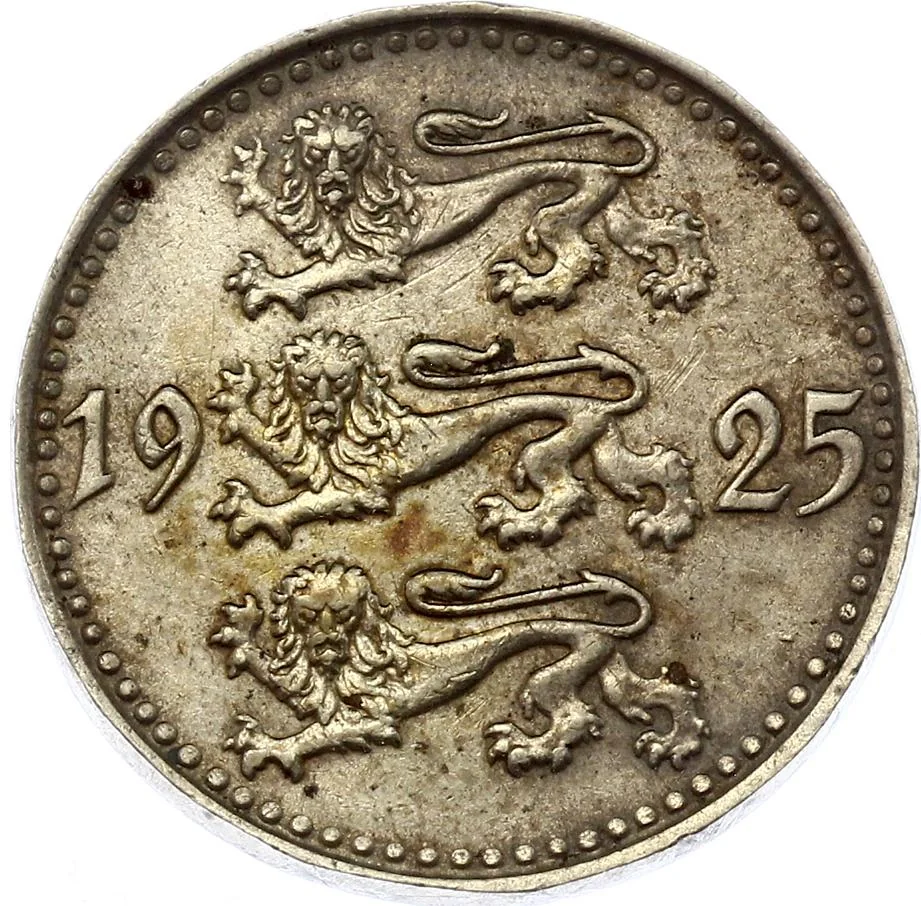
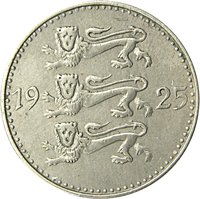
Three lions left divide the date.
Inscription:
19 25
Script: Latin
Engraver: Boris Krümmer
Reverse
Description:
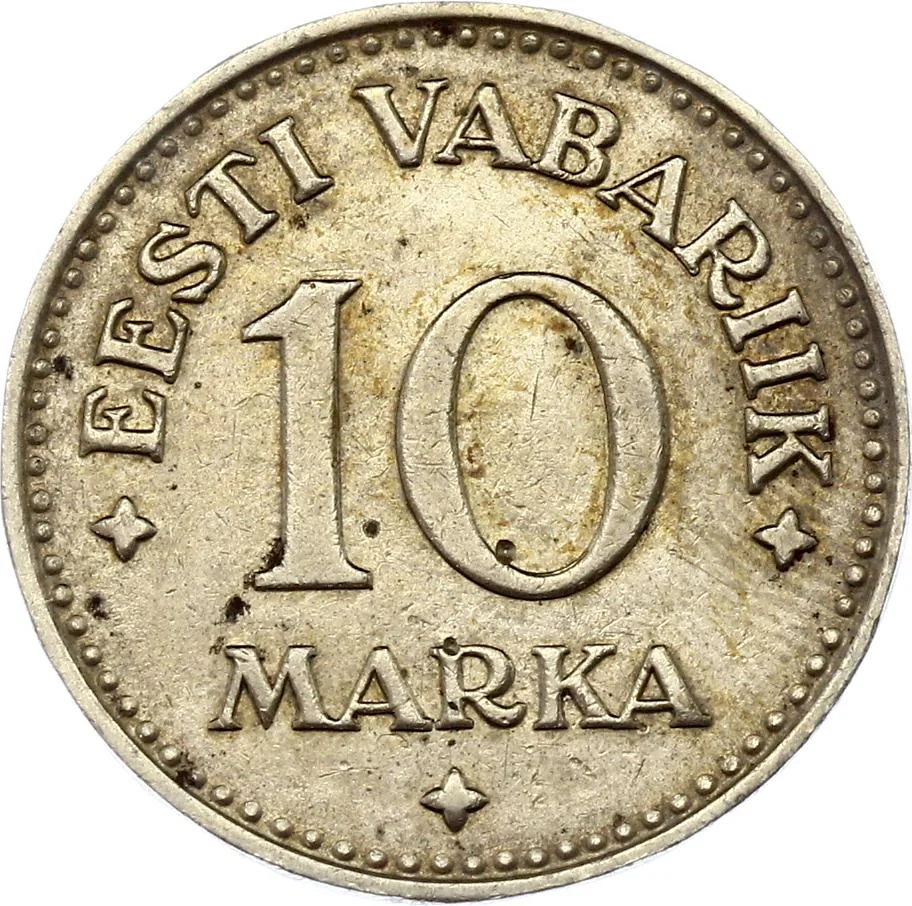
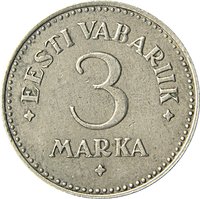
Denomination.
Inscription:
EESTI VABARIIK
10
MARKA
10
MARKA
Translation:
REPUBLIC OF ESTONIA
10
MARKKA
10
MARKKA
Script: Latin
Language: Estonian
Engraver: Boris Krümmer
Edge
Reeded
Mintings
| Year | Mint Mark | Mintage | Quality | Collection |
|---|---|---|---|---|
| 1925 | — | 4,129,410 |
Historical background
In 1925, Estonia was in the midst of a period of significant monetary stability under its new national currency, the Estonian kroon (EKR), introduced in 1928. This reform, masterminded by Finance Minister Otto Strandman, was a direct and successful response to the hyperinflation that had ravaged the country in the early 1920s when it used the German Ostmark and then the unstable Estonian mark. The kroon was established on the gold standard, with its value pegged firmly to the Swedish krona at a 1:1 ratio, which itself was linked to gold. This move immediately halted inflation and restored public and international confidence in Estonia's financial system.
The currency situation in 1925, therefore, was one of cautious optimism and consolidation. The groundwork for the kroon's introduction was being laid, with the country operating under a temporary currency unit, the mark (which was to be exchanged for kroons at a fixed rate of 100:1). The strict fiscal and monetary discipline required by the gold standard was being enforced by the newly independent Bank of Estonia (Eesti Pank), founded in 1919. This discipline involved maintaining substantial gold and foreign exchange reserves to fully back the circulating currency, a policy that ensured the kroon's stability upon its launch.
Consequently, 1925 represents a pivotal transitional year. The chaotic post-war inflation was firmly in the past, and the nation was methodically preparing for the formal launch of its "hard" currency. The kroon's successful implementation in 1928, with its stability lasting until the Soviet annexation in 1940, owed much to the prudent financial policies and institutional frameworks solidified during this mid-decade period. The 1925 environment was thus characterized by deliberate stabilization, setting the stage for the economic growth and integration with Western financial markets that would follow in the late 1920s and 1930s.
The currency situation in 1925, therefore, was one of cautious optimism and consolidation. The groundwork for the kroon's introduction was being laid, with the country operating under a temporary currency unit, the mark (which was to be exchanged for kroons at a fixed rate of 100:1). The strict fiscal and monetary discipline required by the gold standard was being enforced by the newly independent Bank of Estonia (Eesti Pank), founded in 1919. This discipline involved maintaining substantial gold and foreign exchange reserves to fully back the circulating currency, a policy that ensured the kroon's stability upon its launch.
Consequently, 1925 represents a pivotal transitional year. The chaotic post-war inflation was firmly in the past, and the nation was methodically preparing for the formal launch of its "hard" currency. The kroon's successful implementation in 1928, with its stability lasting until the Soviet annexation in 1940, owed much to the prudent financial policies and institutional frameworks solidified during this mid-decade period. The 1925 environment was thus characterized by deliberate stabilization, setting the stage for the economic growth and integration with Western financial markets that would follow in the late 1920s and 1930s.
🌱 Fairly Common