

2 Pfennigs – Bishopric of Salzburg
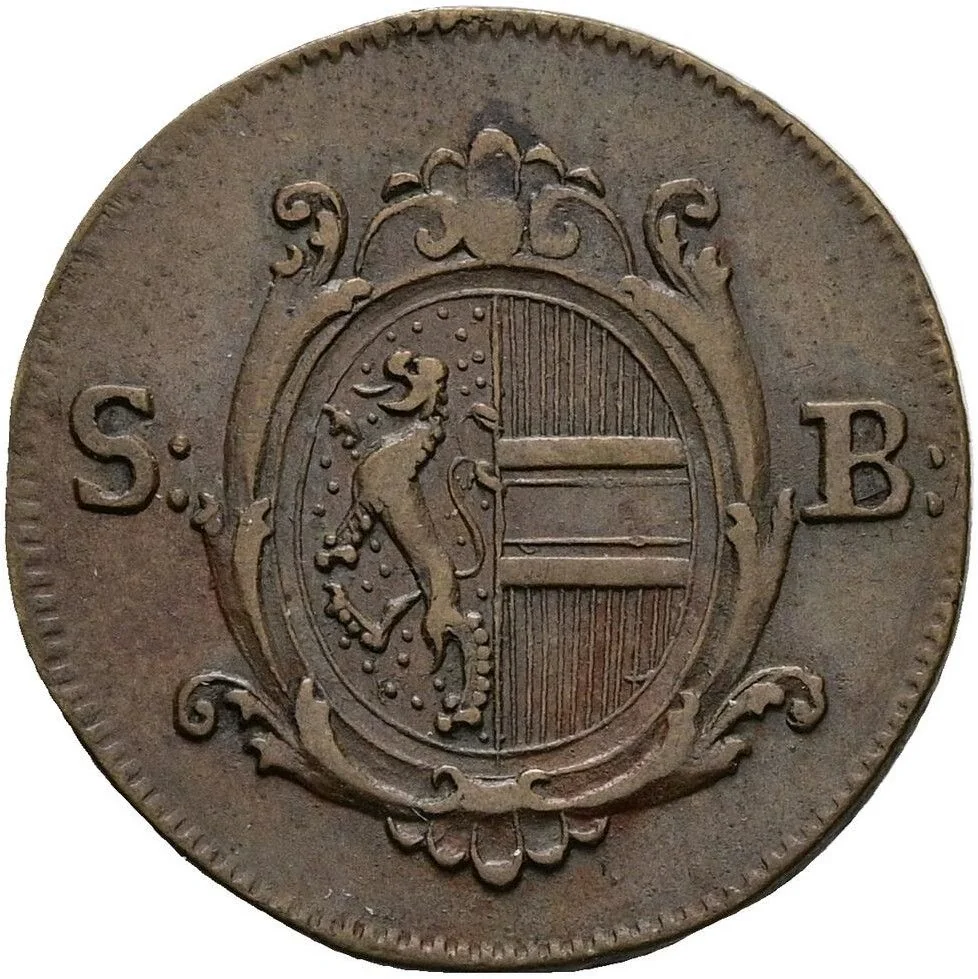
Obverse
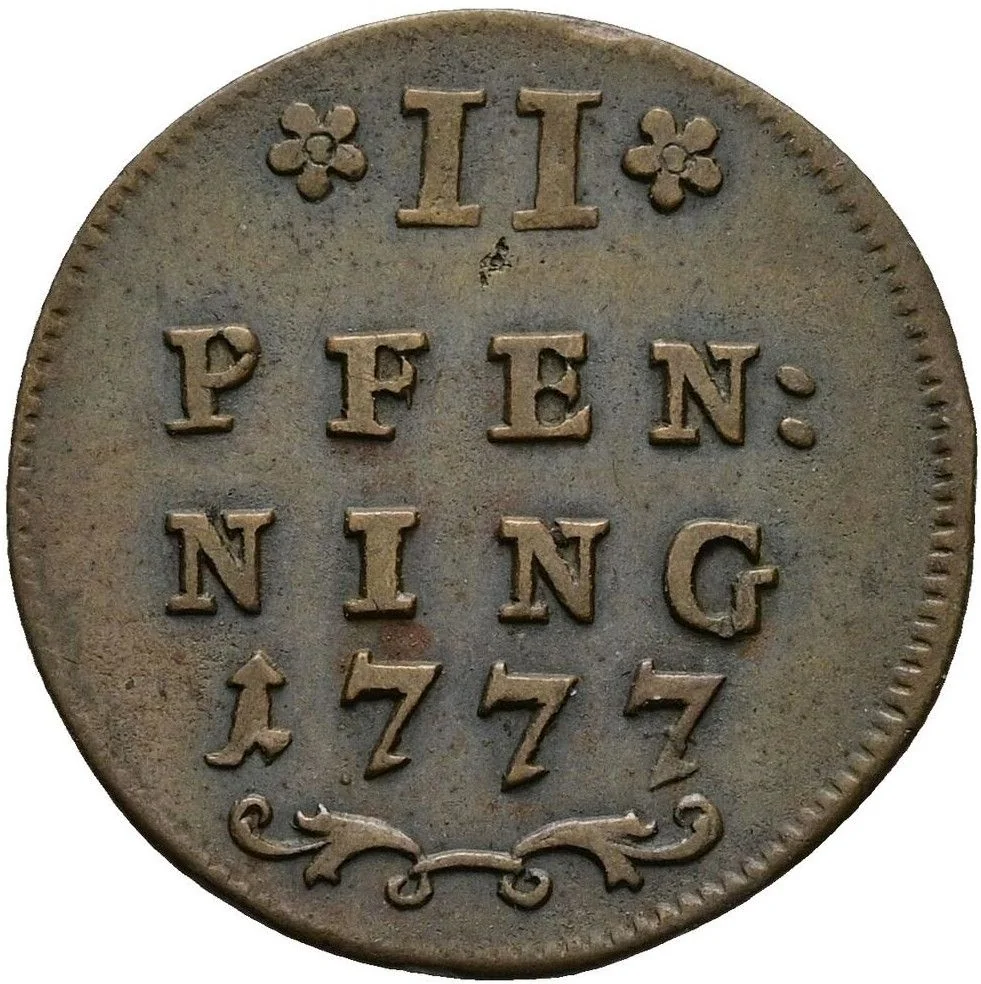
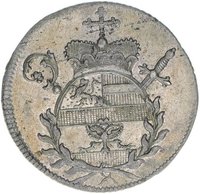
Reverse
Description:
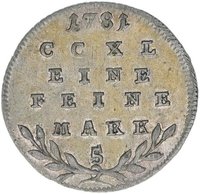
Value and date in four lines.
Rosettes and arabesque below.
Rosettes and arabesque below.
Inscription:
✿ II ✿
PFEN:
NING
1777
PFEN:
NING
1777
Script: Latin
Edge
Categories
| Symbols> Coat of Arms |
Mints
| Name | Mark |
|---|---|
| Salzburg | — |
Mintings
| Year | Mint Mark | Mintage | Quality | Collection |
|---|---|---|---|---|
| 1777 | — | — | ||
| 1781 | — | — |
Historical background
In 1777, the Prince-Archbishopric of Salzburg operated within the complex monetary landscape of the Holy Roman Empire. Its primary currency was the Salzburg Gulden (florin), which was subdivided into 60 Kreuzer. However, this system was not isolated; it existed within a web of regional monetary conventions. Most importantly, Salzburg adhered to the Austrian monetary standard as defined by the Reichsmünzfuß (Imperial minting ordinance). This meant the Salzburg Gulden was pegged in value to the Conventionsthaler, a widely accepted large silver coin, at a standard rate of 1 Conventionsthaler = 2 Salzburg Gulden. This alignment was crucial for trade and financial stability with the neighboring Habsburg lands.
The year 1777 itself fell during the reign of Prince-Archbishop Hieronymus von Colloredo, a reform-minded ruler influenced by Enlightenment principles. While not a year of major monetary reform, the period was characterized by ongoing challenges of currency management common to the era. The bishopric's mint produced its own subsidiary coins (Kreuzer), but maintaining consistent silver content and combating the circulation of debased foreign coins and counterfeits were perpetual administrative tasks. The stability of the currency was a reflection of the state's fiscal health and political standing.
Economically, Salzburg's currency system supported its diverse activities, from the lucrative salt mines that gave the city its name and wealth, to agriculture, trade, and its renowned cultural life. The fixed relationship to the Conventionsthaler facilitated commerce across Central Europe. However, this system was inherently tied to the supply of precious metals and the policies of larger neighbors. Within a generation, the independent monetary system of the Bishopric would disappear entirely, following the secularization of 1803 and Salzburg's subsequent absorption into first the Austrian and then the Bavarian spheres, which led to the replacement of its currency with first Bavarian and later Austrian imperial coinage.
The year 1777 itself fell during the reign of Prince-Archbishop Hieronymus von Colloredo, a reform-minded ruler influenced by Enlightenment principles. While not a year of major monetary reform, the period was characterized by ongoing challenges of currency management common to the era. The bishopric's mint produced its own subsidiary coins (Kreuzer), but maintaining consistent silver content and combating the circulation of debased foreign coins and counterfeits were perpetual administrative tasks. The stability of the currency was a reflection of the state's fiscal health and political standing.
Economically, Salzburg's currency system supported its diverse activities, from the lucrative salt mines that gave the city its name and wealth, to agriculture, trade, and its renowned cultural life. The fixed relationship to the Conventionsthaler facilitated commerce across Central Europe. However, this system was inherently tied to the supply of precious metals and the policies of larger neighbors. Within a generation, the independent monetary system of the Bishopric would disappear entirely, following the secularization of 1803 and Salzburg's subsequent absorption into first the Austrian and then the Bavarian spheres, which led to the replacement of its currency with first Bavarian and later Austrian imperial coinage.
💎 Extremely Rare