

1 Rupee – Mughal Empire
India
Context
Years: 1633–1659
Country: India 
Issuer: Mughal Empire
Ruler: Shah Jahan
Currency:
(1540—1842)
Demonetized: Yes
Material
References
KM: #Click to copy to clipboard235.17
Numista: #71726
Value
Bullion value: $32.74
Obverse
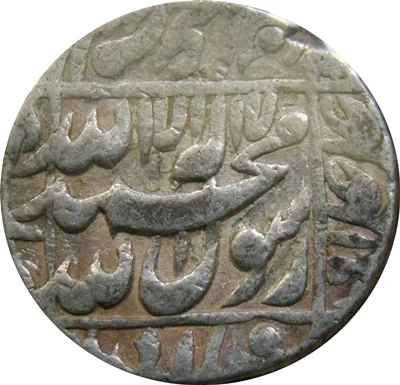
Description:
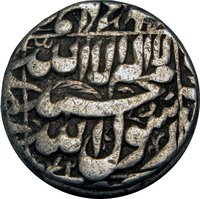
KM# 235.17. Central Kalimah Tayyibah. Margins feature the names and attributes of the Four Caliphs: Abu Bakr (Truth), Umar (Justice), Usman (Modesty), and Ali (Wisdom).
Reverse
Description:
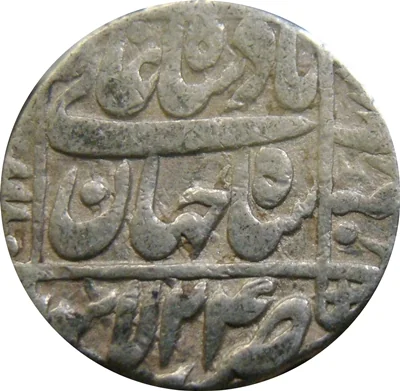
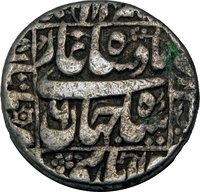
Center: Shah Jahan Badshah Ghazi
Margins: Shihab Al Deen Muhammad Shahib Quarani, Zarb Lahore 24
Margins: Shihab Al Deen Muhammad Shahib Quarani, Zarb Lahore 24
Edge
Mintings
| Year | Mint Mark | Mintage | Quality | Collection |
|---|---|---|---|---|
| 1633 | — | — | ||
| 1634 | — | — | ||
| 1635 | — | — | ||
| 1636 | — | — | ||
| 1637 | — | — | ||
| 1638 | — | — | ||
| 1639 | — | — | ||
| 1640 | — | — | ||
| 1641 | — | — | ||
| 1642 | — | — | ||
| 1643 | — | — | ||
| 1643 | — | — | ||
| 1644 | — | — | ||
| 1645 | — | — | ||
| 1646 | — | — | ||
| 1647 | — | — | ||
| 1648 | — | — | ||
| 1649 | — | — | ||
| 1650 | — | — | ||
| 1651 | — | — | ||
| 1652 | — | — | ||
| 1653 | — | — | ||
| 1654 | — | — | ||
| 1655 | — | — | ||
| 1656 | — | — | ||
| 1657 | — | — | ||
| 1658 | — | — | ||
| 1659 | — | — |
Historical background
In 1633, the Mughal Empire's currency system under Emperor Shah Jahan was a sophisticated and highly regulated bimetallic standard, centred on the silver rupee and the gold mohur. The primary currency for everyday revenue and trade was the silver rupee, a coin of remarkable purity and consistency minted to a strict weight standard. Its widespread acceptance and reliability were pillars of the imperial economy, facilitating both local commerce and long-distance trade. The gold mohur, while in circulation, functioned more as a high-value unit for hoarding, large transactions, and ceremonial purposes, with its value fluctuating against the silver rupee based on market ratios.
The imperial mints (dar-ul-zarb) operated under strict central control, ensuring the uniformity of coinage across the realm. The system was managed by officials like the Master of the Mint (Darogha-i-Dar-ul-Zarb) and the Treasure-Master (Khazanadar), who were responsible for maintaining the precise alloy and weight. This standardization was crucial for state revenue, as land taxes (zabt) and other dues were assessed and collected in silver rupees. The system was not static, however; Shah Jahan's ambitious building projects, including the nascent construction of Shahjahanabad and the Taj Mahal, alongside ongoing military campaigns in the Deccan, placed significant demands on the treasury and required a steady and expanding flow of precious metals.
Despite the strong central framework, the currency situation in 1633 was influenced by broader global forces. The Empire was deeply integrated into Indian Ocean trade networks, and a continuous influx of New World silver, primarily via European traders, was essential for minting enough rupees to meet the economy's needs. This global silver stream helped prevent deflation and supported economic expansion. Concurrently, the system faced challenges from the persistent circulation of older, worn, or foreign coins, and the occasional threat of provincial governors or rebellious princes striking substandard or unauthorized coinage, which the central authority worked constantly to suppress to maintain monetary integrity.
The imperial mints (dar-ul-zarb) operated under strict central control, ensuring the uniformity of coinage across the realm. The system was managed by officials like the Master of the Mint (Darogha-i-Dar-ul-Zarb) and the Treasure-Master (Khazanadar), who were responsible for maintaining the precise alloy and weight. This standardization was crucial for state revenue, as land taxes (zabt) and other dues were assessed and collected in silver rupees. The system was not static, however; Shah Jahan's ambitious building projects, including the nascent construction of Shahjahanabad and the Taj Mahal, alongside ongoing military campaigns in the Deccan, placed significant demands on the treasury and required a steady and expanding flow of precious metals.
Despite the strong central framework, the currency situation in 1633 was influenced by broader global forces. The Empire was deeply integrated into Indian Ocean trade networks, and a continuous influx of New World silver, primarily via European traders, was essential for minting enough rupees to meet the economy's needs. This global silver stream helped prevent deflation and supported economic expansion. Concurrently, the system faced challenges from the persistent circulation of older, worn, or foreign coins, and the occasional threat of provincial governors or rebellious princes striking substandard or unauthorized coinage, which the central authority worked constantly to suppress to maintain monetary integrity.
💎 Very Rare