

10 Mon – Japan
Japan
Context
Material
Diameter: 37.5 mm
Weight: 8.9 g
Thickness: 1 mm
Shape: Round with a square hole
Composition: Copper
Magnetic: No
Techniques: Cast, Countermarked
Alignment: Medal alignment
flip
References
KM: #Click to copy to clipboard57
Numista: #68523
Obverse
Description:
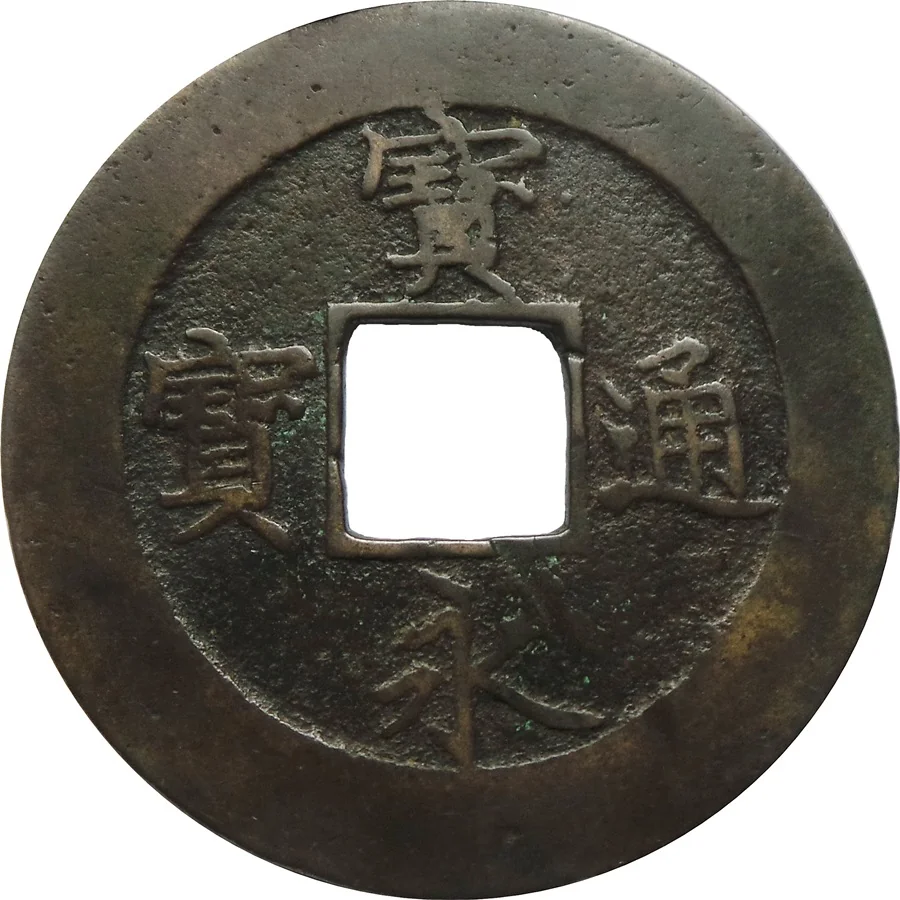
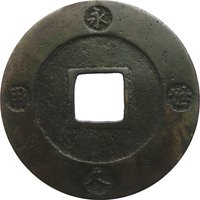
Hōeitsūhō inscribed around square hole.
Inscription:
寶
寶 通
永
寶 通
永
Reverse
Description:
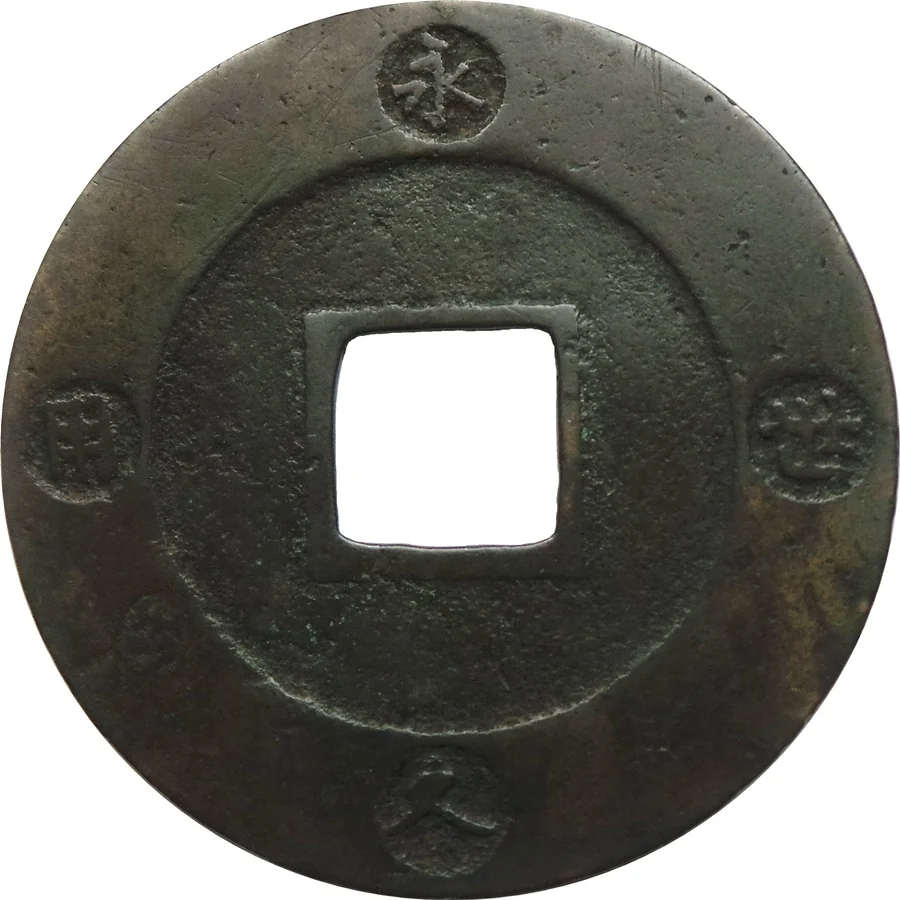
Rim inscription: 永久世用 (eikyūseyō) with (珍) countermark.
Inscription:
永
用 世
久
珍
用 世
久
珍
Edge
Plain
Mints
| Name | Mark |
|---|---|
| Shichijo, Kyoto | — |
Mintings
| Year | Mint Mark | Mintage | Quality | Collection |
|---|---|---|---|---|
| — | — | — |
Historical background
In 1708, Japan's currency system was in a state of severe crisis under the Tokugawa shogunate. The regime operated a tri-metallic system of gold, silver, and copper coins, each with separate denominations and uses, but the entire structure was being undermined by debasement. The shogunate, perpetually short of revenue due to fixed taxes and lavish spending, had resorted to repeatedly recoining currency with reduced precious metal content to generate seigniorage profits. This practice, initiated decades earlier, had led to a proliferation of older, purer coins (known as genryō gin) circulating alongside newer, inferior ones, causing widespread confusion, loss of public trust, and rampant inflation that hurt the samurai on fixed stipends and the common people.
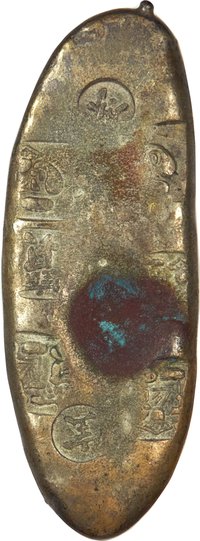
The situation reached a critical point that year with the implementation of the Hōei Recoinage, ordered by the shogun Tokugawa Ienobu and his chief advisor Arai Hakuseki. Alarmed by the economic distortion, Hakuseki advocated for a return to sound money based on Confucian principles. In 1708, the government demonetized old gold and silver coins and issued new ones with significantly increased precious metal content—most notably the Hōei koban, which contained about 80% more gold than its predecessor. This drastic revaluation was an attempt to restore the intrinsic value of the currency, curb inflation, and reassert the shogunate's authority by signaling a return to fiscal virtue.
However, the 1708 reforms proved to be a short-lived and ultimately disruptive intervention. While intended to stabilize the economy, the sudden recall and reminting of coins created severe liquidity shortages and deflationary pressures, stifling commerce. The policy was economically unsustainable for the treasury, as it eliminated the vital seigniorage income the state depended upon. Within just a few years, the shogunate was forced to reverse course, resuming debasement under Ienobu's successor. Thus, 1708 stands as a pivotal but failed year in Japan's monetary history, marking an ambitious but ill-fated attempt to restore a commodity-based currency system against the relentless fiscal pressures of the Tokugawa state.
The situation reached a critical point that year with the implementation of the Hōei Recoinage, ordered by the shogun Tokugawa Ienobu and his chief advisor Arai Hakuseki. Alarmed by the economic distortion, Hakuseki advocated for a return to sound money based on Confucian principles. In 1708, the government demonetized old gold and silver coins and issued new ones with significantly increased precious metal content—most notably the Hōei koban, which contained about 80% more gold than its predecessor. This drastic revaluation was an attempt to restore the intrinsic value of the currency, curb inflation, and reassert the shogunate's authority by signaling a return to fiscal virtue.
However, the 1708 reforms proved to be a short-lived and ultimately disruptive intervention. While intended to stabilize the economy, the sudden recall and reminting of coins created severe liquidity shortages and deflationary pressures, stifling commerce. The policy was economically unsustainable for the treasury, as it eliminated the vital seigniorage income the state depended upon. Within just a few years, the shogunate was forced to reverse course, resuming debasement under Ienobu's successor. Thus, 1708 stands as a pivotal but failed year in Japan's monetary history, marking an ambitious but ill-fated attempt to restore a commodity-based currency system against the relentless fiscal pressures of the Tokugawa state.
🌟 Limited