

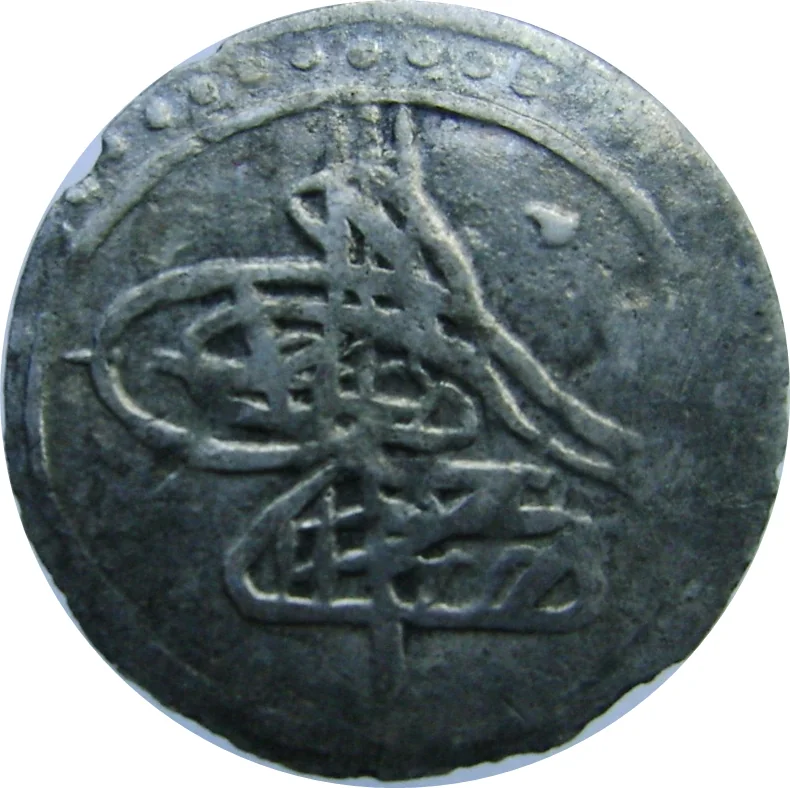
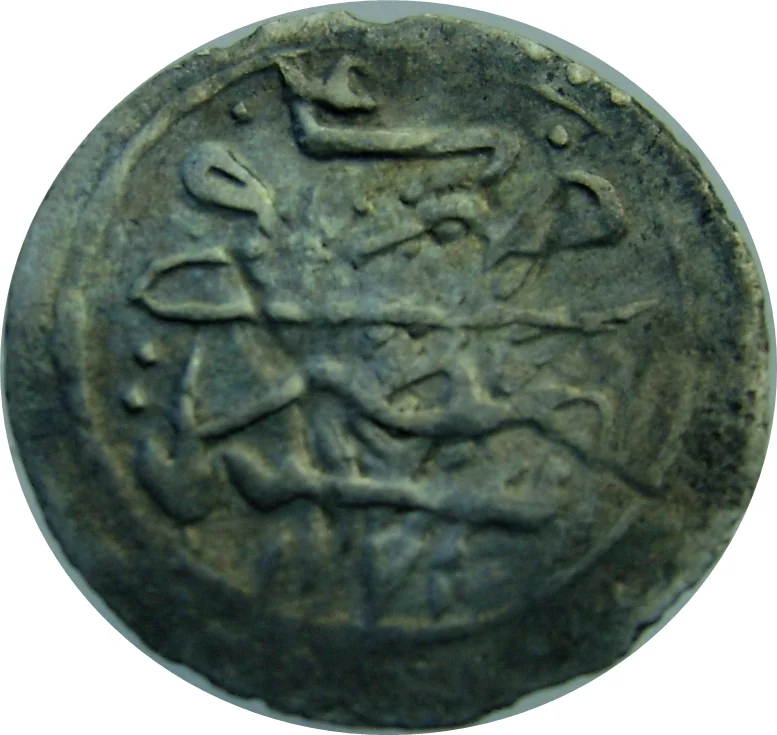
1 Para – Egypt
Egypt
Mintings
| Year | Mint Mark | Mintage | Quality | Collection |
|---|---|---|---|---|
| 1758 | — | — |
Historical background
In 1758, Egypt was nominally a province of the Ottoman Empire, but its currency system reflected a state of profound local autonomy and economic strain. The official currency was the Ottoman para, a small silver coin, and the gold sultani. However, the real power lay with the Mamluk beys, who effectively ruled the country. They controlled the minting of coins in Cairo, often debasing the silver currency to finance their military expenditures and internal rivalries. This practice led to a severe shortage of full-weight silver coins, causing significant instability and a disconnect between the official and market values of money.
The economy was further complicated by the circulation of a multitude of foreign coins, a testament to Egypt's role in Mediterranean and Red Sea trade. Spanish silver dollars (piastres), Venetian ducats, and French écus were all commonly used in major transactions, particularly in Alexandria and among foreign merchant communities. This created a dual monetary system: a debased local currency for everyday internal trade and more trusted foreign specie for large-scale commerce and international exchange. The constant fluctuation in the value and supply of these various coins created a chaotic environment for merchants and peasants alike.
Consequently, the currency situation in 1758 was one of fragmentation and weakness. The Ottoman central authority had little practical control over Egypt's monetary policy, which was manipulated by competing Mamluk factions for their own gain. This financial instability undermined economic development, encouraged hoarding of precious metals, and placed a heavy burden on the peasantry, who suffered from arbitrary taxation and unpredictable prices. This precarious system foreshadowed the deeper economic crises that would plague Egypt in the latter half of the 18th century.
The economy was further complicated by the circulation of a multitude of foreign coins, a testament to Egypt's role in Mediterranean and Red Sea trade. Spanish silver dollars (piastres), Venetian ducats, and French écus were all commonly used in major transactions, particularly in Alexandria and among foreign merchant communities. This created a dual monetary system: a debased local currency for everyday internal trade and more trusted foreign specie for large-scale commerce and international exchange. The constant fluctuation in the value and supply of these various coins created a chaotic environment for merchants and peasants alike.
Consequently, the currency situation in 1758 was one of fragmentation and weakness. The Ottoman central authority had little practical control over Egypt's monetary policy, which was manipulated by competing Mamluk factions for their own gain. This financial instability undermined economic development, encouraged hoarding of precious metals, and placed a heavy burden on the peasantry, who suffered from arbitrary taxation and unpredictable prices. This precarious system foreshadowed the deeper economic crises that would plague Egypt in the latter half of the 18th century.
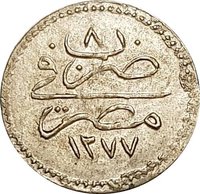
💎 Extremely Rare