

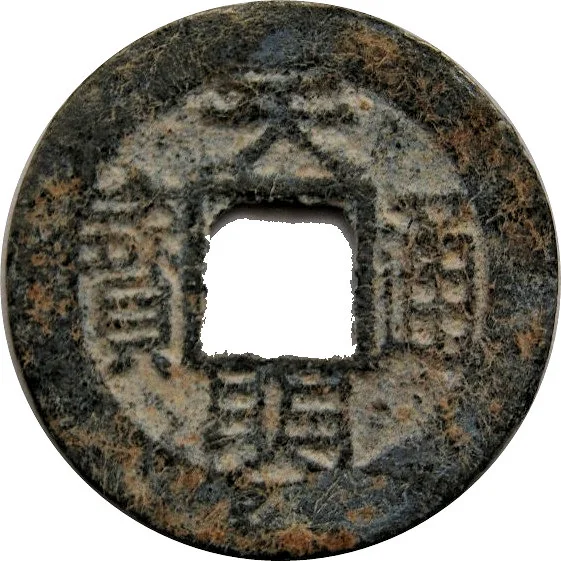
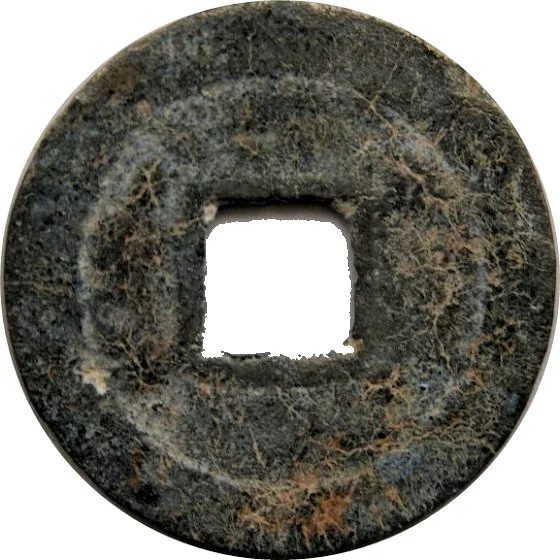
1 cash – Đàng Trong
Add to wishlist
Vietnam
Context
Material
Diameter: 23.3 mm
Weight: 2 g
Shape: Round with a square hole
Composition: Zinc
Magnetic: No
Alignment: Medal alignment
flip
References
KM: #
Numista: #68231
Obverse
Description:
Thien Minh Thong Bao coin.
Inscription:
天
寶 通
明
寶 通
明
Reverse
Description:
Simple.
Edge
Plain
Mintings
| Year | Mint Mark | Mintage | Quality | Collection |
|---|---|---|---|---|
| — | — | — |
Historical background
In 1739, the currency situation in Đàng Trong (the southern Vietnamese realm of the Nguyễn Lords) was characterized by a critical shortage of standardized coinage and a reliance on a complex, multi-currency system. The Nguyễn economy, fueled by vibrant maritime trade with Chinese, Japanese, and European merchants, primarily operated on a silver basis, using silver bars (known as nén or tael) and foreign silver coins like Mexican pesos for large transactions. However, for daily small-scale commerce, there was a severe lack of sufficient copper cash (tiền đồng). The Nguyễn mints produced copper coins sporadically, but their output was insufficient, leading to widespread circulation of older Vietnamese coins from the north (Đàng Ngoài) and, more problematically, a flood of poor-quality, privately minted and smuggled coins.
This scarcity and adulteration led to significant economic instability and confusion. The value and acceptance of coins varied greatly by region and the whims of local authorities, disrupting market exchanges. The Nguyễn court, aware of the problem, had issued decrees to regulate coinage, but enforcement was difficult. In 1736, just three years prior, Lord Nguyễn Phúc Khoát had attempted a monetary reform, outlawing debased coins and promoting the use of a new standardized issue. By 1739, these measures were proving only partially successful, as the fundamental issue of inadequate minting capacity and porous borders persisted.
Consequently, the monetary landscape in 1739 was one of transition and frustration. The court sought to impose order and centralize monetary authority, while merchants and the populace had to navigate a daily reality of mixed, uncertain currencies. This situation reflected the broader challenges of the Nguyễn state in managing a growing, commercialized economy while maintaining control over its means of exchange, a struggle that would continue until more comprehensive reforms were implemented later in the 18th century.
This scarcity and adulteration led to significant economic instability and confusion. The value and acceptance of coins varied greatly by region and the whims of local authorities, disrupting market exchanges. The Nguyễn court, aware of the problem, had issued decrees to regulate coinage, but enforcement was difficult. In 1736, just three years prior, Lord Nguyễn Phúc Khoát had attempted a monetary reform, outlawing debased coins and promoting the use of a new standardized issue. By 1739, these measures were proving only partially successful, as the fundamental issue of inadequate minting capacity and porous borders persisted.
Consequently, the monetary landscape in 1739 was one of transition and frustration. The court sought to impose order and centralize monetary authority, while merchants and the populace had to navigate a daily reality of mixed, uncertain currencies. This situation reflected the broader challenges of the Nguyễn state in managing a growing, commercialized economy while maintaining control over its means of exchange, a struggle that would continue until more comprehensive reforms were implemented later in the 18th century.
💎 Extremely Rare