

3 Patards – Spanish Netherlands
Netherlands
Context
Years: 1615–1620
Country: Netherlands 
Issuer: Spanish Netherlands
Currency:
(1506—1713)
Demonetized: Yes
Material
Diameter: 28 mm
Weight: 2.63 g
Silver weight: 1.53 g
Shape: Irregular round
Composition: 58.2% Silver
Magnetic: No
Technique: Hammered
Alignment: Coin alignment
flip
References
KM: #Click to copy to clipboard30
Numista: #66269
Value
Bullion value: $4.44
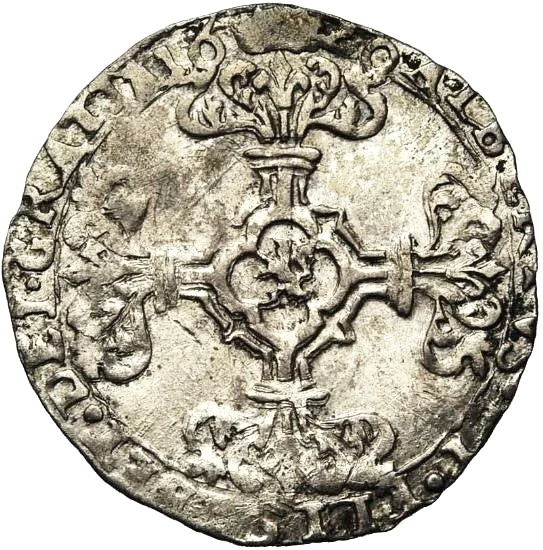
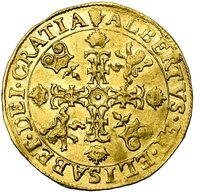
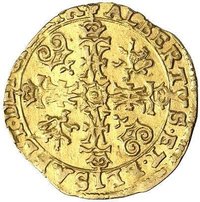
Obverse
Description:
Floriate cross with central lion.
Inscription:
+ ALBERTVS ET ELISABET DEI GRATIA -
Script: Latin
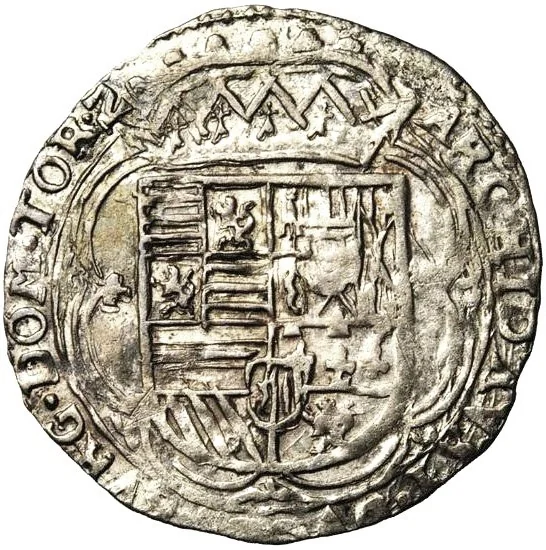
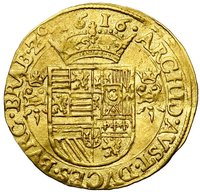
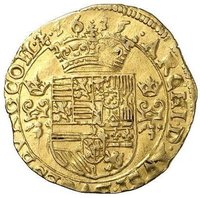
Reverse
Description:
Crowned arms in a polylobe frame.
Inscription:
+ ARCH AVST DVCES BVRG DOM TOR Z
Script: Latin
Edge
Mints
| Name | Mark |
|---|---|
| Tournai | — |
Mintings
| Year | Mint Mark | Mintage | Quality | Collection |
|---|---|---|---|---|
| 1615 | — | — | ||
| 1616 | — | — | ||
| 1617 | — | — | ||
| 1618 | — | — | ||
| 1619 | — | — | ||
| 1620 | — | — |
Historical background
In 1615, the Spanish Netherlands found itself in a complex and debilitating currency crisis, a direct consequence of its geopolitical position and the monetary policies of the Spanish Crown. The region, a wealthy hub of trade and finance within the Habsburg Empire, was caught between the inflow of overvalued Spanish silver reales from its imperial masters and the circulation of debased coinage from neighboring states like the Dutch Republic and the German principalities. This created a classic case of Gresham's Law, where "bad money drives out good"; merchants and citizens hoarded full-weight, high-value coins and used the inferior ones for daily transactions, disrupting commerce and eroding trust.
The core of the problem lay in the official valuation of coins. The Spanish government, needing to finance its ongoing military campaigns in the Eighty Years' War and the Thirty Years' War, repeatedly issued ordinances raising the official tariff of its silver coins above their intrinsic metallic value. This overvaluation encouraged the export and melting down of better-quality coins from elsewhere, while flooding the market with artificially priced Spanish currency. Local authorities in the Netherlandish cities, whose economies relied on stable credit and trade, fiercely resisted these imposed valuations, creating a tense struggle between Madrid's fiscal demands and local economic reality.
The resulting monetary chaos stifled the economy of the Spanish Netherlands. Uncertainty over exchange rates hampered both domestic commerce and international trade, particularly with key partners. Prices became unstable, credit tightened, and the once-vibrant financial markets of Antwerp suffered. While attempts were made to find a solution, including proposed currency reforms and negotiations between the central government and the Provincial Estates, the fundamental conflict between imperial war finance and regional economic stability remained unresolved, perpetuating a crisis that would linger for years.
The core of the problem lay in the official valuation of coins. The Spanish government, needing to finance its ongoing military campaigns in the Eighty Years' War and the Thirty Years' War, repeatedly issued ordinances raising the official tariff of its silver coins above their intrinsic metallic value. This overvaluation encouraged the export and melting down of better-quality coins from elsewhere, while flooding the market with artificially priced Spanish currency. Local authorities in the Netherlandish cities, whose economies relied on stable credit and trade, fiercely resisted these imposed valuations, creating a tense struggle between Madrid's fiscal demands and local economic reality.
The resulting monetary chaos stifled the economy of the Spanish Netherlands. Uncertainty over exchange rates hampered both domestic commerce and international trade, particularly with key partners. Prices became unstable, credit tightened, and the once-vibrant financial markets of Antwerp suffered. While attempts were made to find a solution, including proposed currency reforms and negotiations between the central government and the Provincial Estates, the fundamental conflict between imperial war finance and regional economic stability remained unresolved, perpetuating a crisis that would linger for years.
💎 Extremely Rare