

⅕ Rupee – Bombay Presidency
India
Context

Material
References
KM: #Click to copy to clipboard271
Numista: #65451
Value
Bullion value: $6.13
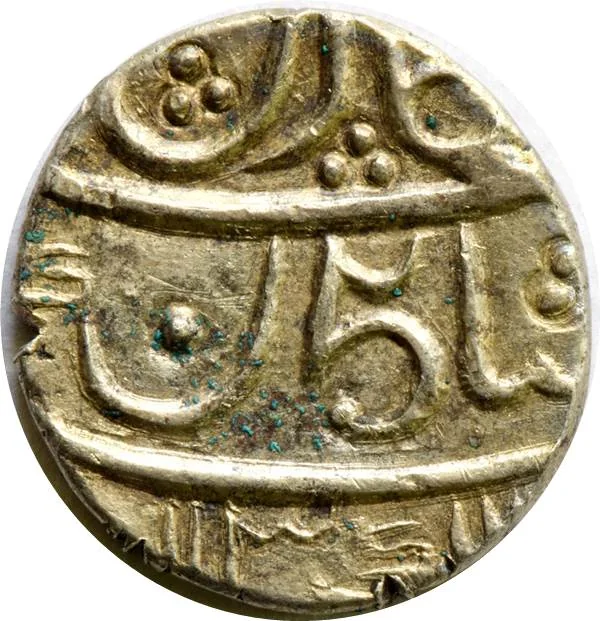
Obverse
Description:
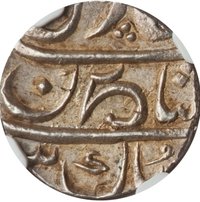
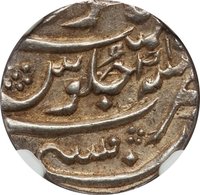
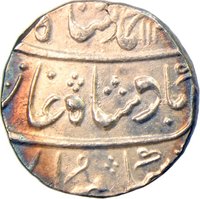
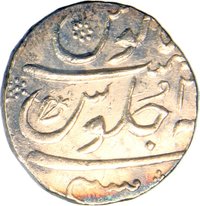
Shah Jahan, year 5, 113X AH.
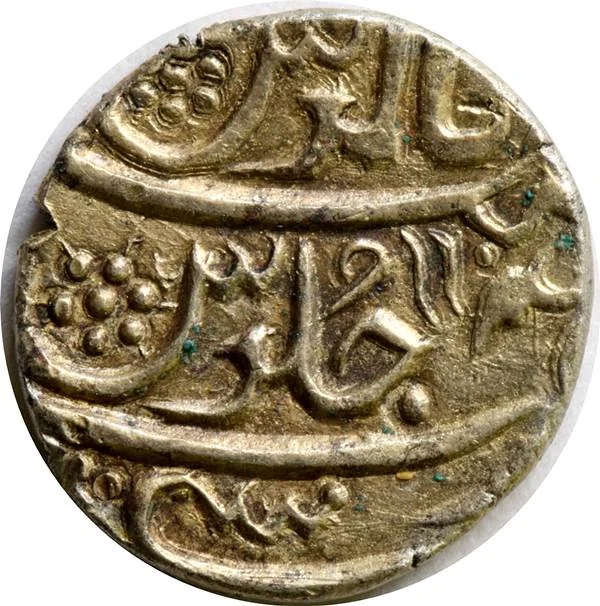
Reverse
Description:
Zarb Mumbai, Year 11 of the reign.
Edge
Plain
Mintings
| Year | Mint Mark | Mintage | Quality | Collection |
|---|---|---|---|---|
| 1719 | — | — | ||
| 1720 | — | — | ||
| 1721 | — | — | ||
| 1723 | — | — | ||
| 1726 | — | — | ||
| 1727 | — | — | ||
| 1729 | — | — | ||
| 1730 | — | — | ||
| 1731 | — | — | ||
| 1739 | — | — | ||
| 1742 | — | — | ||
| 1743 | — | — |
Historical background
In 1719, the currency situation within the Bombay Presidency was complex and transitional, reflecting its position as a fledgling commercial hub under the English East India Company. The monetary landscape was not unified, being a confluence of various indigenous and foreign coins in circulation. The most prominent were the Mughal silver rupees, particularly those minted in Surat, which served as the dominant high-value currency for larger trade. Alongside these, a plethora of other coins like the Portuguese xerafim (largely used in Goa and its dependencies), the mahmudi of Gujarat, and various smaller copper pice and dubb coins facilitated everyday local transactions, creating a multi-layered and often confusing system of exchange.
This multiplicity led to significant challenges for the Company’s administration and merchants. Fluctuating exchange rates between these coinages, varying degrees of purity, and the practice of "batta" (a discount or premium for payment in a particular coin) created constant accounting difficulties and opportunities for fraud. The Company’s own attempts to introduce stable currency, such as issuing copper pice bearing the Company’s crest, were limited in scope and authority. Crucially, the Presidency lacked its own official mint for the recoinage of silver, leaving it dependent on the output and standards of Mughal mints, whose political authority was beginning to fragment after the death of Emperor Aurangzeb in 1707.
Therefore, the year 1719 represents a period of monetary dependency and administrative frustration. The East India Company operated within a hybrid system it did not fully control, where its commercial ambitions were hampered by the inefficiencies of a disparate currency regime. This situation would ultimately provide a powerful impetus for the Company to seek greater sovereign rights, including the crucial farmān to establish its own mint, a privilege it would secure from the Mughals in the 1720s, beginning a process of monetary standardization that would solidify its economic and political power in the region.
This multiplicity led to significant challenges for the Company’s administration and merchants. Fluctuating exchange rates between these coinages, varying degrees of purity, and the practice of "batta" (a discount or premium for payment in a particular coin) created constant accounting difficulties and opportunities for fraud. The Company’s own attempts to introduce stable currency, such as issuing copper pice bearing the Company’s crest, were limited in scope and authority. Crucially, the Presidency lacked its own official mint for the recoinage of silver, leaving it dependent on the output and standards of Mughal mints, whose political authority was beginning to fragment after the death of Emperor Aurangzeb in 1707.
Therefore, the year 1719 represents a period of monetary dependency and administrative frustration. The East India Company operated within a hybrid system it did not fully control, where its commercial ambitions were hampered by the inefficiencies of a disparate currency regime. This situation would ultimately provide a powerful impetus for the Company to seek greater sovereign rights, including the crucial farmān to establish its own mint, a privilege it would secure from the Mughals in the 1720s, beginning a process of monetary standardization that would solidify its economic and political power in the region.
✨ Legendary