

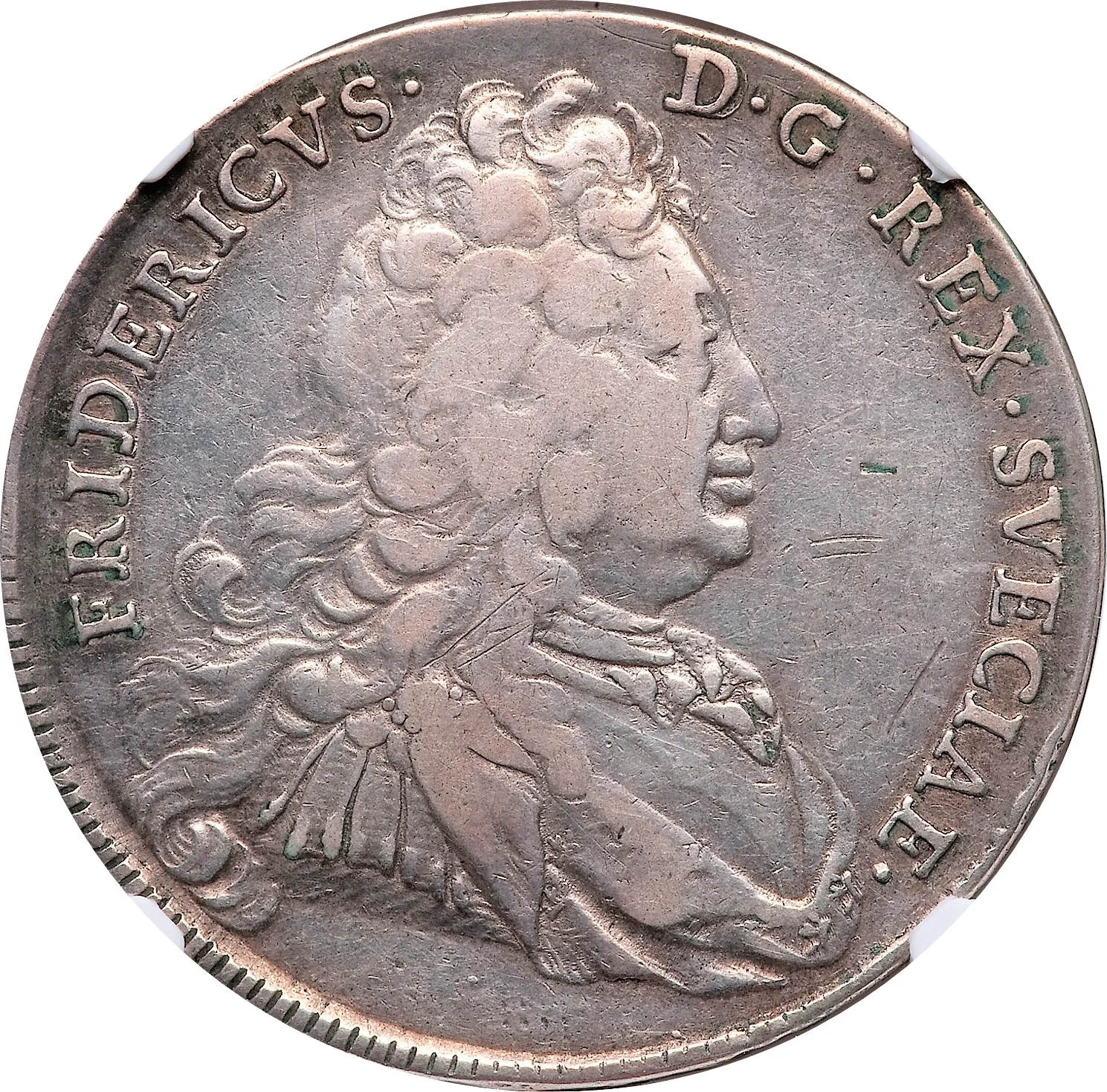
1 Riksdaler – Sweden
Sweden
Context
Years: 1734–1738
Issuer: Sweden 
Ruler: Frederick I
Currency:
(1719—1798)
Demonetized: Yes
Total mintage: 37,598
Material
References
KM: #Click to copy to clipboard395.3
Numista: #64694
Value
Bullion value: $73.00
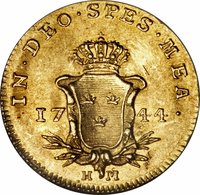
Obverse
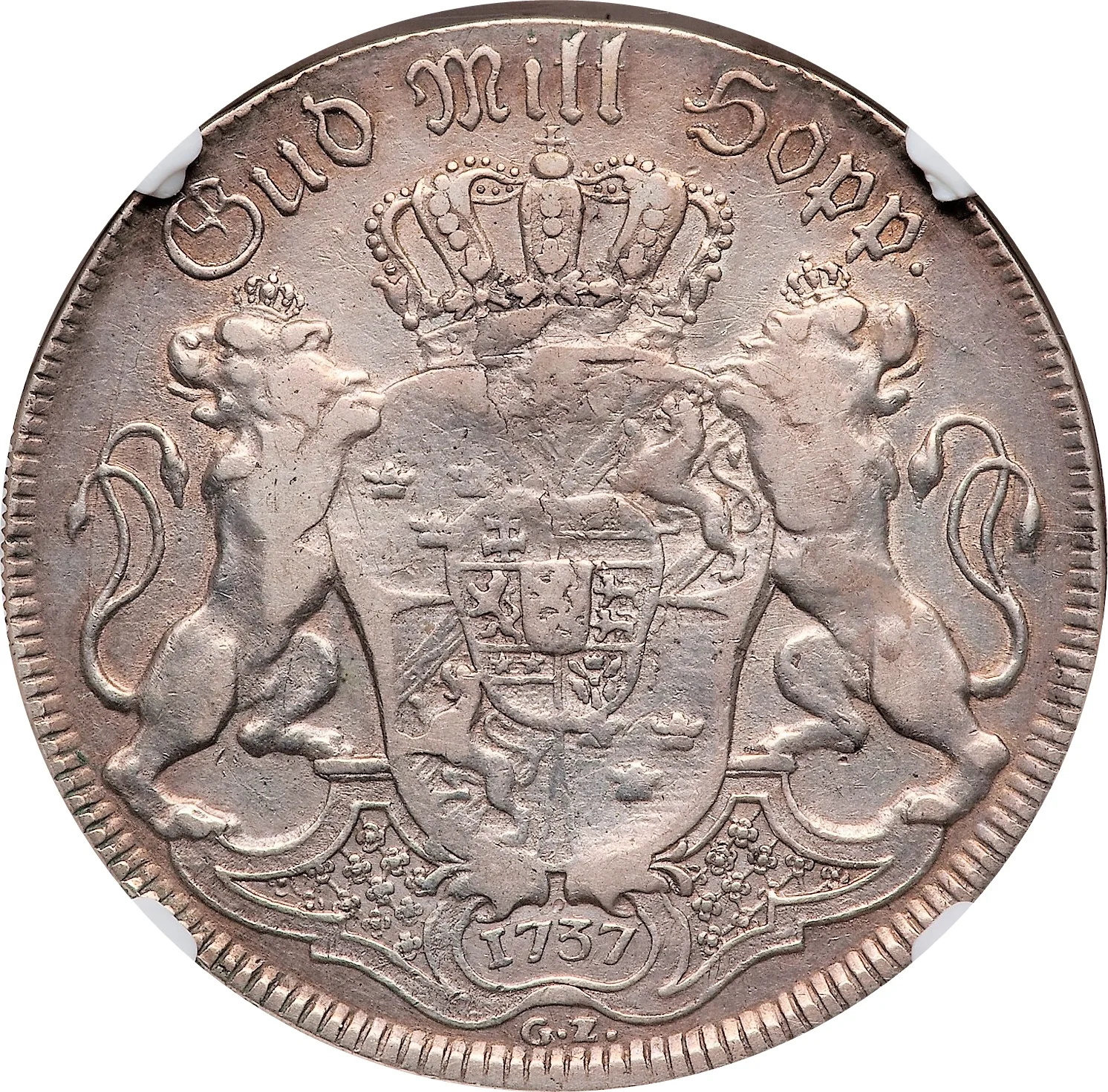
Reverse
Description:
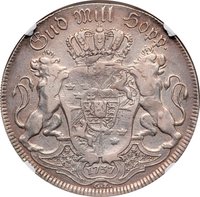
Shield with crown, supporters, and date cartouche; mintmark beside or below.
Inscription:
Gud Mitt Hopp .
1736
GZ
1736
GZ
Scripts: Latin, Latin (Fraktur blackletter)
Edge
Categories
| Symbols> Coat of Arms |
Mints
| Name | Mark |
|---|---|
| Stockholm | — |
Mintings
| Year | Mint Mark | Mintage | Quality | Collection |
|---|---|---|---|---|
| 1734 | — | 1,600 | ||
| 1735 | — | 3,522 | ||
| 1736 | — | 11,772 | ||
| 1737 | — | 8,482 | ||
| 1738 | — | 12,222 |
Historical background
In 1734, Sweden was operating under a complex and strained monetary system, a legacy of its period as a great power in the 17th century. The official currency was the silver daler, but decades of war financing had led to severe debasement. The state had repeatedly issued inferior copper plate money (plåtmynt) and low-quality silver coinage to cover its debts, creating a chronic oversupply of currency and fueling inflation. This resulted in a system where the face value of coins far exceeded their intrinsic metal content, undermining public trust and causing widespread confusion in both domestic and international trade.
The situation was further complicated by the existence of multiple parallel systems. Alongside the state-minted coins, the Riksbank (the world's oldest central bank, founded in 1668) issued credit-based paper money known as transportsedlar. These were initially intended as credit notes but increasingly circulated as currency. Thus, the economy functioned with a tri-metallic mix of overvalued silver coins, bulky copper plates, and experimental banknotes, none of which held stable value. Prices were often negotiated based on the specific type of currency being used, creating inefficiency and hindering economic development.
Recognizing the crisis, the government had already enacted the 1734 Ordinance on Silver Coinage in an attempt to reform the system. This law aimed to stabilize the currency by defining the silver daler as the principal monetary unit and setting fixed exchange rates between silver, copper, and the paper notes. However, the reform in 1734 was a fragile and ongoing process. It struggled to restore confidence fully, as the underlying fiscal discipline was hard to maintain, and the public remained wary of the state's commitment to upholding the new standards. The period thus represents a critical, albeit turbulent, chapter in Sweden's transition from a commodity-based to a more modern fiduciary monetary system.
The situation was further complicated by the existence of multiple parallel systems. Alongside the state-minted coins, the Riksbank (the world's oldest central bank, founded in 1668) issued credit-based paper money known as transportsedlar. These were initially intended as credit notes but increasingly circulated as currency. Thus, the economy functioned with a tri-metallic mix of overvalued silver coins, bulky copper plates, and experimental banknotes, none of which held stable value. Prices were often negotiated based on the specific type of currency being used, creating inefficiency and hindering economic development.
Recognizing the crisis, the government had already enacted the 1734 Ordinance on Silver Coinage in an attempt to reform the system. This law aimed to stabilize the currency by defining the silver daler as the principal monetary unit and setting fixed exchange rates between silver, copper, and the paper notes. However, the reform in 1734 was a fragile and ongoing process. It struggled to restore confidence fully, as the underlying fiscal discipline was hard to maintain, and the public remained wary of the state's commitment to upholding the new standards. The period thus represents a critical, albeit turbulent, chapter in Sweden's transition from a commodity-based to a more modern fiduciary monetary system.
✨ Legendary