

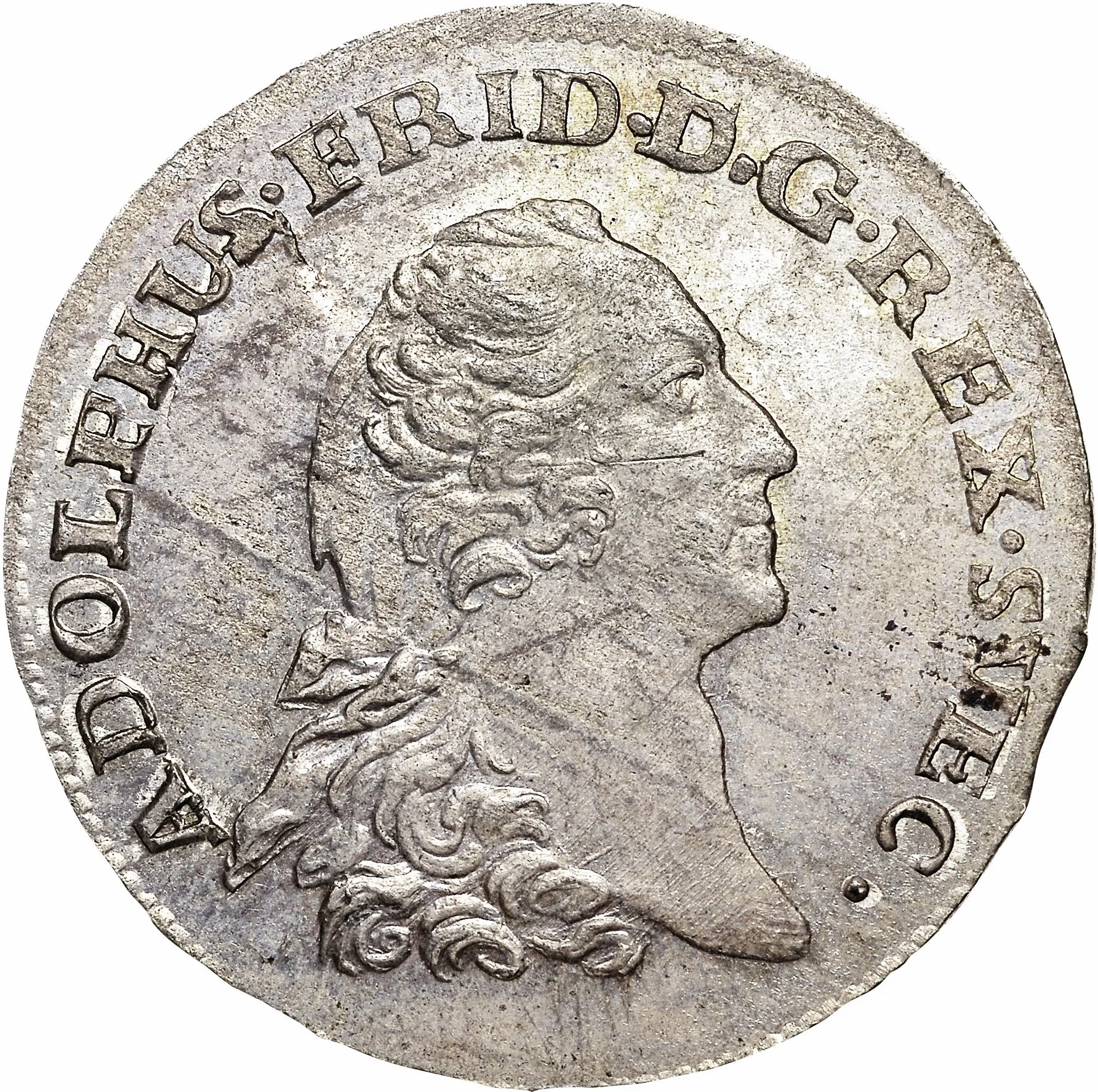
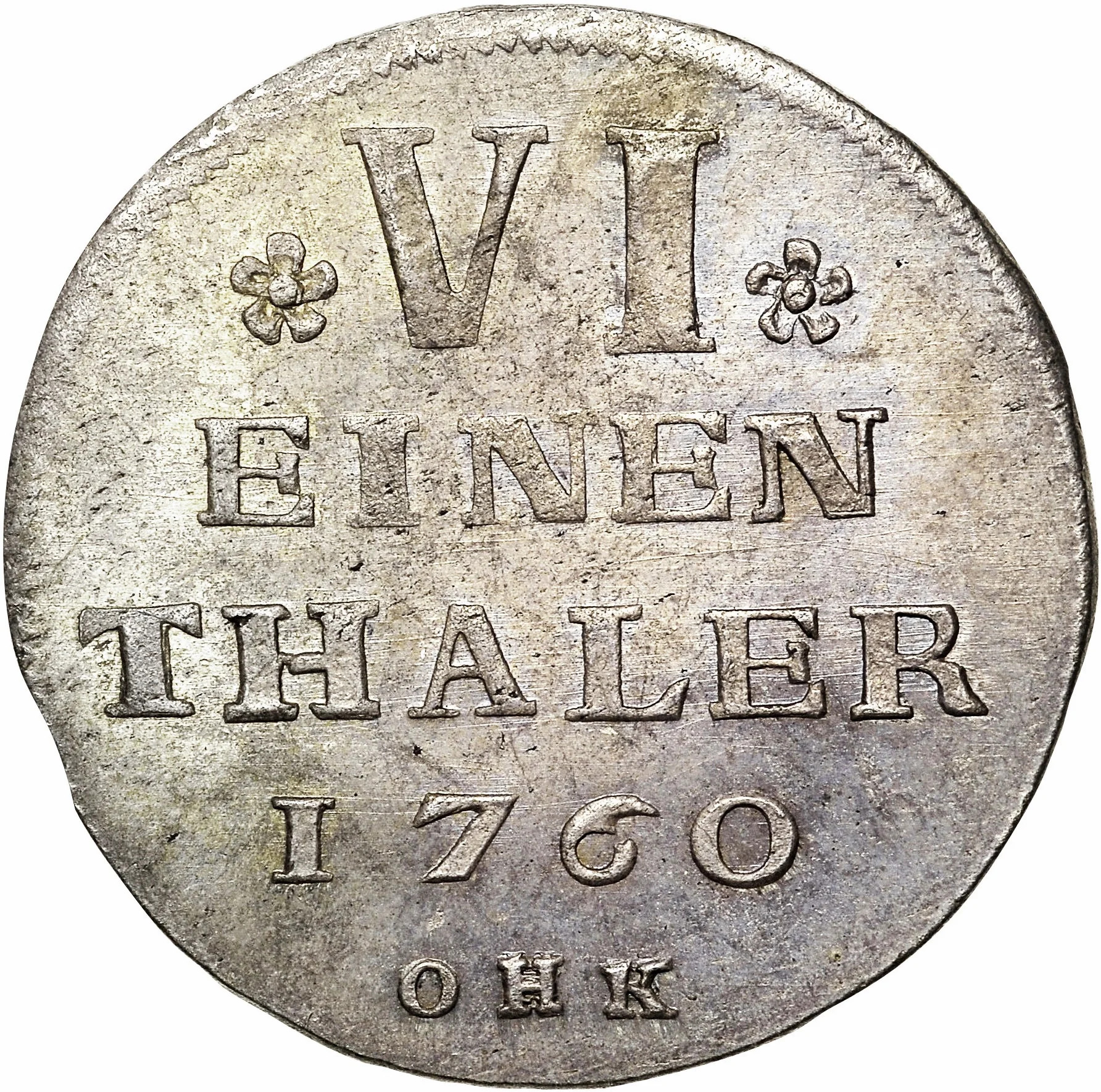
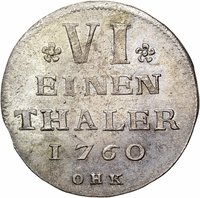
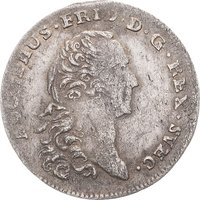
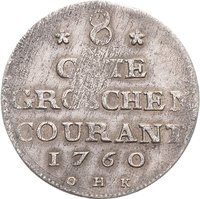
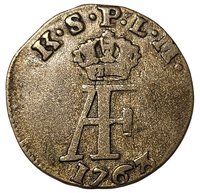
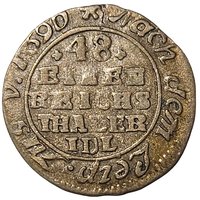
4 Gute Grochen – Swedish dominion of Pomerania
Sweden
Context
Years: 1760–1761
Country: Sweden 
Issuer: Swedish dominion of Pomerania
Ruler: Adolphus Frederick
Currency:
(1630—1815)
Subdivision: 4 Gute Grochen = ⅙ Thaler
Demonetized: Yes
Material
References
KM: #Click to copy to clipboard412
Numista: #64664
Obverse
Reverse
Edge
Mints
| Name | Mark |
|---|---|
| Stralsund | — |
Mintings
| Year | Mint Mark | Mintage | Quality | Collection |
|---|---|---|---|---|
| 1760 | — | — | ||
| 1761 | — | — | ||
| 1761 | DL | — | ||
| 1761 | F | — | ||
| 1761 | ICS | — | ||
| 1761 | LFK | — |
Historical background
During the mid-18th century, Swedish Pomerania, a remnant of Sweden's imperial past on the southern Baltic coast, faced a complex and deteriorating currency situation. The primary unit was the Swedish riksdaler, but the province's economy was deeply integrated with its German neighbours, leading to the widespread circulation of multiple competing currencies. Most notably, the Prussian reichsthaler was dominant in trade, while various local German states' coins also circulated, creating a chaotic monetary environment exacerbated by the ongoing Seven Years' War (1756-1763).
The war placed immense strain on the system. Sweden's military involvement from 1757 to 1762 turned Pomerania into a frontline theatre, requiring massive subsidies and requisitions. To finance this, Sweden heavily debased its own currency, minting and importing low-quality copper mynt and depreciated riksdaler notes into the province. This influx of weak money, following Gresham's law, drove sound Prussian and other full-value specie out of circulation or into hoarding, accelerating inflation and crippling everyday commerce for the local population.
By 1760, the monetary chaos was acute. Trust in the Swedish currency had collapsed, prices were unstable, and the dual pressures of wartime occupation and monetary depreciation caused significant economic hardship. The situation highlighted Sweden's weakening grip on the dominion, as the economic reality was dictated more by regional German powers and the exigencies of war than by Stockholm's authority. This period marked the beginning of the end for Swedish Pomerania, foreshadowing its eventual transfer to Prussia in 1815 after decades of financial and administrative struggle.
The war placed immense strain on the system. Sweden's military involvement from 1757 to 1762 turned Pomerania into a frontline theatre, requiring massive subsidies and requisitions. To finance this, Sweden heavily debased its own currency, minting and importing low-quality copper mynt and depreciated riksdaler notes into the province. This influx of weak money, following Gresham's law, drove sound Prussian and other full-value specie out of circulation or into hoarding, accelerating inflation and crippling everyday commerce for the local population.
By 1760, the monetary chaos was acute. Trust in the Swedish currency had collapsed, prices were unstable, and the dual pressures of wartime occupation and monetary depreciation caused significant economic hardship. The situation highlighted Sweden's weakening grip on the dominion, as the economic reality was dictated more by regional German powers and the exigencies of war than by Stockholm's authority. This period marked the beginning of the end for Swedish Pomerania, foreshadowing its eventual transfer to Prussia in 1815 after decades of financial and administrative struggle.
💎 Extremely Rare