

5 öre – Sweden
Add to wishlist
Sweden
Context
Year: 1722
Issuer: Sweden
Ruler: Frederick I
Currency:
(1719—1798)
Demonetized: Yes
Total mintage: 380,501
References
KM: #
Numista: #64156
Obverse
Description:
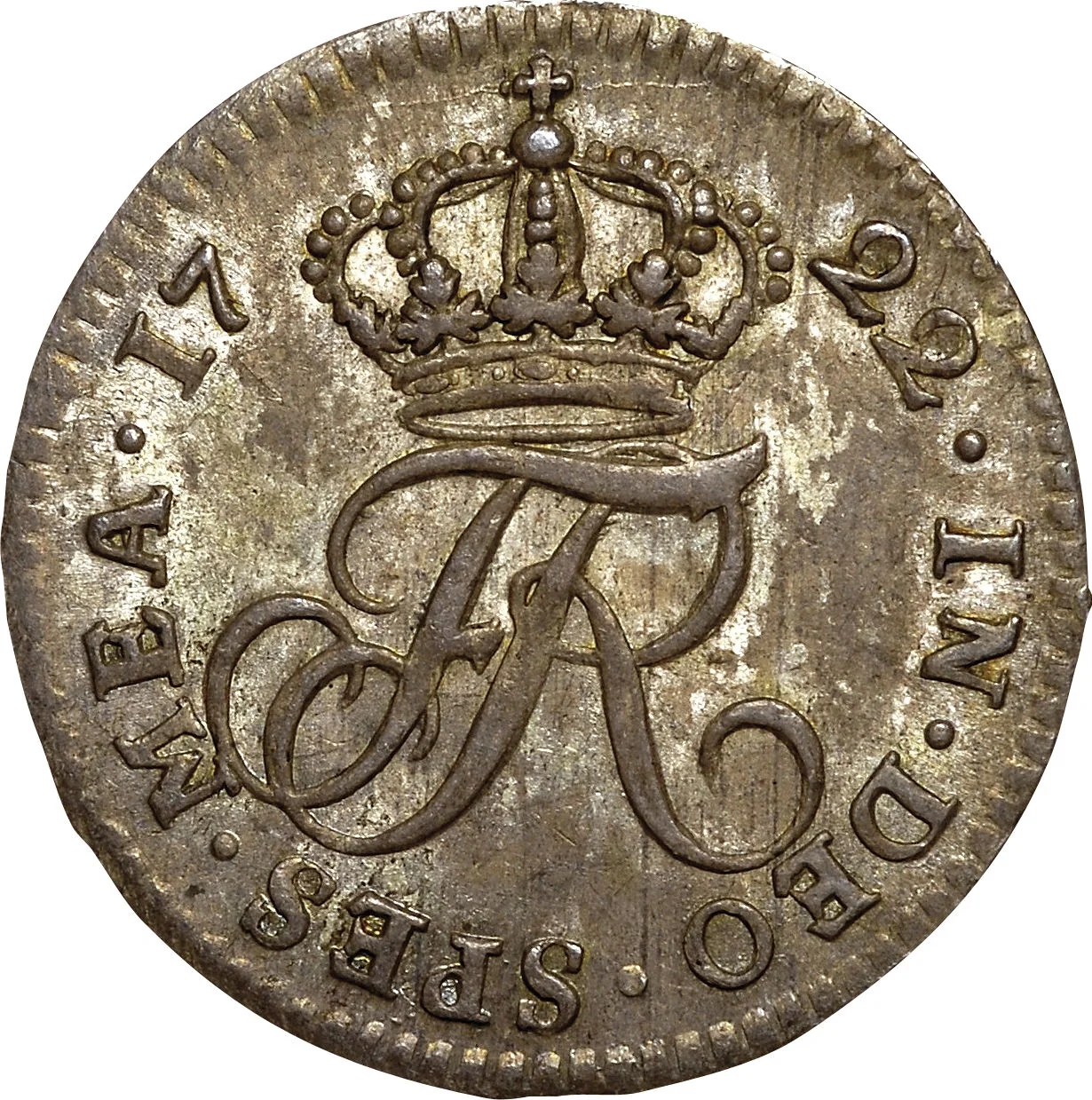
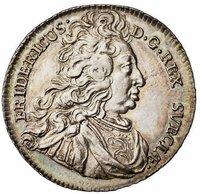
Crowned king's monogram. Around, the king's motto with the date split by the crown.
Inscription:
17 22
• IN • DEO • SPES • MEA •
• IN • DEO • SPES • MEA •
Script: Latin
Reverse
Description:
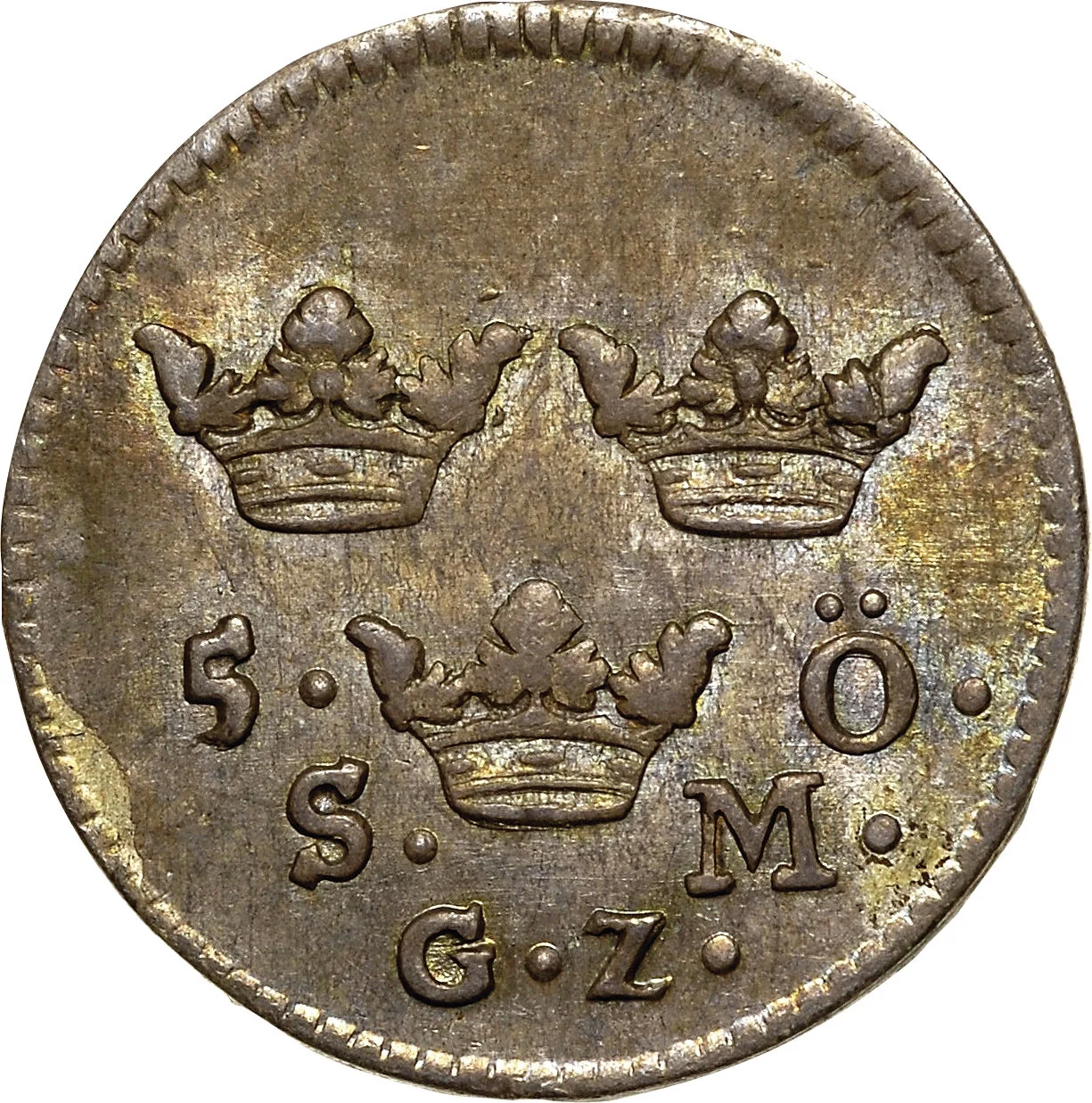
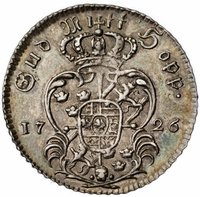
Three Crowns flank value. Mintmark beneath.
Inscription:
5 · Ö ·
S · M ·
G · Z ·
S · M ·
G · Z ·
Script: Latin
Edge
Plain
Mints
| Name | Mark |
|---|---|
| Stockholm | — |
Mintings
| Year | Mint Mark | Mintage | Quality | Collection |
|---|---|---|---|---|
| 1722 | — | 380,501 |
Historical background
In 1722, Sweden was navigating the complex aftermath of the Great Northern War (1700–1721), a conflict that had left the kingdom financially exhausted and its monetary system in disarray. The war effort had been funded largely through the heavy debasement of the Swedish krona (or daler), where the state reduced the silver content in coins while maintaining their face value. This practice, combined with the issuance of vast quantities of copper plate money (plåtmynt), led to severe inflation, a loss of public confidence in the currency, and a chaotic system where the intrinsic metal value of a coin often differed wildly from its nominal worth.
The immediate post-war period, therefore, was one of urgent monetary crisis management. The government, under the influence of the "Age of Liberty" parliament (the Riksdag), recognized that stabilization was essential for economic recovery. Efforts were focused on retiring the heavily depreciated copper money and re-establishing a credible silver-based standard. However, this was a delicate and slow process, as the state treasury was nearly empty and the economy was struggling with war debts and reduced territorial holdings, having lost its Baltic empire.
Consequently, the currency situation in 1722 was characterized by transition and uncertainty. While official policy aimed at restoration and deflation, the practical reality for most Swedes was a confusing mix of old and new coins of fluctuating value, hindering trade and economic planning. The year thus represents a critical point between the wartime financial expedients and the longer, fraught journey toward the monetary stability that would eventually be achieved later in the 18th century with the establishment of the Riksbank and a more secure system.
The immediate post-war period, therefore, was one of urgent monetary crisis management. The government, under the influence of the "Age of Liberty" parliament (the Riksdag), recognized that stabilization was essential for economic recovery. Efforts were focused on retiring the heavily depreciated copper money and re-establishing a credible silver-based standard. However, this was a delicate and slow process, as the state treasury was nearly empty and the economy was struggling with war debts and reduced territorial holdings, having lost its Baltic empire.
Consequently, the currency situation in 1722 was characterized by transition and uncertainty. While official policy aimed at restoration and deflation, the practical reality for most Swedes was a confusing mix of old and new coins of fluctuating value, hindering trade and economic planning. The year thus represents a critical point between the wartime financial expedients and the longer, fraught journey toward the monetary stability that would eventually be achieved later in the 18th century with the establishment of the Riksbank and a more secure system.
✨ Legendary